Nursery Rhymes Visual Songbook
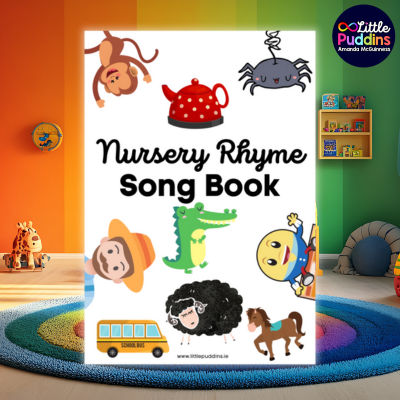
Nursery Rhyme Visual Song Book
Early years environments are rich in rhythm, repetition, and shared experiences. For many Autistic children, nursery rhymes are not simply songs. They are predictable, meaningful, and regulating ways to engage with language, connection, and learning.
At Little Puddins, we are committed to providing neuroaffirmative, non-ableist resources that support Autistic children to access early learning in ways that honour their communication styles, sensory needs, and autonomy. With this in mind, we are delighted to offer a free Nursery Rhyme Visual Song Book for early years settings, preschools, nurseries, and early childhood educators.
Why nursery rhymes matter in Autistic early years practice
Nursery rhymes offer a unique combination of structure and enjoyment. Their predictable patterns, repetitive language, and familiar melodies can support many Autistic children to feel safe and oriented within group routines. When paired with visual supports, nursery rhymes become even more accessible and inclusive.
In neuroaffirmative early years practice, we recognise that children engage, communicate, and learn in different ways. Visual song books support this diversity by reducing reliance on auditory processing alone and by offering multiple ways to participate, observe, or join in when ready.
What is the Nursery Rhyme Visual Song Book?
The Nursery Rhyme Visual Song Book is a printable visual resource designed to support inclusive song time in early years settings. Each rhyme is presented with clear text and supportive imagery, allowing children to follow along visually, anticipate what comes next, and engage at their own pace.
The song book includes familiar and well-loved nursery rhymes such as Incy Wincy Spider, Wheels on the Bus, Row Row Row Your Boat, Twinkle Twinkle Little Star, Old MacDonald, and many more. Each page is intentionally designed to be clear, visually supportive, and suitable for repeated use in busy early years environments.
How this resource supports Autistic children
Visual nursery rhyme books can support Autistic children in ways that are respectful and strengths-based, including:
Supporting understanding through visual structure and predictability
Reducing processing demands during group activities
Offering opportunities for shared attention without pressure to perform
Supporting expressive and receptive communication in multiple forms
Allowing children to engage through listening, watching, vocalising, scripting, or movement
Importantly, engagement is not measured by volume, eye contact, or conformity. Watching, listening quietly, repeating favourite lines, or returning to the same rhyme repeatedly are all valid forms of participation.
How early years educators can use the song book
This resource is flexible and can be used in a variety of ways across early years settings:
As a visual support during group song time
As a choice-making tool, allowing children to select preferred rhymes
As part of small group or individual connection moments
Laminated and bound for a shared book, or used as individual pages
Integrated into daily routines to provide consistency and familiarity
There is no expectation that children must sing along, copy actions, or complete the activity in a particular way. The focus is on access, enjoyment, and felt safety.
A neuroaffirmative approach to early years inclusion
Neuroaffirmative practice moves away from compliance-based expectations and towards understanding how environments can better support Autistic children. Visual supports, including visual song books, are environmental accommodations that benefit many children, not just Autistic children.
By embedding inclusive resources into everyday practice, early years providers demonstrate a commitment to accessibility, dignity, and respect for neurodivergent learners.
Free download for early years settings
The Nursery Rhyme Visual Song Book is available as a free download for early years providers, nurseries, preschools, and families. It has been created to be practical, accessible, and easy to integrate into existing routines without additional training or specialist equipment.
If you are an early years educator looking to strengthen inclusive practice in a meaningful and achievable way, this resource is a gentle and effective place to start.
Explore the free Nursery Rhyme Visual Song Book and bring visual, neuroaffirmative song time into your early years setting today.
