
Autistic PDA Student Experiences

Autistic PDA Student Experiences
As an Autistic PDA individual my experience in school was shaped by a constant need to maintain control and autonomy. While other Autistic students often thrive in structured environments, PDA students can find structure and direct demands overwhelming and anxiety-inducing.
Now, as a parent to two Autistic sons with a PDA profile, I see these similar patterns reflected in their experiences at school. The way PDA presents in educational settings is often misunderstood, leading to unintentional ineffective support and increased anxiety for PDA students.
In this post, I will share insights from my own lived experience as a PDA student, as well as strategies that have helped me and my sons navigate the demands of school and learning. At the end, you can download a free resource on understanding the lived experience of a PDA student, a practical guide for educators, parents, and professionals.
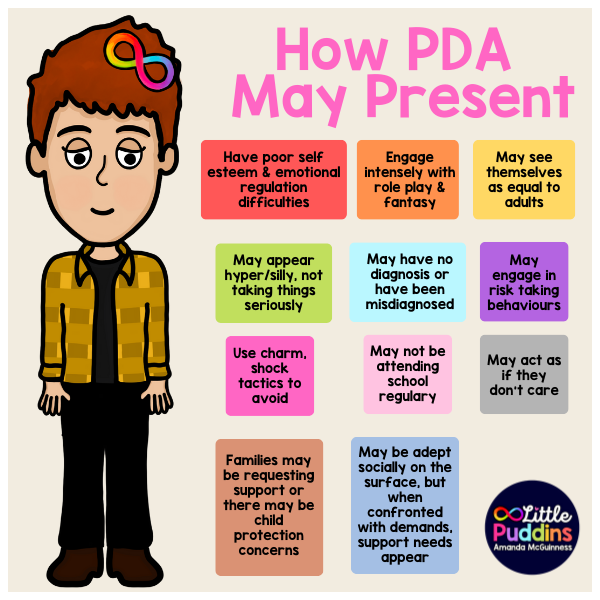
Unique PDA Experience
Autistic PDA students are driven by the need to feel safe.
While other Autistic students might find comfort in routine and predictability, PDA students often can experience these same structures as restrictive and threatening. The desire to maintain autonomy is not about being oppositional, it’s about regulating and attaining felt safety.
High Anxiety and Demand Avoidance
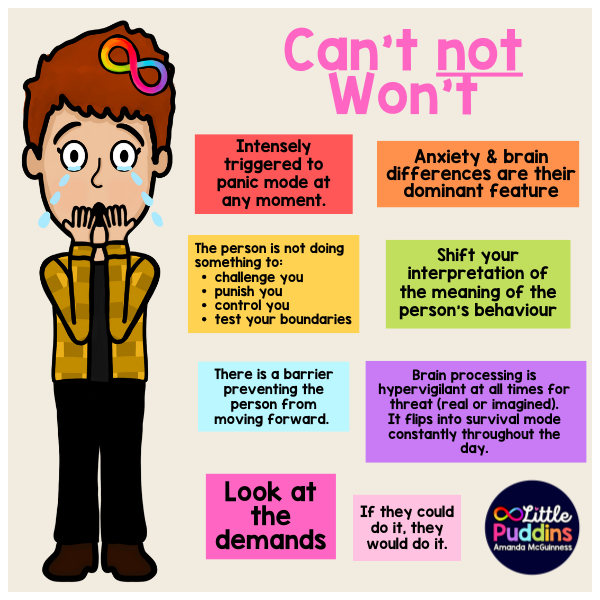
From a young age, I experienced high levels of underlying anxiety in school. Simple instructions like “sit down” or “start your work” often triggered a sense of panic.
When I felt pressured, my threat response shifted into a fight/flight/freeze response.
Avoidance wasn’t a behavioural choice, it was a survival response to feeling overwhelmed.
Example:
When asked to start a writing task, I would often sit quietly and disengage, other times I would be disruptive, particularly in primary school and would be asked to leave the room, not because I couldn’t do the task, but because the pressure to comply felt emotionally overwhelming.
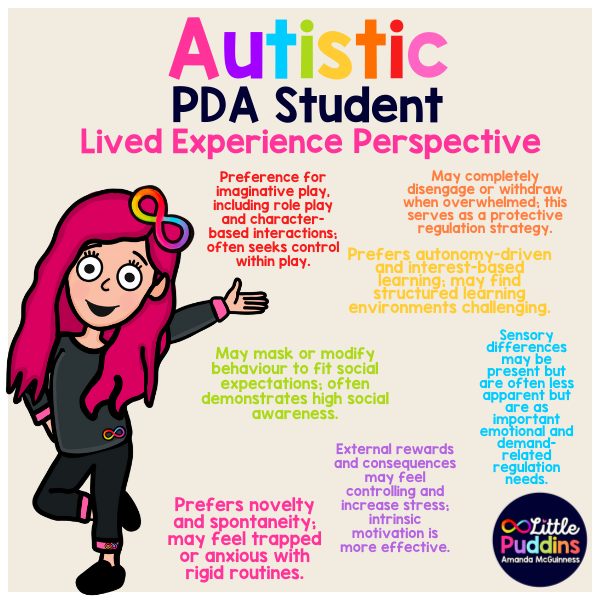
Resistance to Structure and Routine
Schools are built around structure, predictability, and routine. While this supports many Autistic students, it often creates tension and anxiety for PDA students.
Many Autistic students thrive on routine because it provides security. However, Autistic PDA students may experience routine as a loss of autonomy and personal control.
Example:
In secondary school, I struggled with the structured timetable. Knowing that I had to attend maths at a specific time each day created anticipatory anxiety. Added to this high baseline anxiety is that I am also dyscalculic and so Maths a demand was already triggering a threat response. However, if I was given a choice in how I approached Maths a subject (visually and at my own directive pace) I could engage more easily because I retained a sense of autonomy.
Structure itself was not the problem, the issue was how much autonomy as a student I felt I had within that structure.
Response to Instructions and Expectations
Direct and implied expectations are major triggers for many PDA students.
Direct instructions (“Finish your worksheet”) often can feel coercive and increase anxiety.
Even subtle suggestions (“It’s time to start”) can trigger avoidance.
PDA students may be likely to engage when expectations are framed as self directive / collaborative rather than direct instruction.
Example:
When I was told, “Finish your essay by the end of the day,” I would have feelings of panic and overwhelm as now I was being held to the teachers account of when something needed to be completed. The struggle I had was not with the work I had to do (English was one of my favourite classes and later I would go on to obtain an English degree). The struggle for me was the strong sense of being out of control, not being able to work on my own terms and feelings of not being seen as capable and able to direct my own timeline for work completion. I would finish the assignment on time but at the cost of my own health. Later I would return home and come in the front door like a bomb detonating. A shift in the language of the teacher would have supported me to be able to participate in the lesson without the feelings of duress and coercive control that overwhelmed my capacity to remain calm and in control.
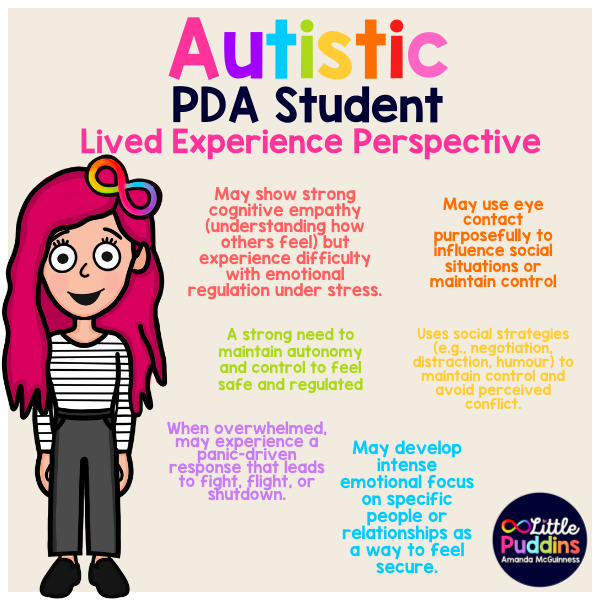
Social Strategies and Emotional Awareness
PDA students can be highly socially aware and capable of reading social cues, but they may use these skills strategically.
PDA students may engage in negotiation and distraction to avoid demands.
They may also use humour or charm to shift focus and reduce pressure.
Example:
Irish for example was not one of my strong subjects at school. I remember being in I believe third year and we had a substitute teacher. Who would not have known my profile as a student. I learned very quickly the nuances of the teacher and in a manner gained their trust so that they did not call on me during lessons to answer questions (as I knew I would struggle to answer correctly but also could not allow for myself to be singled out to answer at their direction). I became an entertainment for the young teacher who was ill at ease in the setting and by using social strategies I was able to avoid demands that if placed on me during that lesson would cause me to spiral.
This behaviour was not about manipulation, it is a self-regulation/preservation strategy aimed at reducing anxiety.

Emotional Regulation and Meltdowns
PDA students often experience rapid emotional shifts when they feel pressured or cornered.
If a demand feels overwhelming, the response is often a panic-driven meltdown or a complete withdrawal (shutdown).
These responses are not deliberate, they are protective mechanisms rooted in nervous system dysregulation.
Example:
In college, I remember walking out of some exams because the pressure to perform under time constraints triggered a deep sense of panic. Offering more flexible assessment methods would have helped reduce that response. Later I would claim to have been unwell and luckily would be offered to resist the examinations.
PDA students need emotional safety before they can engage with learning.
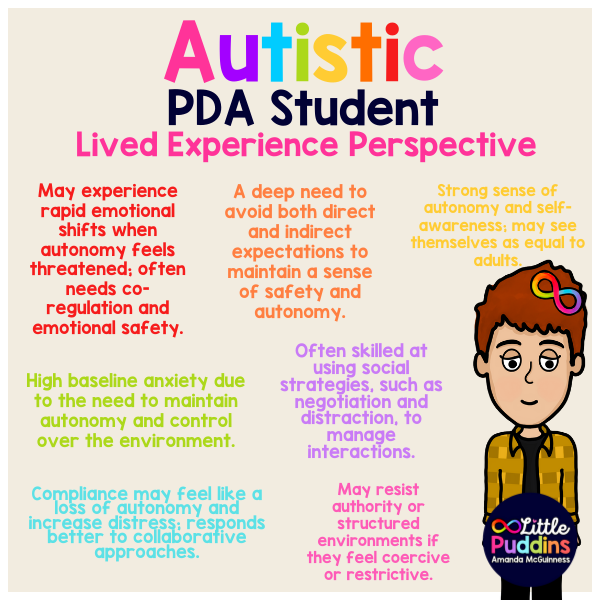
Effective Strategies for Supporting Autistic PDA Students
The most effective strategies focus on reducing pressure and increasing a sense of autonomy:
Provide choices – “Would you like to start with writing or reading?”
Use collaborative language – “How can we make this work for you?”
Minimise pressure – Allow extra time and reduce time-based demands.
Build trust – A trusted relationship reduces anxiety and increases engagement.
Respect withdrawal – If a PDA student disengages, give them space rather than applying pressure.
Example:
I remember a teacher who allowed me to take breaks when I needed to. Knowing I had that option reduced my anxiety, and I was more likely to stay engaged because I felt respected and trusted.
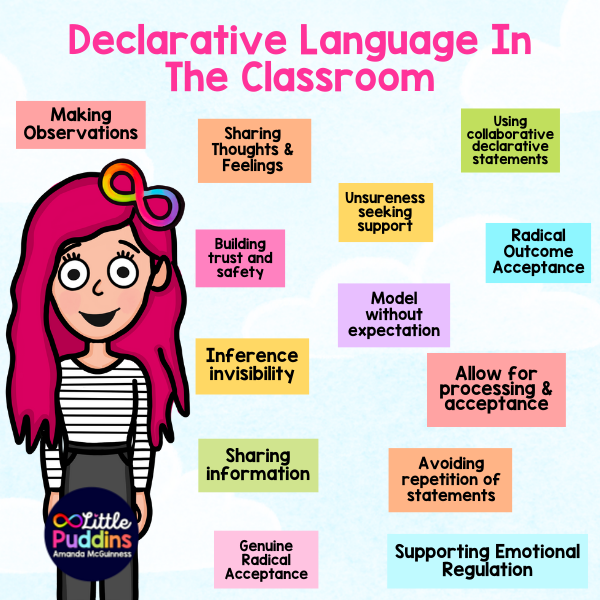
A Parent’s Perspective on Autistic PDA Students and Learning
As a parent of two Autistic PDA sons, I’ve learned that the key to helping them thrive in school is to honour their need for autonomy.
My sons engage more easily when they feel respected and heard.
They are more likely to participate in learning when they feel emotionally safe.
Punitive approaches increase their anxiety and result in greater avoidance.
Collaborative, flexible strategies work best, for both PDA students and their families.

Creating a Safe and Supportive Learning Environment
Autistic PDA students experience school differently from other Autistic students. The key to supporting them lies in reducing perceived pressure, offering autonomy, and building trust.
When PDA students feel emotionally safe and in control of their learning, they are more likely to engage and succeed.
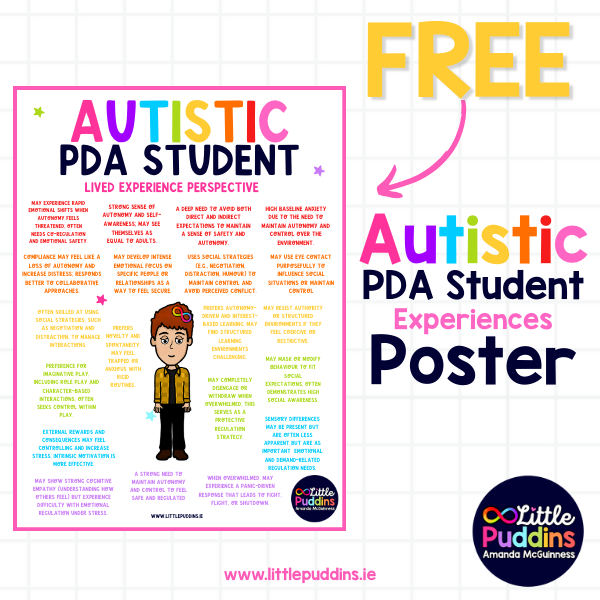
Free Resource: Lived Experience of a Autistic PDA Students
If you found this post helpful, download my free resource on the lived experience of a PDA student. This guide offers deeper insights into supporting PDA students in educational settings. Click here to download.
PDA References
Cat, S. (2018) PDA by PDAers: From Anxiety to Avoidance and Masking to Meltdowns. London: Jessica Kingsley Publishers.
Cat, S. (2019) The PDA Paradox: The Highs and Lows of My Life on a Little-Known Part of the Autism Spectrum. London: Jessica Kingsley Publishers.
Christie, P., Duncan, M., Fidler, R. and Healy, Z. (2011) Understanding Pathological Demand Avoidance Syndrome in Children: A Guide for Parents, Teachers and Other Professionals. London: Jessica Kingsley Publishers.
Fidler, R. and Gould, D. (2020) Navigating PDA in the USA: A Guide for Parents and Professionals. London: Jessica Kingsley Publishers.
Hoopmann, K. (2022) All About PDA: An Insight Into Pathological Demand Avoidance. London: Jessica Kingsley Publishers.
Kerbey, L. (2023) The Educator’s Experience of Pathological Demand Avoidance: An Illustrated Guide to Pathological Demand Avoidance and Learning. London: Jessica Kingsley Publishers.
Kerbey, L. (2024) The Teen’s Guide to PDA. London: Jessica Kingsley Publishers.
Sherwin, J.A. (2015) Pathological Demand Avoidance Syndrome – My Daughter is Not Naughty. London: Jessica Kingsley Publishers.
Get in Touch: Contact Amanda
Follow for Insights: Instagram @littlepuddins.ie
