
Autism Christmas at Home
Autism Christmas Advice
Christmas is often imagined as a season filled with tradition, sensory sparkle and social gatherings. Yet for many Autistic children, teens and adults, the festive period brings a significant shift in sensory intensity, routine and social expectation. These changes can increase cognitive load, emotional strain and feelings of unpredictability within the home. Understanding these experiences allows families to create Christmas environments that feel safe, respectful and genuinely enjoyable for Autistic individuals.
A neuroaffirmative Christmas at home is not about limiting celebration. It is about creating a festive season that honours Autistic sensory needs, communication styles, autonomy and unique ways of experiencing joy. When Christmas is approached through this lens, home becomes a place of comfort and stability rather than overwhelm.
Why Christmas at Home Can Be Difficult for Autistic Individuals
Many Autistic people thrive in environments where predictability, clarity and sensory balance are prioritised. Christmas often disrupts all three at once.
Sensory shifts
Lights, scents, textures, sounds and decorations appear suddenly and can make familiar environments feel unfamiliar or unpredictable.
Unexpected social demands
Visitors, greetings, conversations and unstructured gatherings introduce additional social pressure, which can heighten anxiety.
Changes in routines
School closures, later mornings, altered mealtimes and irregular family activities can reduce the stability that routines usually provide.
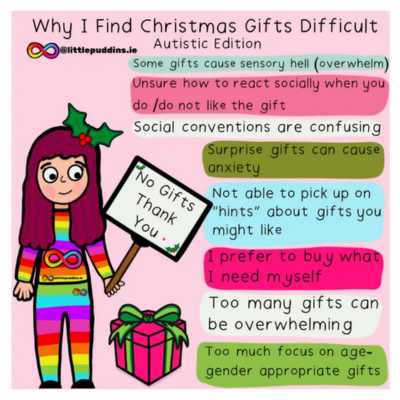
Complexities of gift giving
Festive gifting can involve multiple sensory, social and emotional layers. Many Autistic individuals find the unpredictability, rapid pace and social expectations surrounding gifts more stressful than enjoyable.
Recognising these challenges allows families to design a Christmas experience that supports regulation, comfort and joy.
Creating Autistic Safe Spaces at Home
A safe space at home is an essential protective factor during the Christmas season. It allows the Autistic individual to regulate their nervous system, retreat when needed and return to social engagement at their own pace.
Soft and predictable lighting
Bright or flashing lights can be overstimulating. Soft or steady lighting creates a calmer environment. Some families choose to place festive lighting only in certain rooms while keeping others unchanged.
A quiet retreat area
A dedicated corner or room free from decoration and noise can act as an anchor point for regulation. Access should be unrestricted and respected without question.
Visual clarity for daily plans
Visual schedules, visitor boards and simple written or pictorial plans help reduce uncertainty. Predictability supports emotional safety.
Access to sensory tools

Tools such as noise-reducing headphones, weighted blankets, handheld stims or fidgets should be readily available. No permission should be required to use them.
Scents kept minimal
Scented candles, incense or strong festive aromas may feel overwhelming. Consider scent-free alternatives.
Flexible decoration choices
Not all Autistic people find decorations comforting. Some prefer to help decide where decorations go, while others value having some rooms left as they are.
Preserving familiar routines
Keeping regular mealtimes, sleep schedules and daily rhythms intact helps stabilise the nervous system.
Supportive communication signals
Families can establish a simple gesture, card or phrase indicating a need for pause or withdrawal from social interaction.
Respect for pacing
Every person regulates differently. Offering ample time for transitions, meals, play and rest helps maintain emotional balance.
Supportive Christmas Accommodations at Home
Adapting Christmas at home begins with respecting Autistic preferences across daily activities. Even small accommodations can profoundly influence comfort and connection.
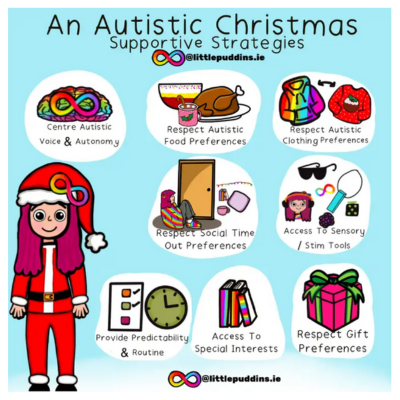
Food preferences
Familiar foods should always remain available. There is no obligation to eat traditional Christmas meals. Preferences are valid and should be honoured.
Clothing preferences
Festive clothing may involve textures or seams that cause discomfort. Comfortable clothing supports well-being and regulation.
Breaks from social interaction
Some Autistic individuals need structured time-out from visitors, conversation or noise. Breaks can occur before, during or after festive activities, and should be embraced as a healthy regulation strategy.
Sensory and stim access
Access to sensory supports is essential throughout the day. Stimming is often a vital regulation tool, especially during periods of heightened sensory or emotional demand.
Predictability and clarity
Supporting predictability through visual or verbal explanations helps reduce cognitive load and enhances emotional safety.
Special interests woven into the season
Special interests offer joy, stability and motivation. Integrating them into the festive period can help the individual experience Christmas in ways that feel genuinely meaningful.
Gift preference respect
Some Autistic individuals prefer predictable gifts, practical gifts or fewer gifts. Some prefer to choose their own. All preferences are valid and can reduce stress around gifting rituals.
A Christmas That Truly Feels Like Home
Autism Christmas at home is an opportunity to reimagine the season in a way that supports the Autistic individual’s nervous system, sense of safety and right to authentic participation. When families approach the festive period through a neuroaffirmative lens, Christmas becomes calmer, more accessible and more meaningful.
It becomes a season defined not by pressure or performance, but by connection, comfort and belonging.
