
St Patricks Day Autism Resources
Supporting Autistic Children on St Patrick’s Day: Neuroaffirmative Tips and Two Free Resources
St Patrick’s Day is a joyful celebration across Ireland and around the world. For many Autistic children, however, the sensory demands, unpredictability, crowds, noise, and changes in routine can create significant stress. A neuroaffirmative approach recognises that Autistic children do not need to be changed to fit the day. Instead, the environment, expectations, and supports can be adapted so the celebration feels predictable, accessible, and safe.
To help families and educators prepare for St Patrick’s Day, we have created two free downloadable resources:
A St Patrick’s Day Social Visual Guide
A St Patrick’s Day Matching Workbook
Both resources are designed to support understanding, reduce uncertainty, and offer Autistic-friendly ways to engage with the theme of the day.
Free Resource 1: St Patrick’s Day Social Visual Guide
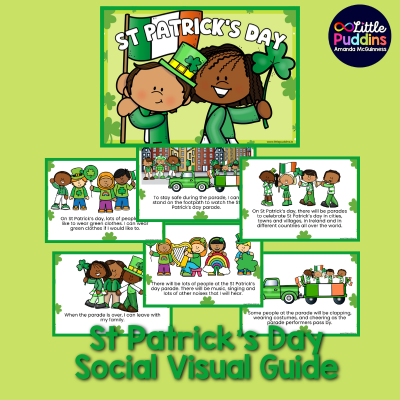
Our St Patrick’s Day Social Story and Visual Guide helps Autistic children understand what might happen on March 17. Through clear visuals and simple, concrete language, the guide explains key parts of the day such as parades, crowds, noise levels, clothing choices, and family routines.
On the pages, children can see illustrations of parade floats, people dressed in green, crowds, and musicians, all of which offer predictability about what they may encounter during celebrations.
This visual guide can be read in advance, reviewed on the morning of St Patrick’s Day, or used as part of a home or school support plan. It gives children time to process what they may see, hear, or experience, thereby reducing uncertainty and cognitive load.
Free Resource 2: St Patrick’s Day Matching Workbook
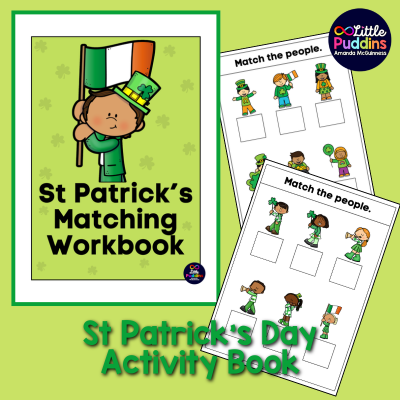
The St Patrick’s Day Matching Activity Book is a structured, visually clear matching resource designed to support understanding, attention, and engagement with the theme of the day. Activities include matching people, hats, shamrocks, boots, rainbows, and pots of gold.
This workbook can be used at home, in preschools, primary schools, after-school clubs, or therapy settings. It is especially useful for Autistic children who:
Benefit from visual structure
Prefer predictable, low-pressure engagement
Enjoy matching, sorting, and categorising activities
Require a calm alternative when celebrations feel overwhelming
The workbook includes symbol pieces that children can match onto each page, providing a regulated, independent activity aligned with the St Patrick’s Day theme.
Why St Patrick’s Day Can Be Overwhelming for Autistic Children
St Patrick’s Day often involves several elements that can increase sensory, cognitive, and emotional load. These may include:
Loud environments such as parades, marching bands, and cheering crowds
Unpredictable sensory input including whistles, music, movement of floats, and bright colours
Changes in routine including different clothing expectations or community events
Social expectations that may not align with an Autistic child’s communication or interaction style
Busy public spaces that can feel chaotic, unsafe, or overwhelming
These challenges are not a reflection of a child’s capabilities. They are a natural response to an environment that is not designed with neurodiversity in mind.
A supportive approach focuses on tuning into each child’s sensory profile, autonomy, and communication needs.
Neuroaffirmative Strategies for St Patrick’s Day
1. Prioritise predictability
Provide clear explanations about what the day might look like. Use visual supports such as the free social story to reduce cognitive uncertainty. Review possible routes, timeframes, or alternatives such as watching a parade from a quiet location.
2. Honour sensory needs
Many Autistic children experience sensory overload during parades or busy events. Strategies that help include:
Noise-reducing headphones
Sunglasses or hats for brightness
A comfort item or sensory tool
Access to quieter viewing spaces
Permission to step away and return when ready
The goal is to support regulation, not endurance.
3. Offer choice and autonomy
Some Autistic children enjoy parades, while others prefer to avoid them. Both are equally valid. Provide real choices about:
Whether to attend
How long to stay
What clothing feels comfortable (green clothing is optional, as noted in the social story on page 7)
Respecting autonomy reduces anxiety and supports emotional safety.
4. Prepare for sensory load and transitions
Transitions into and out of busy environments can be challenging. Preparing ahead, using visual sequences or step-by-step plans, helps children feel grounded.
After the celebration or activity, plan time for decompression. This may include quiet play, movement breaks, or time alone.
5. Create Autistic-friendly alternatives
Some families choose quieter celebrations such as:
Baking at home
Creating art or crafts
Completing the free matching workbook
Watching parades online
Reading stories about Irish culture
These alternatives still honour the spirit of the day without placing demands on the child.
How Schools and Early Years Settings Can Support Autistic Learners
Share the social visual guide with families ahead of time
Offer designated quiet spaces on the day
Avoid compulsory participation in parades or dress-up
Provide structured, predictable activities like the matching book
Use clear timetables and gentle transitions
Avoid loud surprise events, whistles, or forced cheering
Offer sensory supports without requiring explanation or justification
Schools that adopt these practices create inclusive, accessible experiences for Autistic children while supporting emotional well-being.
Download Your Free St Patrick’s Day Autism Resources
We are delighted to offer both resources free to families, schools, and professionals:
St Patrick’s Day Social Visual Guide
A clear, child-friendly guide to help Autistic learners understand and prepare for the day.St Patrick’s Day Matching Activity Book
A structured, engaging, visually based workbook aligned with the theme of the day.
These resources can be shared with parents, teachers, SNAs, and early years educators to support Autistic children in ways that feel respectful, predictable, and affirming.
