Free Autism Social Stories
Why We Are Moving from Social Stories to Social Visual Guides
For many years, social stories have been widely used to support Autistic children and young people to navigate everyday situations.
In response to growing Autistic scholarship and neuroaffirmative practice, there is a clear shift towards Social Visual Guides as a more accessible, and effective form of support.
What Is a Social Visual Guide?
A Social Visual Guide is a preparatory, information-based support that combines clear visuals with concise, factual language to reduce uncertainty and increase predictability. Its purpose is not to teach social rules or direct behaviour, but to provide Autistic people with the information they need to participate on their own terms.
Social Visual Guides explicitly answer key questions such as when something will happen, where it will take place, who will be involved, what to expect, how the experience will unfold, and what supports are available if needed. By making implicit expectations explicit, the responsibility for accessibility is shifted from the individual to the environment.
Why Social Visual Guides?
Social Visual Guides differ fundamentally in their intent and design. They are grounded in neuroaffirmative principles, aligned with Autistic processing strengths such as visual learning and monotropic attention, and informed by contemporary frameworks including the double empathy problem and the understanding that Autistic life outcomes are shaped by environments.
Rather than telling an Autistic person what they should do, a Social Visual Guide offers clarity, transparency, and choice.
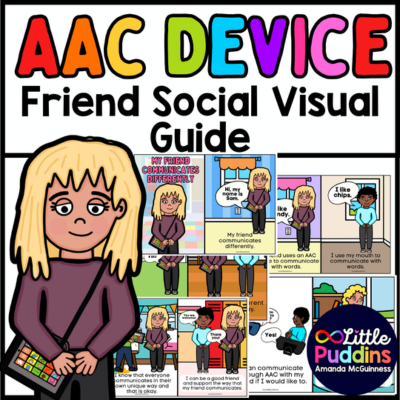
Social Visual Guides as an Accessibility Tool
Social Visual Guides function as environmental accommodations. They reduce cognitive load, support executive functioning, and promote regulation by removing ambiguity. They also support inclusion by ensuring that essential information is available in formats that are accessible to a wide range of learners, not only Autistic people.
Used across home, school, healthcare, and community settings, Social Visual Guides support participation without demanding compliance or behavioural performance.
Free Social Visual Guides Included
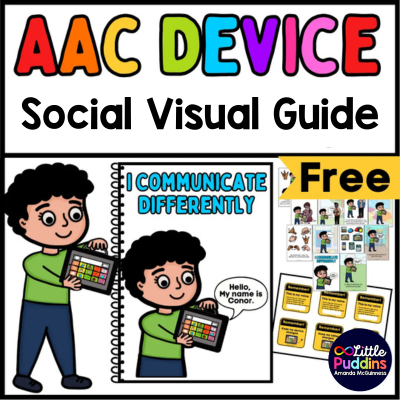
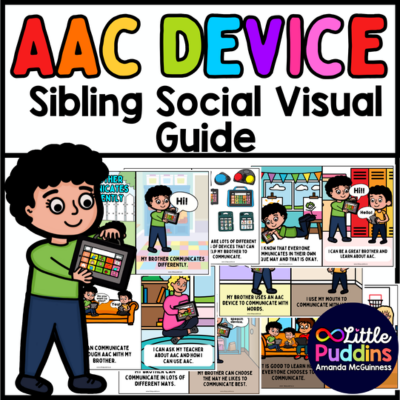
This post includes access to several free Social Visual Guides designed to support common situations and transitions. These guides are intended as sign-posting resources and can be used by families, educators, and professionals as practical examples of neuroaffirmative visual supports in action.
Each guide reflects best practice in accessible communication and can be adapted to reflect individual needs, preferences, and contexts.
Moving Forward
The move towards Social Visual Guides represents a broader shift in how support is conceptualised. It is a move away from correcting behaviour and towards creating environments that are predictable, respectful, and accessible.
When we prioritise clarity over compliance and information over instruction, we create conditions where Autistic people can engage authentically and with dignity.