Shane Hollander & Autistic Representation
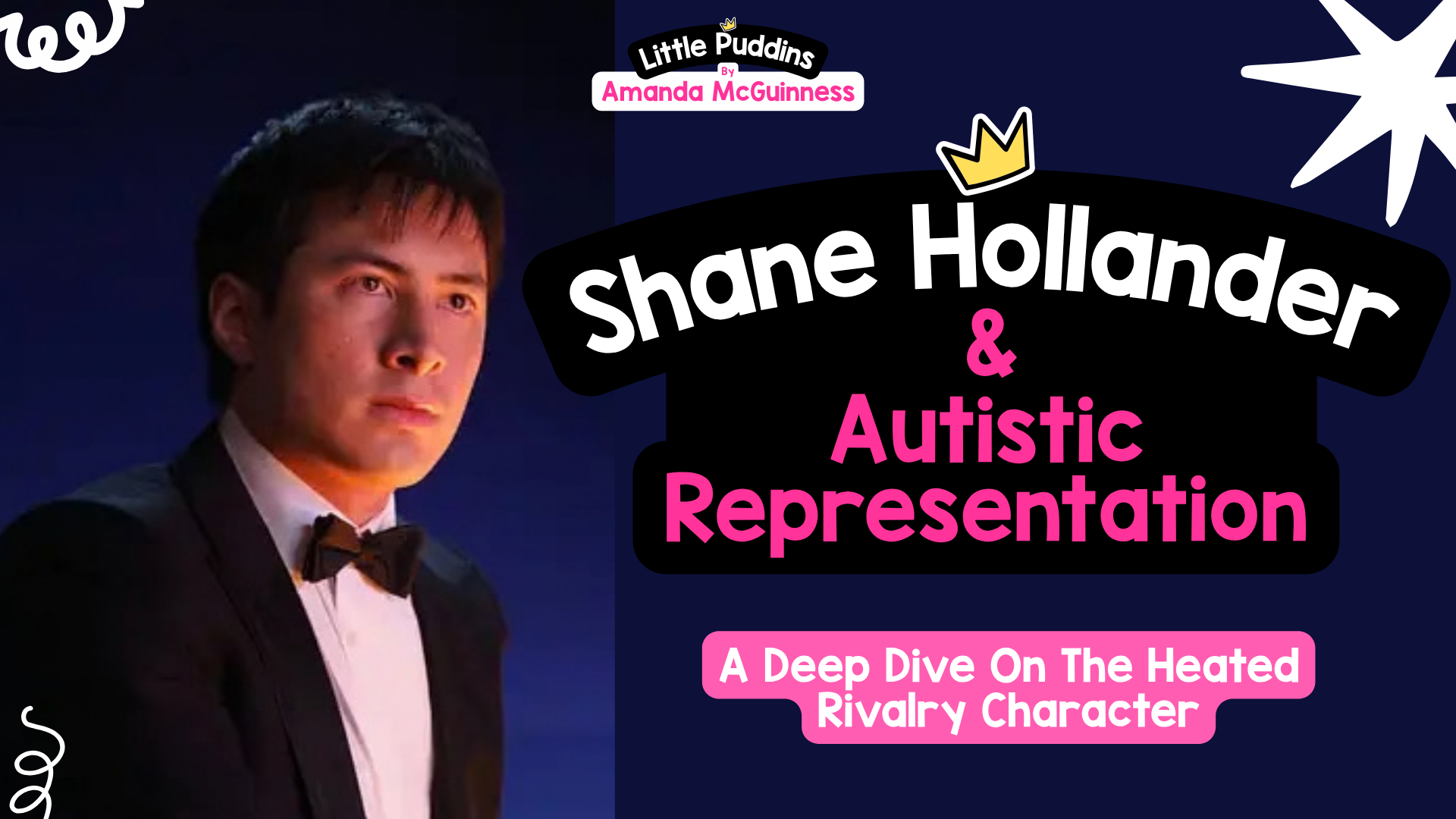
Shane Hollander and Autistic Representation in Heated Rivalry
Autistic representation in popular media has historically been shaped by stereotype, simplification, and deficit-focused narratives. In recent years, however, audiences have begun to demand portrayals that reflect Autistic lived experience with greater nuance, authenticity, and respect. One character who has emerged as particularly resonant within Autistic community spaces is Shane Hollander from Heated Rivalry.
Across online Autistic communities, including Reddit discussion boards and long-form fan analysis, Shane Hollander has been widely recognised as reflecting an internal world that feels familiar to many Autistic adults. This recognition is significant not only because of its depth, but because it is not speculative. Both the author, Rachel Reid, and the actor portraying Shane, Hudson Williams, have explicitly confirmed that the character is Autistic, grounding this representation in intentional authorship and performance rather than audience inference.
Heated Rivalry and Character-Driven Storytelling
Heated Rivalry, adapted from Rachel Reid’s novel, centres on the long-term relational and emotional development of two professional ice hockey players. What distinguishes the series within a crowded media landscape is its commitment to character-driven storytelling. Rather than relying on exposition or overt labelling, the show allows character psychology, relational patterns, and emotional processing to emerge organically.
Within this context, Shane’s Autistic identity is integrated rather than foregrounded. His experience is not treated as a narrative device or a problem to be resolved, but as part of a whole person navigating intimacy, pressure, ambition, and vulnerability.
Authorial Intent and Canonical Confirmation
Rachel Reid has acknowledged in interviews that Shane is canonically Autistic, explaining that his character was written with a specific cognitive and emotional profile in mind. This confirmation is particularly important for Autistic audiences, many of whom have spent a lifetime encountering characters who are retrospectively labelled as “coded” or whose Autistic traits are denied or minimised by creators.
By affirming Shane’s Autistic identity, Reid reframes the character as an intentional representation rather than an accidental one. This clarity matters. It validates Autistic readers and viewers who recognised themselves in Shane long before any external confirmation, and it challenges the assumption that Autistic experience must be explicit, instructional, or explanatory to be real.
Hudson Williams’s Performance and Internal Experience
Hudson Williams’s portrayal builds on this foundation with exceptional care. In interviews, Williams has spoken about approaching the role with an understanding that Shane is Autistic, and about how this knowledge shaped his performance. Rather than externalising Autism through exaggerated behaviours or familiar media tropes, he focused on conveying Shane’s internal processes.
These include his intensity of focus, his emotional regulation, his anxiety under social scrutiny, and his deeply thoughtful approach to relationships. Autistic community discussions frequently note that this performance feels authentic precisely because it prioritises internal coherence over visible markers. It reflects how Autism is lived from the inside, rather than how it is often observed from the outside.
Within a culture still learning how to hold neurodiversity with nuance, this kind of portrayal does more than add visibility. It contributes to cultural literacy, offering audiences an opportunity to understand Autistic experience as human, multidimensional, and worthy of respect rather than explanation.
Direction, Stillness, and Narrative Trust
The portrayal of Shane Hollander is further strengthened by the directorial approach taken in Heated Rivalry. Director Jacob Tierney makes deliberate choices that create space for stillness, internal processing, and emotional restraint. These elements are central to many Autistic lived experiences, yet are rarely afforded narrative legitimacy on screen.
Through pacing, framing, and tone, Shane’s scenes prioritise internal logic and emotional authenticity rather than spectacle. This approach reflects a trust in both the character and the audience, and supports a form of representation that honours Autistic identity as culturally and psychologically rich rather than narratively inconvenient.
In collaboration with Rachel Reid’s authorial intent and Hudson Williams’s deeply attuned performance, this direction enhances the integrity of Shane’s portrayal and reinforces the show’s commitment to respectful representation.
Why This Representation Matters
For Autistic adults, representation of this nature carries significant weight. Shane Hollander is neither infantilised nor positioned as a problem to be solved. His strengths and challenges are contextual, relational, and integrated.
This portrayal offers recognition without spectacle, affirmation without simplification, and visibility without harm. It stands as an example of how Autistic characters can be written and performed with dignity, depth, and trust in Autistic humanity.
Moving Representation Forward
The impact of Shane Hollander’s portrayal extends beyond fandom spaces. It contributes to broader cross-neurological conversations about what authentic Autistic representation can and should look like in contemporary media. In that sense, Rachel Reid, Jacob Tierney, and Hudson Williams deserve genuine praise for helping to move representation forward in ways that align with Autistic lived experience and neuroaffirmative values.
As media continues to shape public understanding of Autism, portrayals like this matter. They demonstrate that when Autistic characters are created and performed with intention, respect, and nuance, representation becomes not only visible, but meaningful.
Heated Rivalry is a show not to be missed.