
Apps Supporting Autistic Wellbeing
(This post was written in 2023)
Apps Supporting Autistic Wellbeing
Autistic wellbeing is shaped by social, environmental, and systemic factors, Many Autistic people experience ongoing exposure to ableism, stigma, and narrow expectations around communication, behaviour, and participation. These pressures can contribute to chronic stress, heightened cognitive load, and reduced psychological safety. Supporting Autistic wellbeing therefore requires approaches that prioritise autonomy, accessibility, and respect for diverse ways of being.
Within this context, wellbeing apps can function as supportive, self-directed tools rather than corrective interventions. When chosen thoughtfully, digital tools can offer Autistic individuals accessible ways to support regulation, emotional balance, and daily functioning in environments that are not always designed with neurodivergent needs in mind.
Wellbeing apps can be particularly helpful because they support autonomy and choice. Individuals can decide when, how, and whether to engage, without external pressure or observation. Many apps also provide sensory or visual input that supports calming, grounding, or focus. Predictable interfaces and structured layouts can reduce cognitive load and support executive functioning. Digital tools can also offer private regulation options, which may be important in public or shared spaces. For some people, journalling, reflection, or guided relaxation within an app can support emotional processing without the demand of spoken communication.
It is important to note that no single app will be appropriate for all Autistic people. These tools are optional supports and should always be used flexibly, based on individual preference, sensory profile, and context.
Autism Well Being Apps
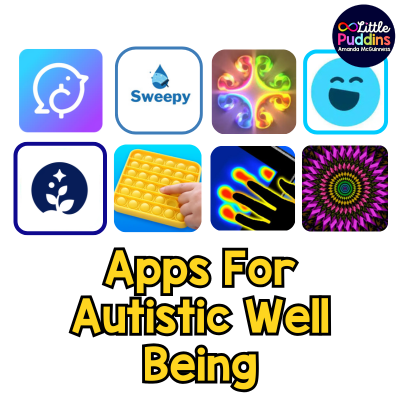
Finch is a self-care and wellbeing app available on iOS and Android. It combines emotional check-ins, gentle habit support, and reflective journalling within a visually structured environment. The app supports emotional awareness and routine-building without relying on pressure or compliance-based prompts.
Sweepy is a home organisation app available on iOS and Android. It breaks household tasks into manageable steps and presents them visually, which can support executive functioning and reduce overwhelm related to planning, sequencing, and task initiation.
Fluid is an interactive visual app available on iOS and Android. It responds to touch with flowing visual patterns and is commonly used as a sensory regulation or grounding tool. The continuous visual feedback can support calming and focus.
BetterSleep is a sleep and relaxation app available on iOS and Android. It offers soundscapes, guided relaxation, and sleep-focused content. For Autistic individuals who experience difficulties with sleep, predictable auditory input can support regulation and bedtime routines.
Antistress is available on iOS and Android and includes a collection of simple interactive activities designed to provide repetitive sensory input. These digital fidgets can support self-regulation and reduce agitation.
Heat Pad is an iOS-based visual interaction app that responds to finger movement by generating colour-based patterns such as gradients and waves. It can be used as a calming visual focus or a form of sensory exploration.
Mesmerize is a meditation and relaxation app available on iOS and Android. It combines guided meditation with immersive visuals and music. The multimodal design may be more accessible for individuals who find traditional meditation formats challenging.
Tappy Fidget is available on iOS and Android and provides tapping and sliding interactions with responsive sound and haptic feedback. It can support sensory regulation and focus, particularly in environments where physical fidget tools may not be available.
Download your FREE Resource
A downloadable PDF version of this curated list is available for those who wish to save or share the information. This resource is provided as signposting information only and is intended to support informed choice rather than prescribe specific tools.
Wellbeing apps are not a substitute for relational support, environmental accommodation, or systemic change. However, when used intentionally, they can form part of a broader wellbeing toolkit that supports Autistic autonomy, regulation, and self-understanding.
