
Free Printable Daily Visual Schedule
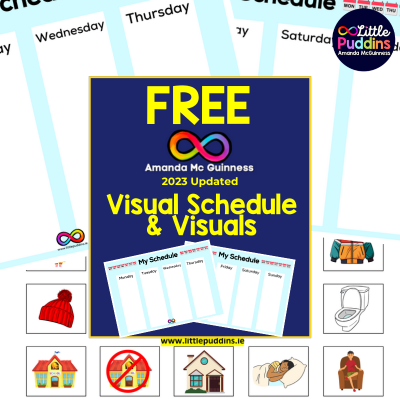
Free Autism Visual Schedule: Supporting Predictability at Home and School
Visual schedules are one of the most effective and widely used supports for Autistic children and teenagers. They provide clarity, reduce uncertainty, and support understanding of what is happening now and what will happen next. For many Autistic learners, visual information is more accessible than spoken language, particularly during times of transition, stress, or sensory overload.
This free Autism visual schedule has been designed to support Autistic children and teens across both home and school contexts, offering a flexible, low-demand way to increase predictability and felt safety throughout the day.
How visual schedules support Autistic children and teens
Visual schedules externalise information that would otherwise need to be held in working memory. This reduces cognitive load and supports executive functioning, especially for children who find planning, sequencing, or transitioning between activities challenging.
Visual schedules can help by:
Making daily routines more predictable
Reducing anxiety linked to uncertainty
Supporting smoother transitions between activities
Reducing reliance on repeated verbal instructions
Supporting autonomy and independence
Importantly, visual schedules are not behaviour management tools. They are access tools that support understanding and regulation.
Using visual schedules at home
At home, visual schedules can support morning routines, after-school transitions, hygiene tasks, mealtimes, and bedtime. They help children see what is coming next, which can reduce resistance and overwhelm, particularly during busy or low-energy times of day.
This free schedule includes clear daily layouts and visual icons that can be adapted to suit individual routines, preferences, and energy levels, allowing families to co-create schedules that work for their household.
Using visual schedules at school
In school settings, visual schedules support classroom transitions, changes in routine, and expectations across the school day. They are particularly helpful during unstructured times such as arrival, break times, or the end of the day.
A consistent visual schedule can support emotional regulation, increase participation, and reduce anxiety without placing additional demands on the Autistic student.
A neuroaffirmative approach to visual supports
Visual schedules should always be used collaboratively and flexibly. They are not about compliance or control. When used in a neuroaffirmative way, they empower Autistic children and teens by giving them access to information in a format that supports their processing style.
The free Autism visual schedule is available to download and can be used, adapted, and revisited as routines change over time, supporting Autistic learners in environments that feel clearer, calmer, and more predictable
