Autism Calm Down Cards
Supporting Autistic Wellbeing Through Everyday Strategies
(This post is supported by a free visual resource)
Supporting Autistic wellbeing is not about stopping big feelings or expecting children to calm themselves on demand. It is about helping Autistic children feel understood, supported, and safe.
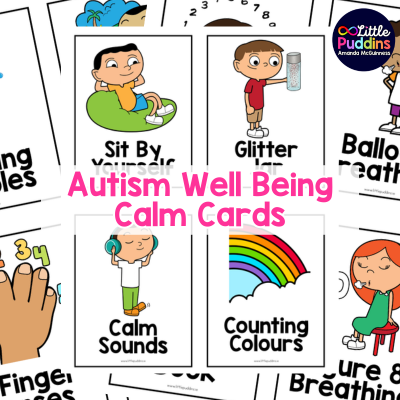
This post is accompanied by a free set of visual wellbeing and regulation cards, created to give Autistic children clear, respectful options for supporting themselves during moments of stress, frustration, or overwhelm.
Understanding wellbeing for Autistic children
Autistic children experience the world differently. Busy environments, changes in routine, sensory input, social demands, or tiredness can all make daily life feel harder. When a child becomes upset, withdrawn, or unsettled, this is not misbehaviour or refusal. It is communication.
Supporting wellbeing means responding with understanding rather than correction.
Why visual supports help
When children are upset, it can be hard for them to explain what they need or remember what helps. Visual supports make options visible and easier to access without needing lots of talking.
Visual wellbeing supports can:
Reduce pressure to explain feelings with words
Offer clear choices rather than instructions
Help children recognise what helps them feel better
Support independence while still offering reassurance
Normalise taking breaks and using support strategies
They are not about making children behave differently. They are about helping children feel better.
What this free resource includes
The free visual cards that accompany this post show a range of gentle, supportive strategies that children can choose from. These include ideas such as listening to calming sounds, counting, breathing slowly, moving their body, squeezing a tactile object, resting, reading, or holding a favourite toy
Not every strategy will suit every child, and that is expected. The purpose is choice, not completion.
How these visual supports can be part of everyday support at home
These cards are not tools to prompt children to calm themselves or manage distress independently. They are shared supports that help adults and children notice what might feel supportive in a moment.
Rather than introducing them as something a child should use, they can simply exist as part of the environment, just like books, toys, or comfort items. Adults may notice a card and gently reference it, or use it themselves to model regulation and care.
Support at home might look like:
An adult noticing distress and offering presence first
Sitting alongside the child rather than stepping away
Respecting when a child does not want any strategy at all
Understanding that rest, withdrawal, or closeness can be supportive
Nothing needs to be practised, chosen, or completed. The child is not expected to engage with the cards for support to be valid.
Support can happen anywhere the child feels safest. There is no requirement for a separate space, routine, or designated area.
Wellbeing does not need to be contained.
How these supports fit in school environments
In school, these visuals are access supports, not behaviour tools. They are not used to redirect, correct, or remove children from learning spaces.
When adults remain present, calm, and responsive, children are more likely to feel safe enough to move through distress. Visual supports can sit alongside this adult support, offering information without pressure.
Support in school might look like:
Offering flexibility without drawing attention
Prioritising relationship and safety over productivity
Children should never be isolated or excluded because they are struggling. Distress is a signal for support, not separation.
Wellbeing is shared, not something children must do
Autistic wellbeing is not built by teaching children to regulate themselves better. It is built when adults take responsibility for creating environments that are kinder, calmer, and more flexible.
These visual cards are not about fixing emotions or changing behaviour. They exist to support connection, understanding, and shared care.
The free visual wellbeing support cards that accompany this post are offered as one small way to support Autistic children without judgement, pressure, or expectation.
Wellbeing grows through trust, safety, and relationship. It is something we build with children, not something we ask them to manage alone.
