
PDA Book Recommendations
Essential Reads for Understanding Demand Avoidance, Regulation, and Connection
If you are supporting an Autistic individual with a demand avoidant profile, the right resources can fundamentally shift your understanding from behaviour-focused interpretations to a deeper appreciation of nervous system responses, autonomy, and relational safety.
This curated list of PDA book recommendations brings together some of the most valuable and widely respected texts in the field. Each book offers practical, compassionate, and evidence-informed insights that support connection, reduce perceived demand, and enhance emotional understanding.
Whether you are a parent, professional, or Autistic individual, these books provide meaningful frameworks that move beyond compliance and towards trust-based, neuroaffirmative support.
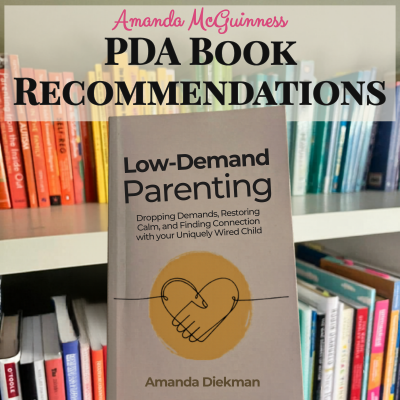
Low-Demand Parenting: Dropping Demands, Restoring Calm, and Finding Connection with Your Uniquely Wired Child – Amanda Diekman
This book introduces a transformative approach centred on reducing perceived demands to support regulation and connection. Amanda Diekman reframes behaviour through a nervous system lens, emphasising that what may appear as “refusal” is often a stress response linked to overwhelm.
Drawing on lived experience, the book explores how lowering expectations, prioritising connection, and removing pressure can restore calm within families. It offers practical, accessible strategies for shifting from control-based parenting to relational, responsive support.
Why this book is useful:
Provides a clear framework for understanding demand avoidance through autonomy and safety
Offers real-life examples that are highly relatable for families
Supports a shift towards connection-led parenting, particularly relevant for PDA profiles
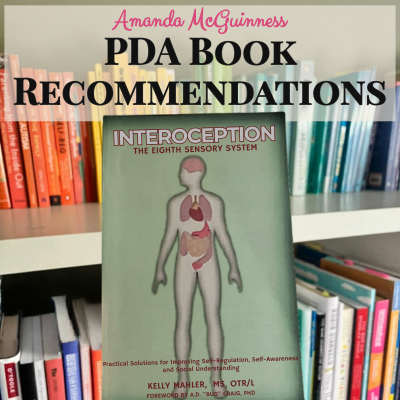
Interoception: The Eighth Sensory System – Kelly Mahler
Kelly Mahler’s work on interoception is foundational for understanding internal body awareness and its role in emotional regulation. Interoception refers to the ability to sense and interpret internal bodily signals such as hunger, thirst, pain, and emotional states .
This book bridges complex neurobiological concepts with practical strategies, helping readers understand how differences in interoception can impact regulation, communication, and daily functioning.
Why this book is useful:
Explains the critical link between body awareness and emotional regulation
Provides practical tools to support self-awareness and co-regulation
Deepens understanding of why behaviours may emerge when internal cues are difficult to interpret
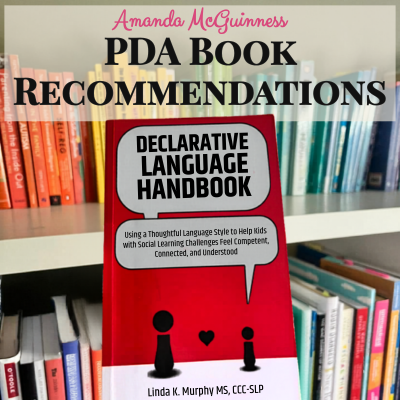
The Declarative Language Handbook – Linda K. Murphy
Linda K. Murphy presents a powerful communication framework rooted in curiosity, shared observation, and co-regulation. Declarative language shifts communication away from demands and directives, instead supporting connection and understanding.
The handbook offers practical examples of how to model thinking, reduce pressure, and support engagement through language that invites rather than instructs. It aligns closely with approaches that reduce perceived threat and support autonomy.
Why this book is useful:
Provides a clear alternative to directive, demand-based communication
Supports co-regulation and relational safety through language
Offers practical scripts and examples that can be immediately applied
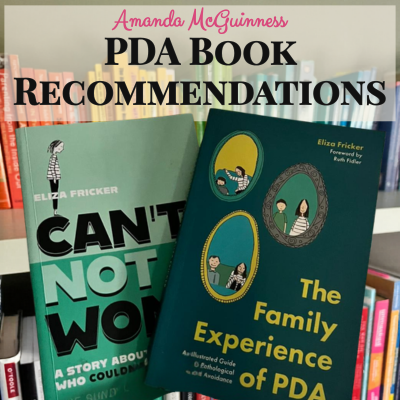
The Family Experience of PDA – Eliza Fricker
This visually engaging and deeply reflective book explores the lived experience of families navigating PDA. Through illustrations and narratives, Eliza Fricker captures the emotional complexity, challenges, and moments of connection within family life.
It offers a compassionate perspective that validates both the Autistic individual and the family system, highlighting the importance of understanding, flexibility, and relational support.
Why this book is useful:
Provides powerful insight into lived experience
Supports empathy and understanding across the family unit
Uses accessible visuals to communicate complex emotional experiences
Can’t Not Won’t: A Story About a Child Who Couldn’t Go to School – Eliza Fricker
This book explores school-based anxiety and demand avoidance through a narrative format. It highlights how environments, expectations, and misunderstanding can contribute to distress and school avoidance.
Through storytelling, it reframes behaviour as a response to overwhelm rather than opposition, making it a valuable resource for both families and educators.
Why this book is useful:
Highlights the impact of school environments on Autistic wellbeing
Supports a shift from behaviour-based to needs-based understanding
Encourages more flexible, compassionate educational approaches
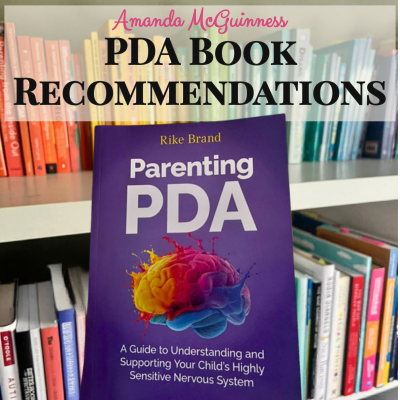
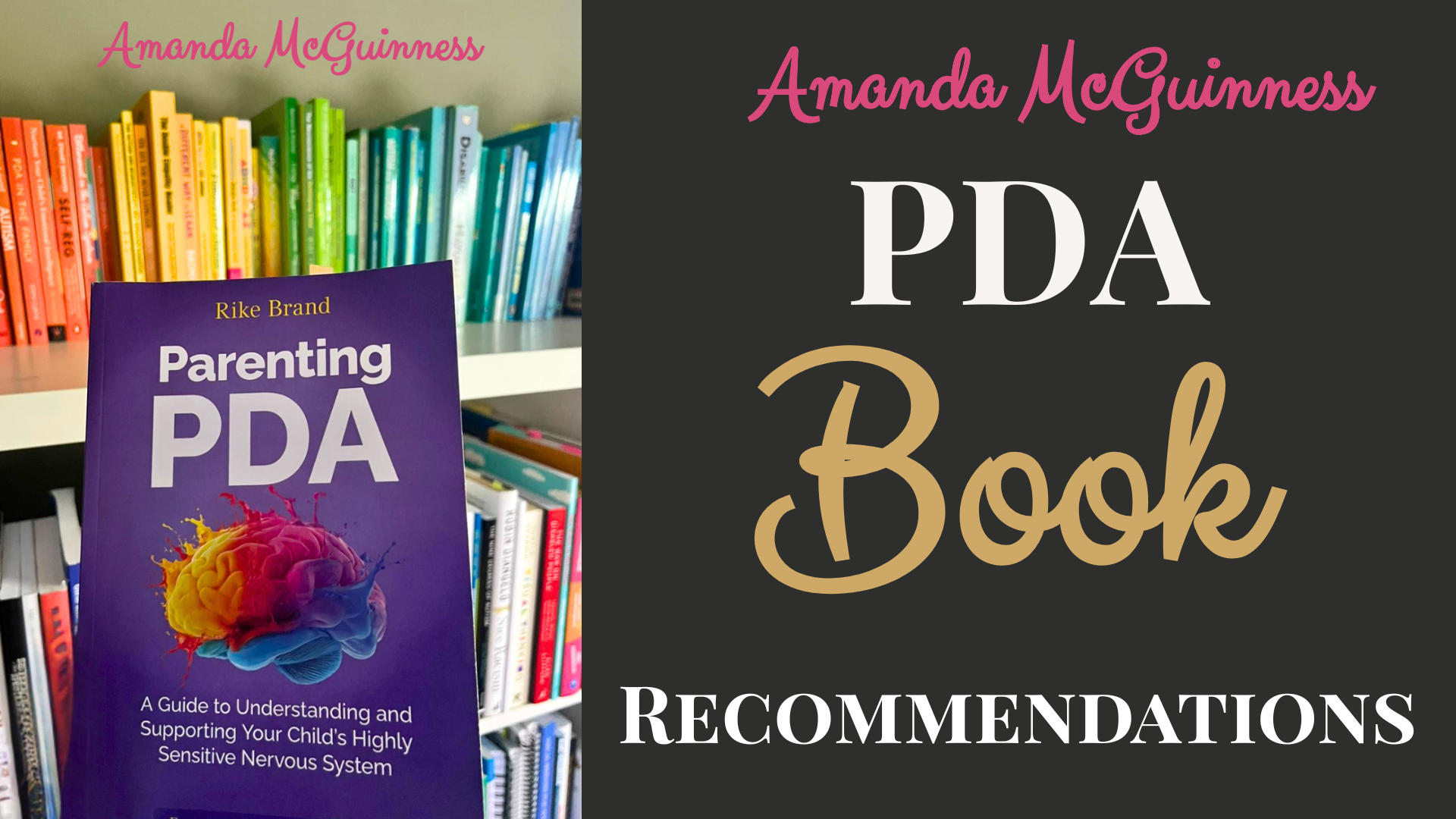
Parenting PDA: A Guide to Understanding and Supporting Your Child’s Highly Sensitive Nervous System – Rike Brand
Rike Brand offers a structured, accessible guide to understanding PDA through the lens of a highly sensitive nervous system. The book explores how anxiety, perception of demand, and environmental factors influence behaviour.
It combines theory with practical strategies, supporting caregivers to adapt their approach in ways that reduce stress and support regulation.
Why this book is useful:
Provides a clear explanation of PDA as a nervous system response
Offers practical strategies grounded in understanding rather than control
Supports parents in adapting expectations and environments
The Value of PDA Literature
Literature plays a vital role in shaping both understanding and practice. For families, texts often represent the first moment of recognition and validation. For professionals, they can serve as a catalyst for shifting away from deficit- and compliance-based approaches towards trust-based, autonomy-supportive practice. For Autistic children and adolescents, books can provide affirmation, belonging, and tools for self-understanding.
By collating resources across these readership levels, the PDA Book Recommendations Guide seeks to strengthen inclusive, affirming, and evidence-informed approaches to supporting Autistic people with a PDA profile.
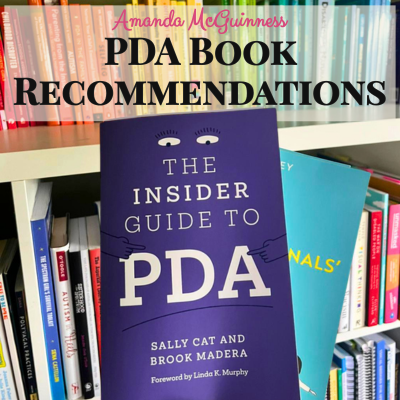
The Insider’s Guide to PDA – Sally Cat and Brook Madera
Written from a lived experience perspective, this book offers invaluable insight into what PDA feels like from the inside. It explores autonomy, anxiety, and the constant negotiation of demands from a deeply personal viewpoint.
This perspective is essential in ensuring that support approaches remain respectful, informed, and aligned with the Autistic experience.
Why this book is useful:
Centres Autistic voice and lived experience
Provides insight into internal experiences often not visible externally
Supports more authentic, respectful, and effective support approaches
PDA Book Recommendation Guide
The full PDA Book Recommendations Guide is available for download. It has been designed for ease of navigation and practical use across family, educational, and professional contexts. Click here to download your free PDA Book Recommendation Guide.

References:
Pathological Demand Avoidance (PDA) and the Nervous System:
1. Foundational Understanding of PDA:
Newson, E., Le Maréchal, K. and David, C. (2003) ‘Pathological demand avoidance syndrome: a necessary distinction within the pervasive developmental disorders’, Archives of Disease in Childhood, 88(7), pp. 595–600. Available at: https://adc.bmj.com/content/88/7/595 (Accessed: 1 February 2025).
Johnson, M. and Saunderson, H. (2023) ‘Examining the relationship between anxiety and pathological demand avoidance in adults: A mixed methods approach’, Frontiers in Education, 8, Article 1179015. Available at: https://www.frontiersin.org/articles/10.3389/feduc.2023.1179015/full (Accessed: 2 February 2025).
O’Nions, E., Happé, F., Viding, E. and Noens, I. (2021) ‘Extreme demand avoidance in children with autism spectrum disorder: Refinement of a caregiver-report measure’, Advances in Neurodevelopmental Disorders, 5(3), pp. 1–13. Available at: https://link.springer.com/article/10.1007/s41252-021-00203-z (Accessed: 1 February 2025).
O’Nions, E., Christie, P., Gould, J., Viding, E. and Happé, F. (2014) ‘Development of the “Extreme Demand Avoidance Questionnaire” (EDA-Q): Preliminary observations on a trait measure for pathological demand avoidance’, Journal of Child Psychology and Psychiatry, 55(7), pp. 758–768. Available at: https://acamh.onlinelibrary.wiley.com/doi/10.1111/jcpp.12149 (Accessed: 2 February 2025).
2. Neurophysiological Perspectives:
Porges, S.W. (2011) The Polyvagal Theory: Neurophysiological Foundations of Emotions, Attachment, Communication, and Self-Regulation. New York: W.W. Norton & Company.
Porges, S.W. (2001) ‘The polyvagal theory: phylogenetic substrates of a social nervous system’, International Journal of Psychophysiology, 42(2), pp. 123–146.
3. Insights for PDA Practitioners:
O’Nions, E., Happé, F., Viding, E. and Noens, I. (2021) ‘Extreme demand avoidance in children with autism spectrum disorder: Refinement of a caregiver-report measure’, Advances in Neurodevelopmental Disorders, 5(3), pp. 1–13. Available at: https://link.springer.com/article/10.1007/s41252-021-00203-z (Accessed: 1 February 2025)
Haire, L., Symonds, J., Senior, J. and D’Urso, G. (2024) ‘Methods of studying pathological demand avoidance in children and adolescents: A scoping review’, Frontiers in Education, 9, Article 1230011. Available at: https://www.frontiersin.org/articles/10.3389/feduc.2024.1230011/full (Accessed: 1 February 2025).
4. Neuroscience and Trauma-Informed Perspectives:
Porges, S.W. (2009) ‘Reciprocal influences between body and brain in the perception and expression of affect: A polyvagal perspective’, The Healing Power of Emotion: Affective Neuroscience, Development & Clinical Practice, pp. 27–54.
5. Real-World Lived Experience and Clinical Application:
Christie, P. (2018) ‘PDA… the story so far’, PDA Society Resources. Available at: https://www.pdasociety.org.uk/resources/phil-christie-pda-the-story-so-far/ (Accessed: 1 February 2025).
