
PDA and Praise Rejection
Why Praise Can Sometimes Feel Like Pressure for Autistic People with a PDA profile
Praise is generally understood as something positive. Many of us grow up believing that praise builds confidence, encourages participation, and strengthens relationships. Parents, teachers, and professionals are often taught to praise frequently and enthusiastically in order to support children emotionally.
Yet for many with a PDA profile, praise can feel unexpectedly uncomfortable, overwhelming, or even emotionally unsafe.
A PDA child/teen may appear distressed after being complimented, dismiss encouraging comments, stop engaging in an activity they previously enjoyed, or react defensively to positive feedback. These responses are often misunderstood as low self-esteem, oppositional behaviour, or an inability to accept kindness. In reality, the experience is usually far more complex and deeply connected to how the nervous system processes pressure, expectation, and autonomy.
For many Autistic PDA individuals, praise is not experienced as a simple moment of encouragement that begins and ends in the present. Instead, it can immediately create a sense of future expectation.
A comment such as “You did that brilliantly” may internally translate into:
What if they expect this every time now?
What if I cannot do it again?
What if I disappoint them next time?
What was initially an enjoyable or manageable activity can suddenly begin to feel loaded with pressure. The nervous system may shift away from enjoyment and into anticipation, monitoring, and self-protection.
This is particularly important within PDA because the nervous system is often highly sensitive to perceived demands, including indirect or implied demands. Praise can unintentionally carry an invisible expectation to repeat, maintain, or perform at the same level again in the future.
Praise can also introduce a feeling of evaluation. Traditional praise often places the adult in the role of observer, judge, or assessor. Even when delivered warmly, it may reinforce the idea that someone else is determining what is “good,” successful, acceptable, or worthy of approval.
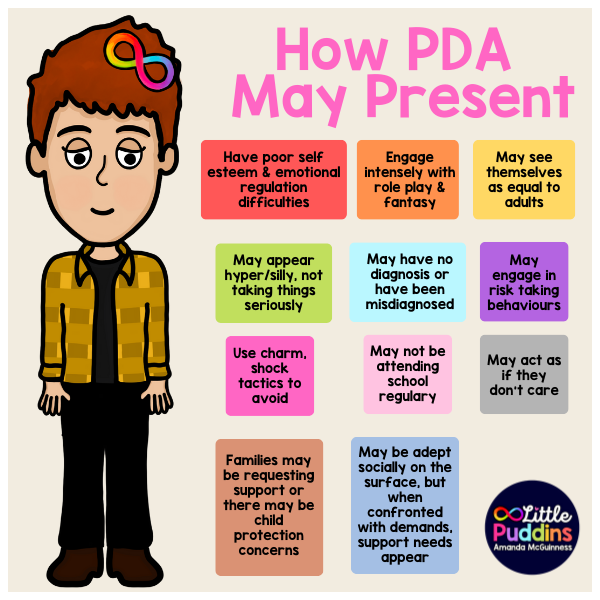
For a person with a PDA profile, this experience can heighten:
self-consciousness
emotional exposure
fear of failure
feelings of being watched or scrutinised
pressure to maintain performance
Many Autistic people with a PDA profile, describe feeling safest in relationships where they are not constantly analysed, monitored, corrected, or evaluated. This includes positive evaluation. In these moments, the nervous system may become less focused on the activity itself and more focused on avoiding future pressure, preserving autonomy, or protecting against vulnerability.
This does not mean warmth, encouragement, or connection should be removed from relationships. Rather, it invites us to think differently about how we communicate appreciation and connection.
Often, PDA individuals may respond more positively to communication that feels observational rather than evaluative.
For example, instead of; “Good job, that’s amazing”, a more regulating alternative may be:
I noticed how focused you were while doing that
You spent a long time working on that
That seemed important to you
I liked hearing your ideas about that
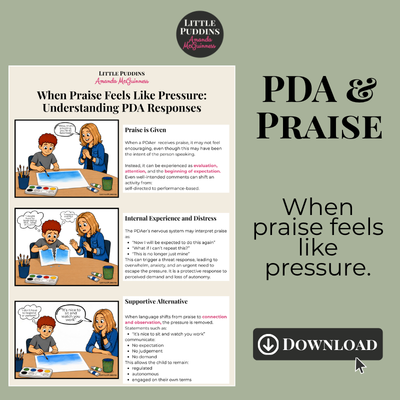
These kinds of comments communicate presence, interest, and connection without placing the person into a performance-based dynamic.
Within PDA, it is important to remember that demands are not always direct instructions. Demands can also be emotional, relational, implied, anticipatory, or socially embedded. Praise may unintentionally communicate:
Keep doing this
This is who you should be
This pleased me
This is the standard now
For a nervous system already working hard to manage pressure and preserve autonomy, positive attention can sometimes feel activating.
Some PDA individuals withdraw from activities immediately after receiving praise. Adults may interpret this as avoidance of success or a lack of confidence. The withdrawal may actually represent an attempt to escape the pressure now attached to the activity.
Why Praise Can Sometimes Reduce a PDA Individual’s Sense of Autonomy
From the outside, the praise may appear harmless or encouraging. Internally, however, the experience can feel very different.
Many activities begin from a place of autonomy. A person with a PDA profile may draw, play, create, speak, or engage because the activity feels enjoyable, regulating, interesting, or personally meaningful. There may be very little performance pressure attached to the experience.
However, once praise enters the interaction, the activity can begin to feel observed and externally defined.
What previously belonged to the PDAer may suddenly feel as though it now belongs to somebody else’s expectations.
The nervous system may begin asking:
Is this what they want from me now?
Am I expected to keep doing this?
What happens if I cannot repeat it?
What if this changes how they see me?
Praise may unintentionally move an experience:
from self-directed to externally evaluated
from internally motivated to socially monitored
from safe to performance-based
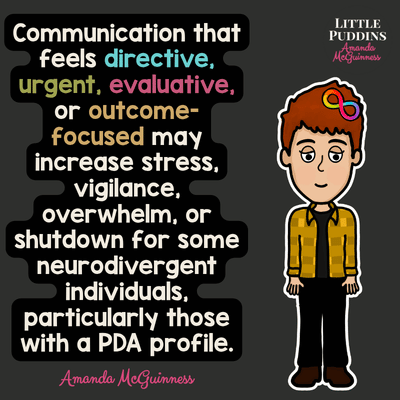
Once this happens, the nervous system may respond as though pressure has entered the situation, even if the adult’s intention was warmth or encouragement. For some PDA individuals, praise can even activate a threat response.
PDA and The Nervous System Response to Praise
When the nervous system perceives pressure, expectation, or loss of control, survival responses may emerge rapidly.
Some PDAers may move into fight responses, which can look like resistance, refusal, irritability, or rejecting the praise altogether. Others may move into flight responses, withdrawing from the activity, avoiding future participation, or physically leaving the interaction. Some may freeze, appearing shut down, disconnected, quiet, or emotionally flat.
Internally, the experience may feel intensely overwhelming, even when very little is outwardly visible.
This understanding also sheds light on why some PDA children/teens may suddenly crumple up work, abandon projects, refuse to continue activities, or appear distressed after positive attention. What may be actually occurring: attempts to reduce emotional intensity, escape pressure, or restore a sense of internal control.
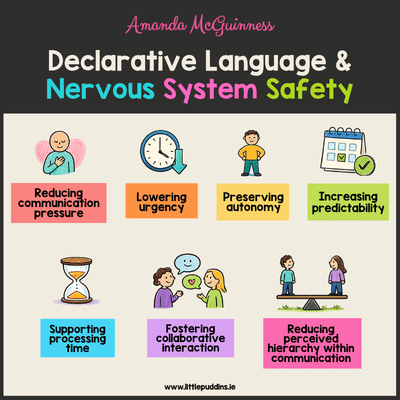
Often, PDAers respond more safely to interactions that feel collaborative, observational, and autonomy-preserving rather than evaluative or performance-focused.
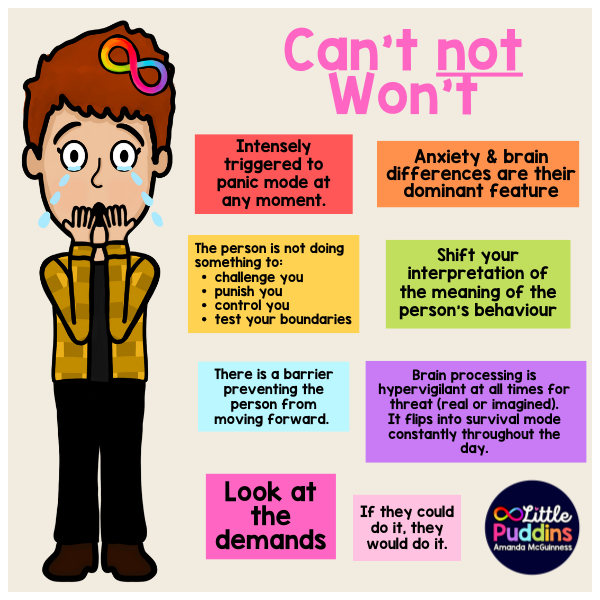
For many PDAers, the reaction to praise is connected to what praise symbolises internally. What may sound like encouragement to one person can feel like expectation, exposure, or pressure to another. Once an activity begins to feel observed, measured, or emotionally loaded, the nervous system may experience a loss of control.
The reaction that follows is frequently an attempt to restore equilibrium.
For example, tearing up a drawing, deleting work, refusing to continue, or abruptly abandoning an activity may function as a way to:
remove the source of expectation
end the emotional intensity of the interaction
reduce feelings of exposure
regain ownership and autonomy
These responses are often misunderstood through a behavioural lens. Yet from a neurobiological perspective, they are usually protective responses emerging from overload and perceived pressure.
What is the Purpose of Praise?
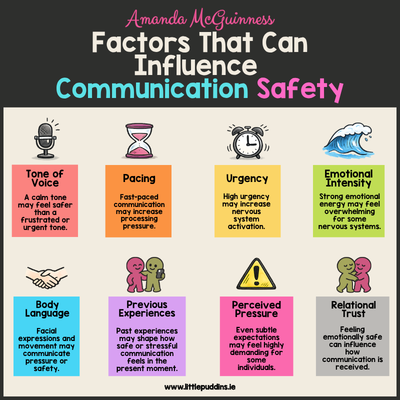
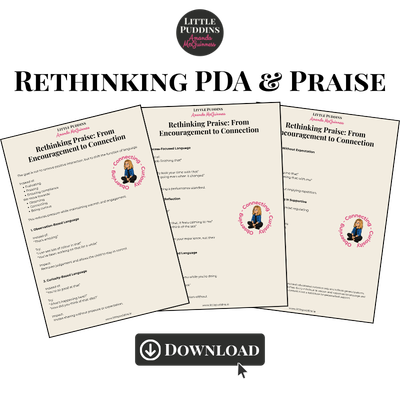
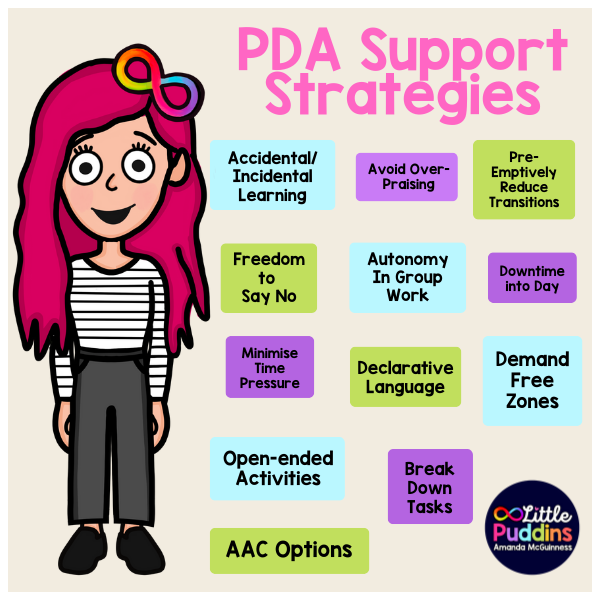
Why do we give praise and we focus on shifting the communication away from evaluation and toward connection? Declarative language is supportive of these types of communicative interactions.
For many PDAers, praise can feel hierarchical and performance-focused, even when delivered with kindness.
A more regulating approach is often rooted in declarative language, relational safety, shared connection, and curiosity. Instead of evaluating the outcome, adults can gently describe what they notice.
This kind of language reduces judgement and allows the PDAer to remain in ownership of the experience. Curiosity-based language can also feel safer because it invites sharing rather than imposing meaning. Curiosity communicates interest without attaching expectation.
Continue Exploring PDA
Understanding pressure is one part of the wider picture.
You may also find these Little Puddins guides helpful:
What is PDA? Learn about the characteristics of a Persistent Drive for Autonomy and why it is understood differently from traditional behaviour-based models.
PDA Parenting Guide Explore practical, neuroaffirmative approaches to supporting everyday life at home.
Declarative Language Discover how communication styles can influence autonomy, regulation and connection.
PDA and School Understand how classroom environments, expectations and relationships shape participation.
Autistic Burnout and Regulation Learn how accumulated stress can affect capacity across home, school and community.
Praise & Silence
There are also moments where saying very little at all may be the most supportive response. For some PDAers, attention itself can increase nervous system activation. In these moments, quiet presence may feel safer than verbal interaction.
Sitting nearby, remaining emotionally available, or simply sharing space without comment can significantly reduce:
attention pressure
social demand
cognitive load
performance anxiety
Sometimes the most regulating message is not spoken aloud at all. It is communicated through calm presence, emotional safety, and the absence of pressure.

References:
Pathological Demand Avoidance (PDA) and the Nervous System:
1. Foundational Understanding of PDA:
Newson, E., Le Maréchal, K. and David, C. (2003) ‘Pathological demand avoidance syndrome: a necessary distinction within the pervasive developmental disorders’, Archives of Disease in Childhood, 88(7), pp. 595–600. Available at: https://adc.bmj.com/content/88/7/595 (Accessed: 1 February 2025).
Johnson, M. and Saunderson, H. (2023) ‘Examining the relationship between anxiety and pathological demand avoidance in adults: A mixed methods approach’, Frontiers in Education, 8, Article 1179015. Available at: https://www.frontiersin.org/articles/10.3389/feduc.2023.1179015/full (Accessed: 2 February 2025).
O’Nions, E., Happé, F., Viding, E. and Noens, I. (2021) ‘Extreme demand avoidance in children with autism spectrum disorder: Refinement of a caregiver-report measure’, Advances in Neurodevelopmental Disorders, 5(3), pp. 1–13. Available at: https://link.springer.com/article/10.1007/s41252-021-00203-z (Accessed: 1 February 2025).
O’Nions, E., Christie, P., Gould, J., Viding, E. and Happé, F. (2014) ‘Development of the “Extreme Demand Avoidance Questionnaire” (EDA-Q): Preliminary observations on a trait measure for pathological demand avoidance’, Journal of Child Psychology and Psychiatry, 55(7), pp. 758–768. Available at: https://acamh.onlinelibrary.wiley.com/doi/10.1111/jcpp.12149 (Accessed: 2 February 2025).
2. Neurophysiological Perspectives:
Porges, S.W. (2011) The Polyvagal Theory: Neurophysiological Foundations of Emotions, Attachment, Communication, and Self-Regulation. New York: W.W. Norton & Company.
Porges, S.W. (2001) ‘The polyvagal theory: phylogenetic substrates of a social nervous system’, International Journal of Psychophysiology, 42(2), pp. 123–146.
3. Insights for PDA Practitioners:
O’Nions, E., Happé, F., Viding, E. and Noens, I. (2021) ‘Extreme demand avoidance in children with autism spectrum disorder: Refinement of a caregiver-report measure’, Advances in Neurodevelopmental Disorders, 5(3), pp. 1–13. Available at: https://link.springer.com/article/10.1007/s41252-021-00203-z (Accessed: 1 February 2025)
Haire, L., Symonds, J., Senior, J. and D’Urso, G. (2024) ‘Methods of studying pathological demand avoidance in children and adolescents: A scoping review’, Frontiers in Education, 9, Article 1230011. Available at: https://www.frontiersin.org/articles/10.3389/feduc.2024.1230011/full (Accessed: 1 February 2025).
4. Neuroscience and Trauma-Informed Perspectives:
Porges, S.W. (2009) ‘Reciprocal influences between body and brain in the perception and expression of affect: A polyvagal perspective’, The Healing Power of Emotion: Affective Neuroscience, Development & Clinical Practice, pp. 27–54.
5. Real-World Lived Experience and Clinical Application:
Christie, P. (2018) ‘PDA… the story so far’, PDA Society Resources. Available at: https://www.pdasociety.org.uk/resources/phil-christie-pda-the-story-so-far/ (Accessed: 1 February 2025).
