Autism PDA and Fluctuating Capacity
Fluctuating Capacity in Autism & PDA
Understanding Nervous System Capacity, Stress, Safety, and Regulation
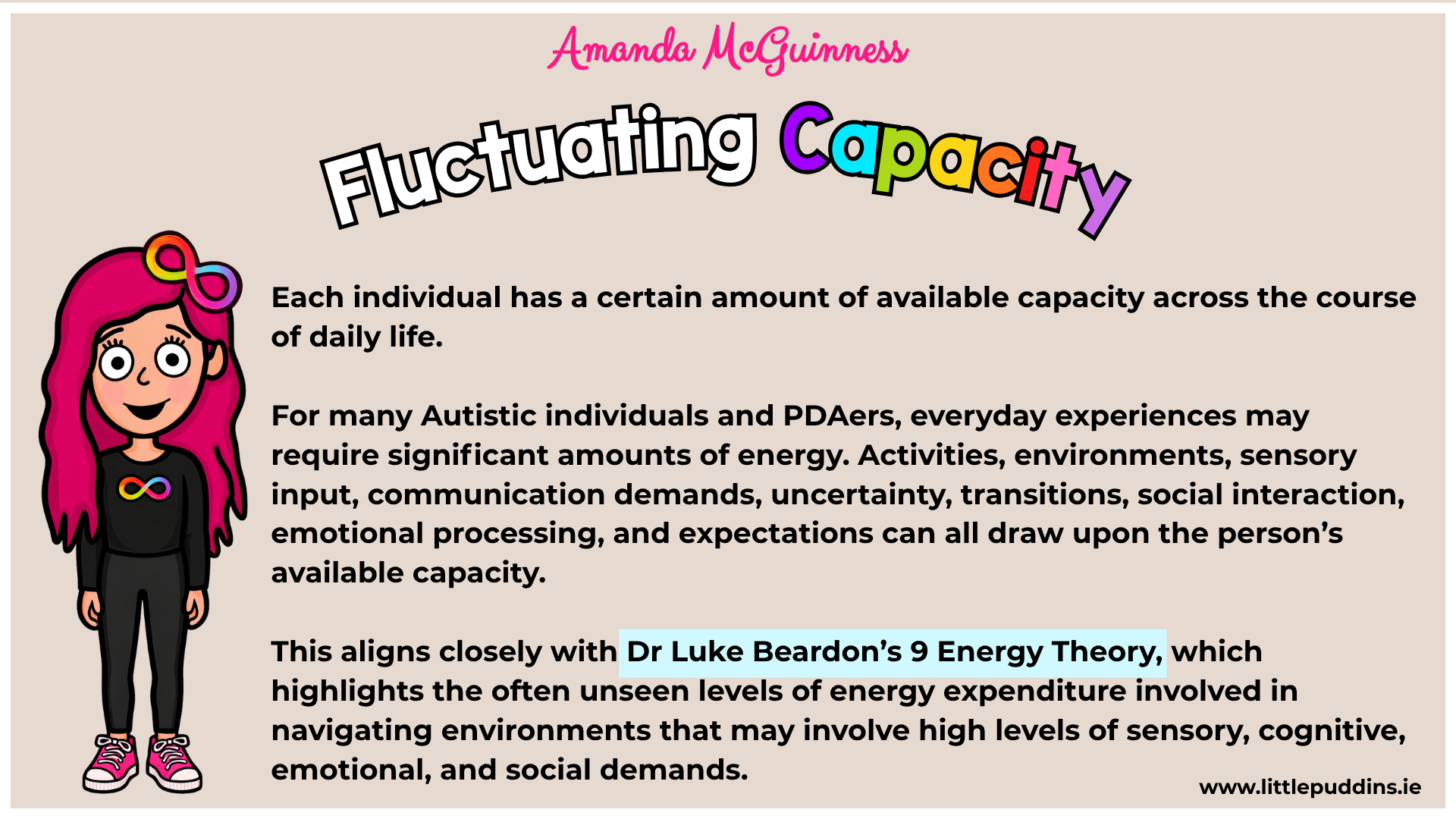
For many Autistic individuals and PDAers, daily life can involve navigating a nervous system that responds intensely to sensory input, uncertainty, pressure, transitions, social demands, and cumulative stress. Some days, a person may feel more able to cope, communicate, think flexibly, and remain connected. On other days, even small demands can feel overwhelming or unmanageable.
This fluctuation is closely connected to what is often called the Window of Tolerance, also referred to by some neuroaffirmative practitioners as the Regulation Window or Window of Capacity. Originally described by Dan Siegel, the metaphor for nervous system regulation is a concept that refers to the range within which the nervous system is able to remain regulated enough for flexible thinking, emotional processing, communication, learning, and connection.
What is Persistent Drive for Autonomy?
We have created a comprehensive guide that explains PDA comprehensively.
If you would like to understand what PDA is, current perspectives, autonomy, regulation, communication, education and practical support, start with our detailed guide before continuing with this article.
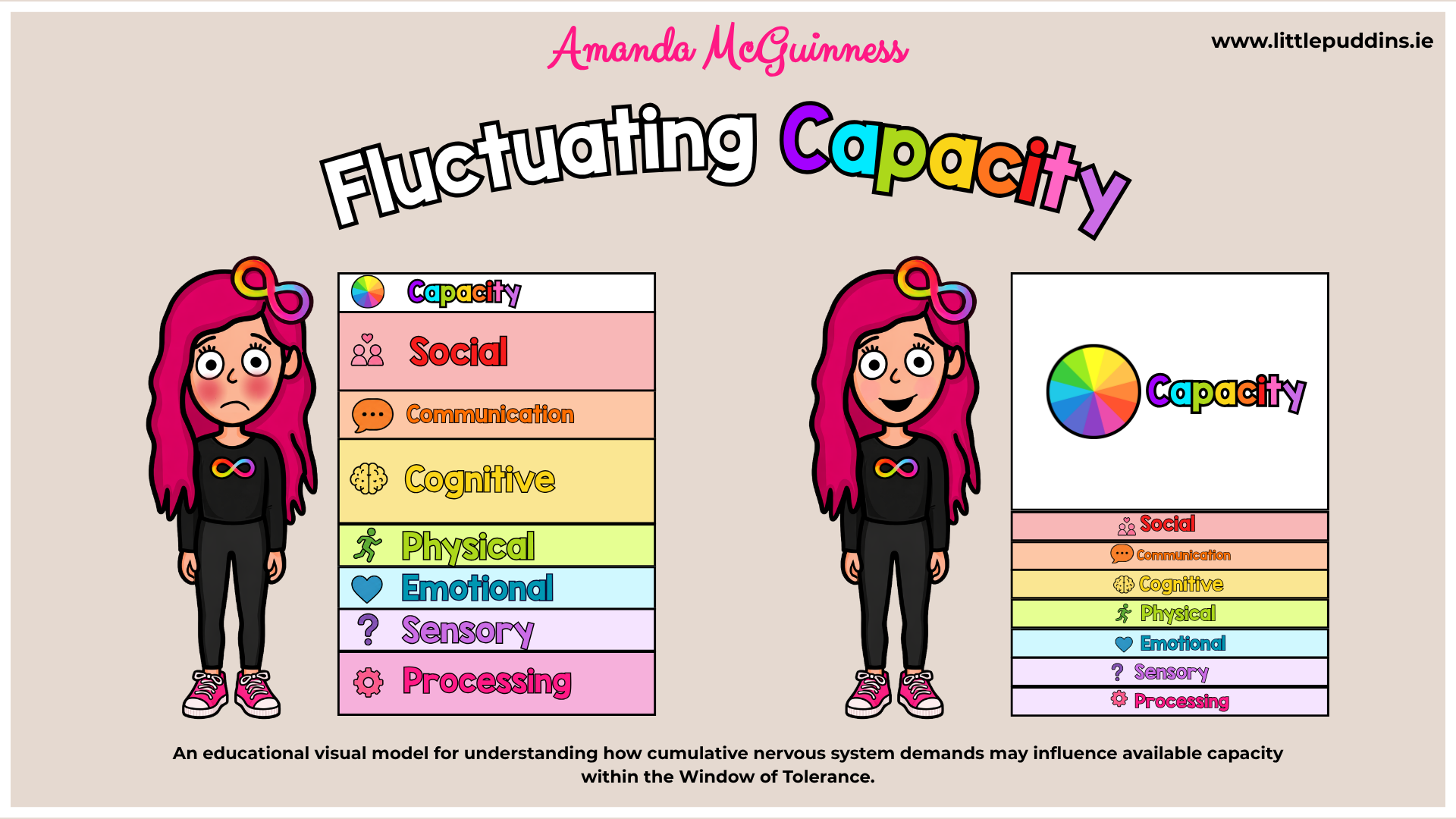
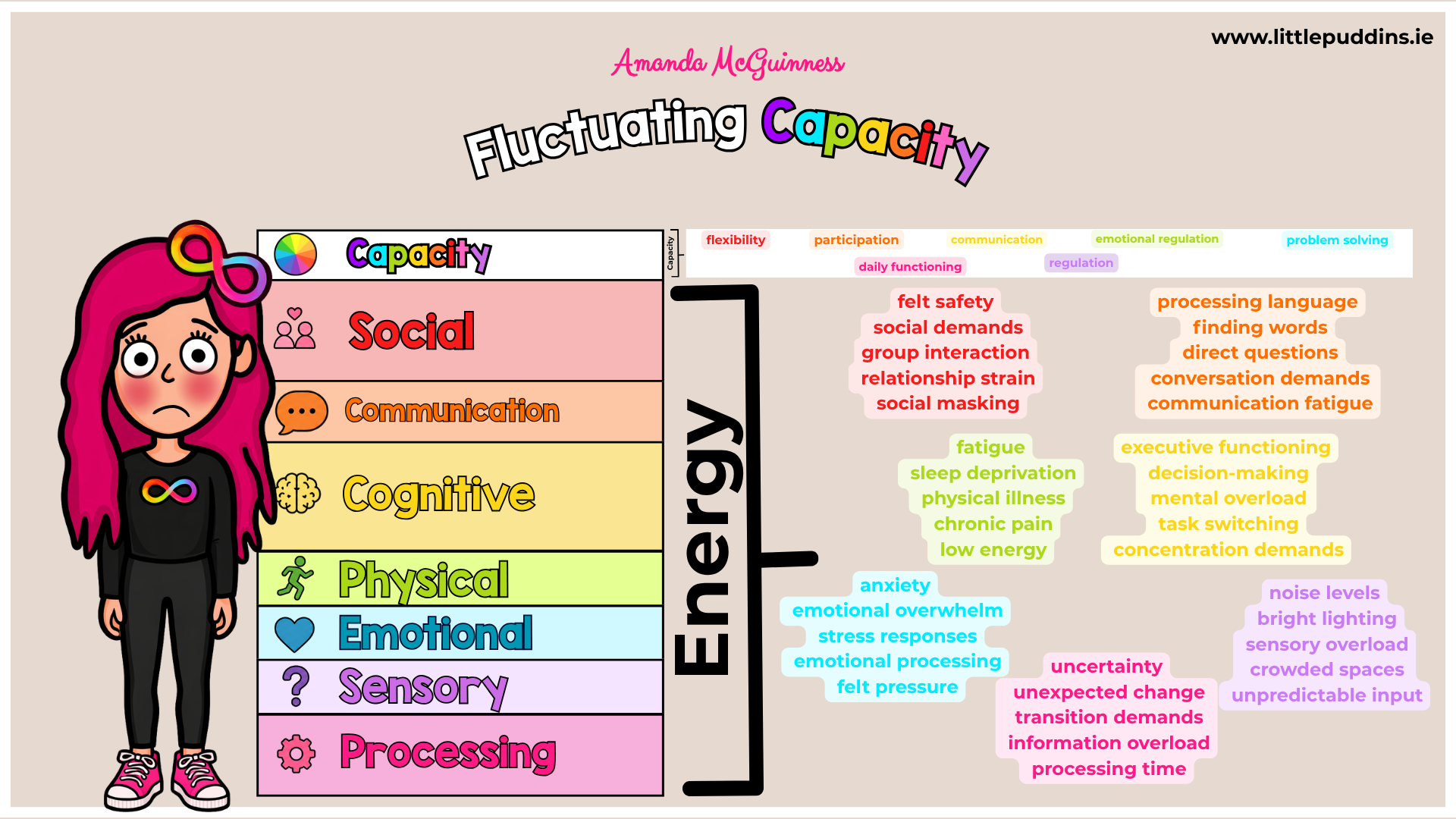
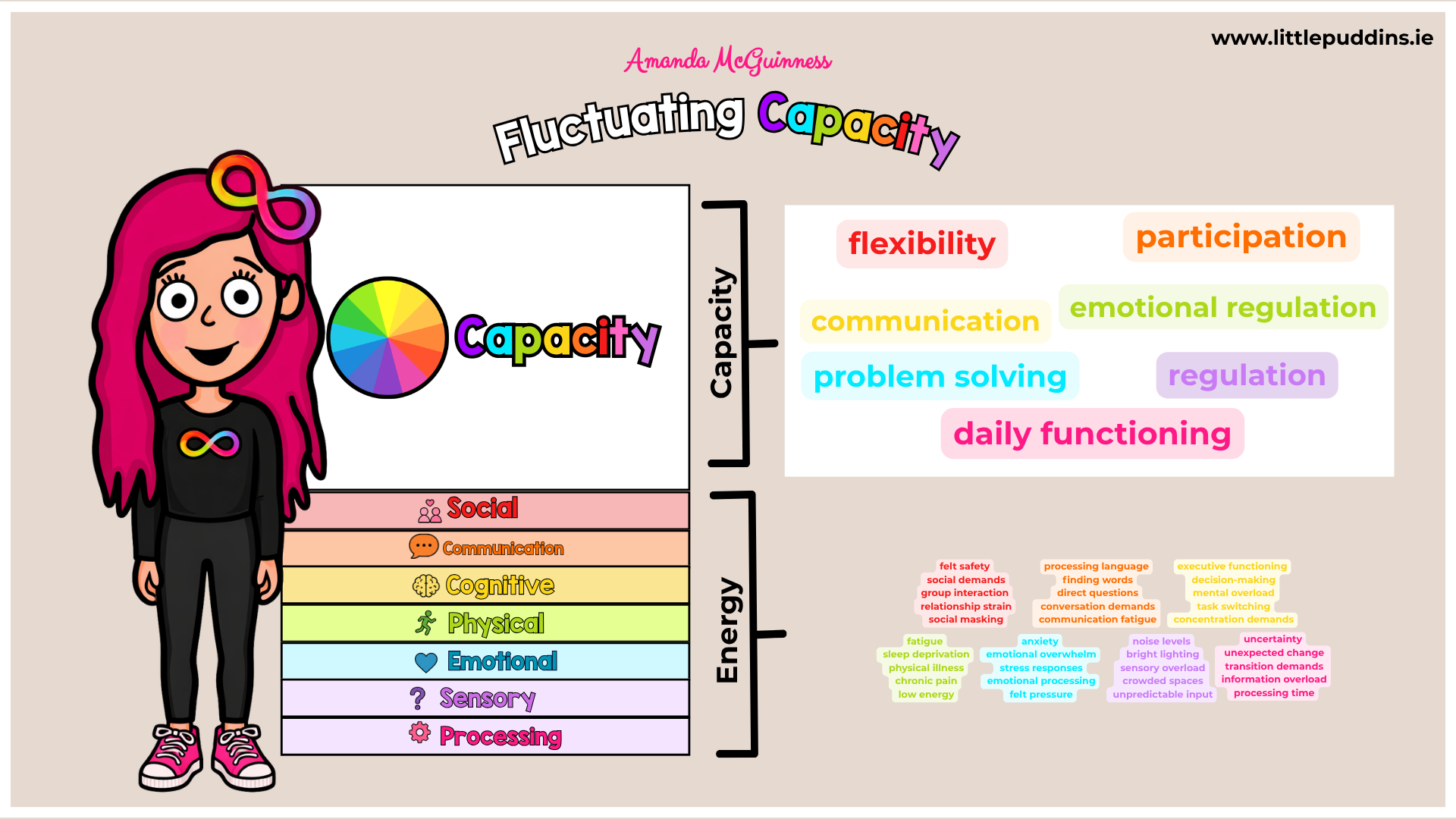
Nervous system capacity changes constantly depending on stress, sensory experiences, emotional safety, physical wellbeing, relationships, environment, demands, and recovery. Understanding what widens or narrows this window can help families, educators, and professionals support Autistic individuals with greater compassion and empathy.
What Does It Mean to Be Within the Window of Tolerance?
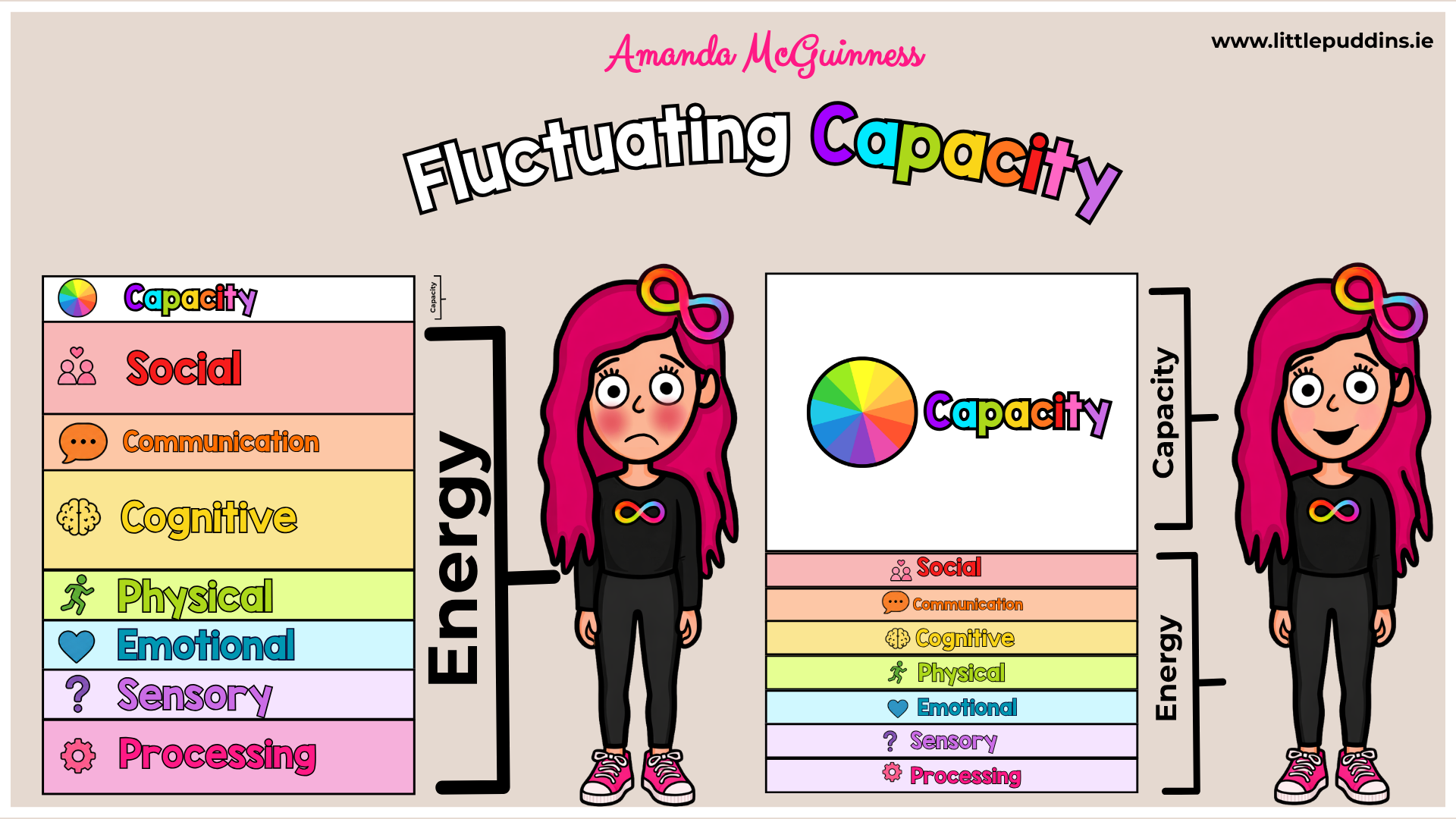
When a person is within their Window of Tolerance, the nervous system is functioning in a more flexible and integrated way. This does not mean the person is always calm, happy, or perfectly regulated. Human nervous systems naturally fluctuate throughout the day.
Rather, being within the Window of Tolerance means a person is more likely to:
think flexibly
process information
communicate effectively
access executive functioning
tolerate manageable stress
recover more easily from challenges
engage socially
regulate emotions
feel grounded enough to participate in daily life
For Autistic individuals and PDAers, remaining within this window can require significant nervous system energy, particularly in environments that are sensory-heavy, unpredictable, socially demanding, or high-pressure.
What Can Narrow the Window of Tolerance?
A narrowed Window of Tolerance means the nervous system has less available capacity to manage stress, sensory input, emotions, demands, or change. When this happens, a person may move more quickly into hyperarousal or hypoarousal states.
Sensory Overload
Many Autistic nervous systems process sensory information intensely. Noise, lighting, textures, smells, movement, crowded environments, or multiple competing sensory inputs can rapidly increase nervous system stress.
Over time, cumulative sensory stress can significantly reduce regulation capacity and increase vulnerability to shutdown, overwhelm, irritability, panic, or burnout.
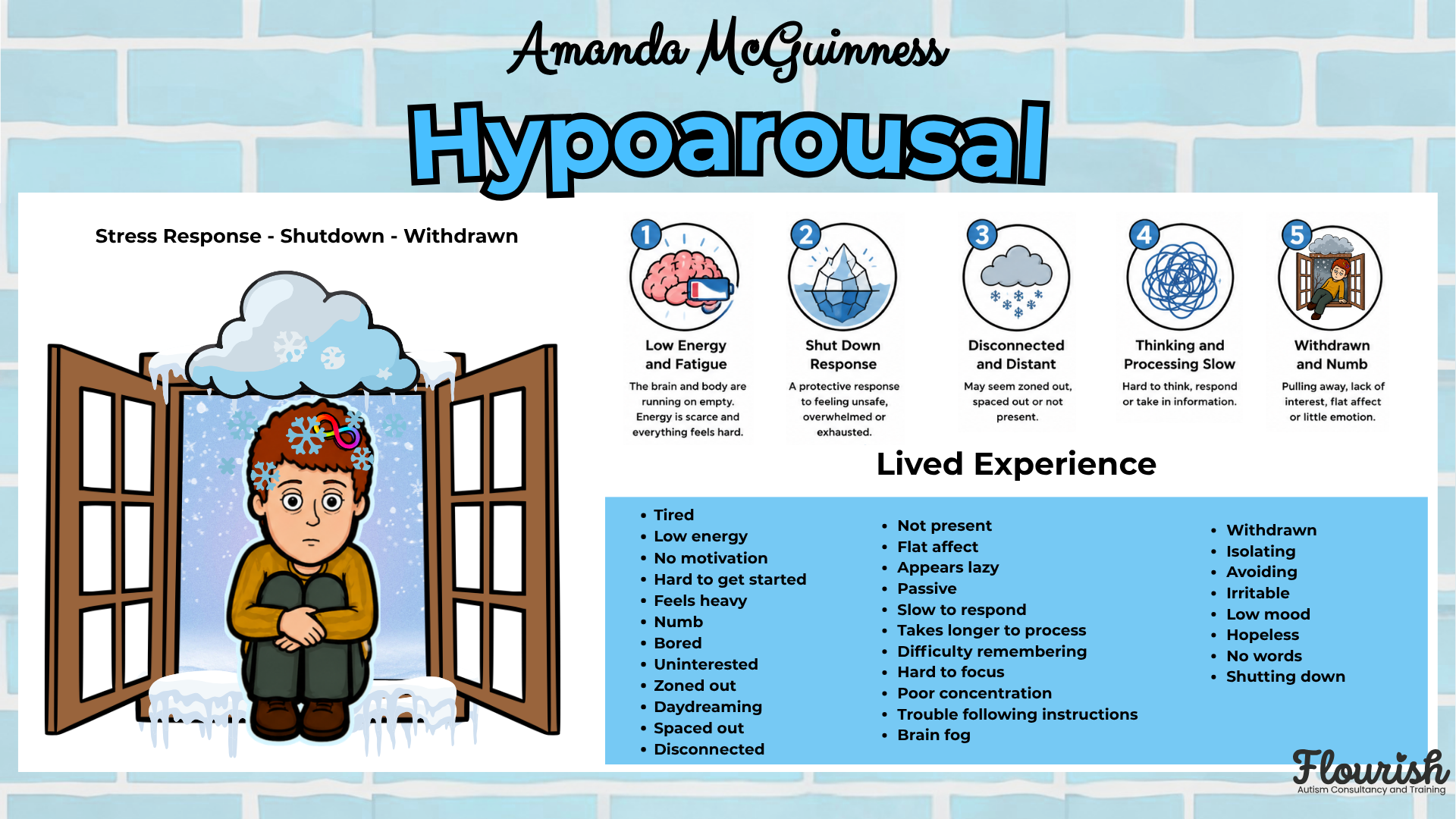
Chronic Stress and Cumulative Load
Nervous systems are influenced not only by immediate stressors but by cumulative stress over time.
Examples may include:
ongoing school stress
social exhaustion
masking
emotional pressure
lack of recovery time
family stress
uncertainty
disrupted sleep
repeated exposure to environments that feel unsafe or overwhelming
For many Autistic individuals, the nervous system may already be carrying a high background level of stress before additional demands occur.
Perceived Pressure and Loss of Autonomy
For PDAers particularly, demands, expectations, urgency, correction, monitoring, and perceived loss of control can activate threat responses within the nervous system.
Within PDA-informed practice, these responses are understood as protective nervous system reactions connected to safety, autonomy, and overwhelm.
Even everyday experiences such as:
being rushed
repeated reminders
performance expectations
direct questioning
transitions
social evaluation
can narrow the Window of Tolerance when the nervous system perceives pressure or reduced autonomy.

Uncertainty and Unpredictability
Many Autistic nervous systems rely heavily on predictability to conserve regulation capacity.
Unexpected changes, unclear expectations, inconsistent communication, sudden transitions, or uncertainty about what is happening next can increase nervous system activation and reduce feelings of safety.
Predictability often supports regulation because the nervous system does not need to remain as vigilant for potential change or threat.
Masking and Social Exhaustion
Masking involves suppressing natural Autistic ways of being and experiencing the world, in order to meet social expectations and attempt to achieve to some degree felt safety.
While masking may appear successful externally, it often places enormous strain on the nervous system internally. Over time, chronic masking can contribute to:
exhaustion
anxiety
emotional overwhelm
shutdown
reduced stress tolerance
Autistic burnout
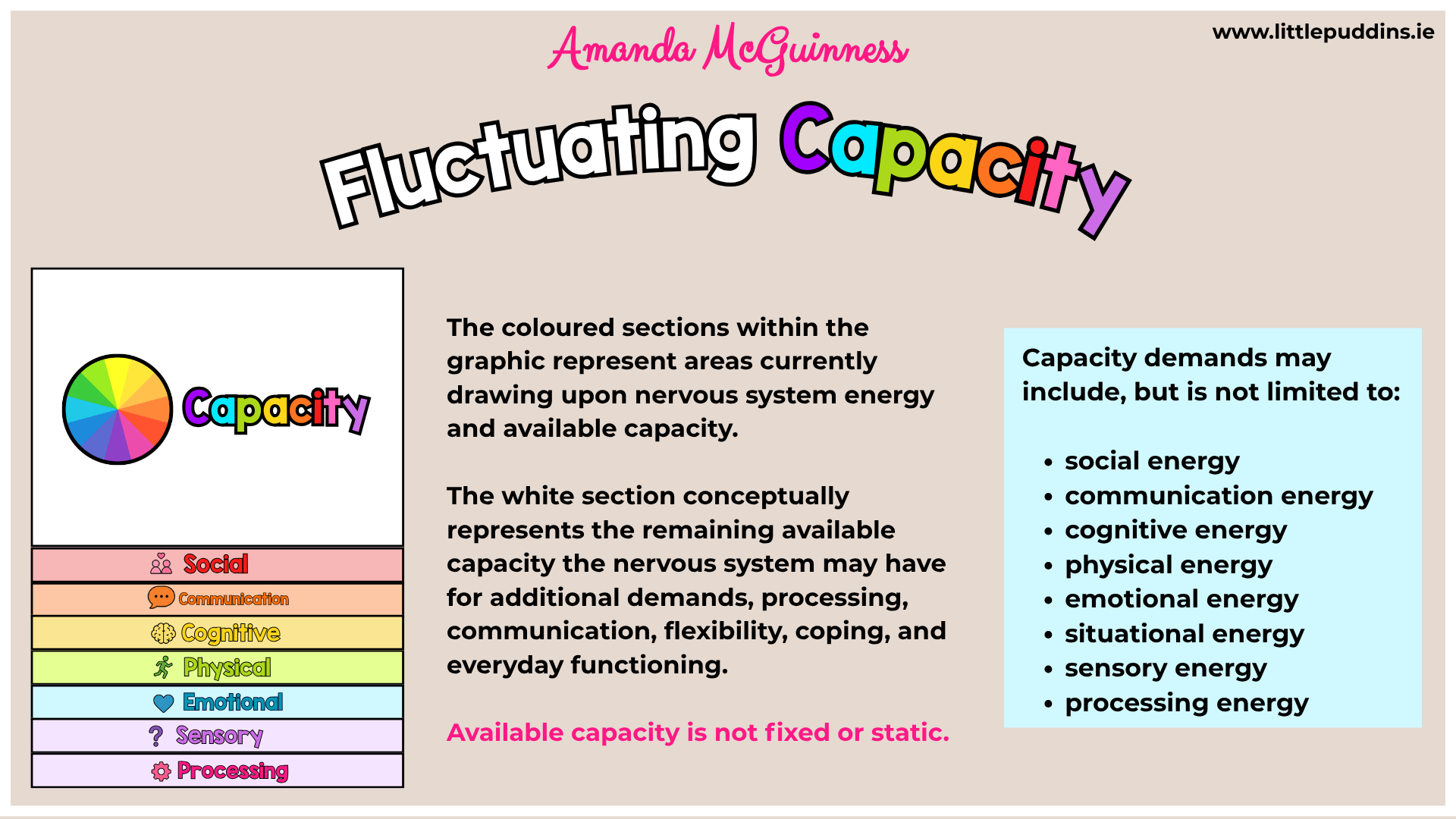
Many individuals appear regulated while simultaneously operating far outside their actual nervous system capacity.
Lack of Recovery Time
Nervous systems require restoration. Without opportunities for decompression, reduced demands, sensory recovery, rest, and emotional safety, regulation capacity gradually narrows.
Autistic individuals often require more intentional recovery time because sensory, cognitive, emotional, and social processing may demand significantly more nervous system energy.
What Helps Open or Support the Window of Tolerance?
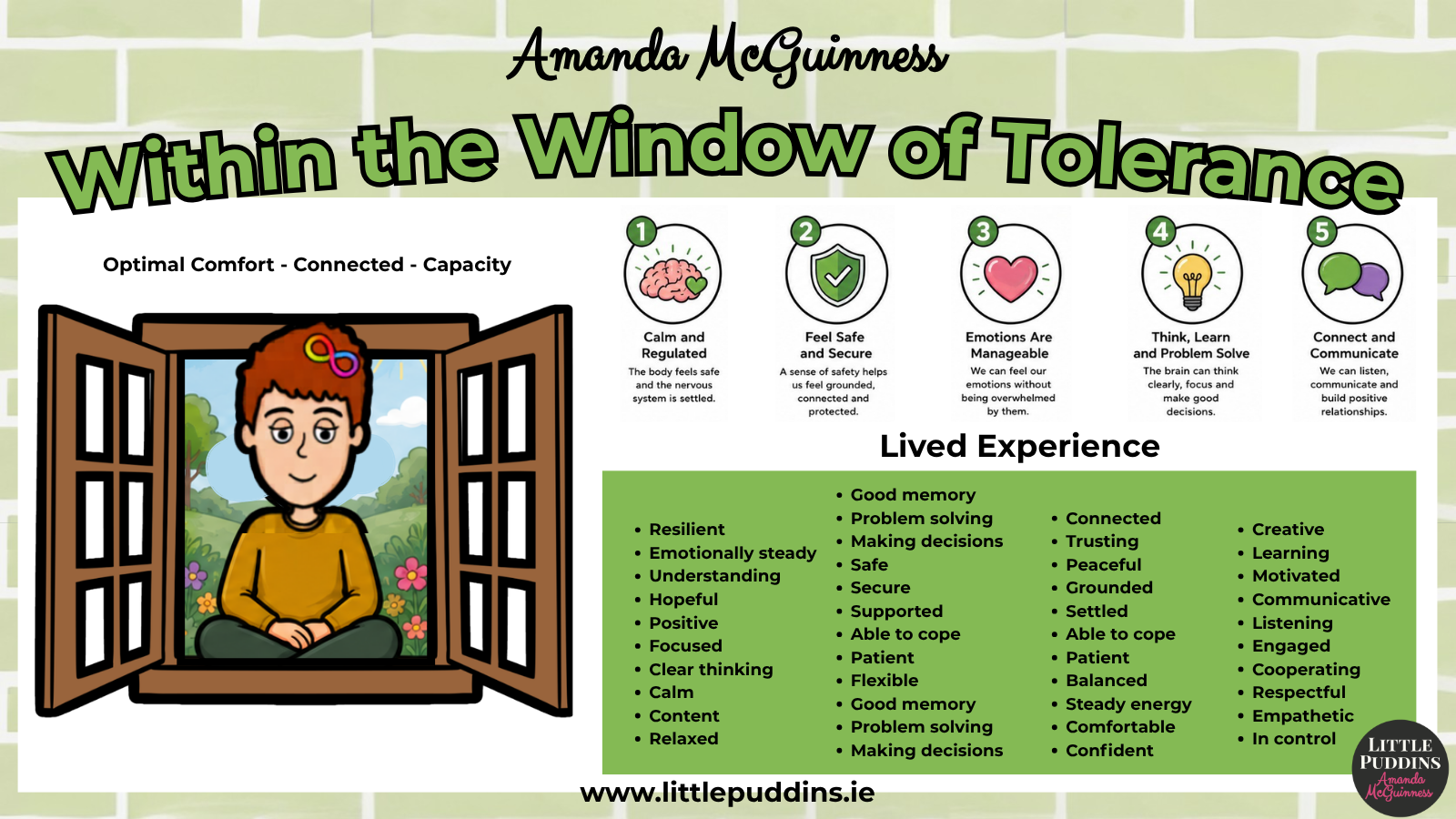
The Window of Tolerance tends to widen when the nervous system experiences increased safety, predictability, connection, flexibility, and recovery.
The goal is not perfect calmness or compliance. The goal is to create conditions where the nervous system no longer needs to remain in survival mode as frequently.
Emotional Safety and Co-Regulation
Human nervous systems regulate through connection. Safe, attuned relationships can significantly influence nervous system flexibility and recovery.
Co-regulation may involve:
calm presence
emotional validation
reduced judgment
predictable responses
compassionate communication
relational trust
feeling emotionally understood
For many Autistic individuals, feeling genuinely safe with another person can help reduce nervous system threat responses and increase regulation capacity.
Sensory Safety
Sensory environments directly affect nervous system functioning.
Supportive sensory approaches may include:
reducing unnecessary noise
providing sensory breaks
respecting sensory boundaries
allowing movement
reducing visual clutter
supporting sensory regulation tools
offering access to quieter environments
Sensory support is not about eliminating all sensory input. It is about reducing unnecessary nervous system strain.
Predictability and Preparation
Predictability often widens the Window of Tolerance by reducing uncertainty and threat perception.
Helpful supports may include:
visual supports
schedules
collaborative planning
transition preparation
clear communication
advance notice of change
consistent routines
These supports help reduce the nervous system energy required to monitor for unpredictability.
Autonomy and Flexibility
Autonomy is deeply connected to nervous system safety, particularly for PDAers.
Supportive approaches may include:
collaborative problem-solving
flexibility around demands
offering meaningful choices
reducing unnecessary control
using declarative language
prioritising dignity and trust
When nervous systems feel trapped, pressured, or controlled, stress responses often intensify.
Rest, Recovery, and Nervous System Restoration
Recovery is essential for maintaining regulation capacity.
Helpful restorative experiences may include:
reduced-demand time
solitude
sensory recovery
deep interests
movement
safe connection
sleep
quiet environments
access to preferred regulation activities
Restoration is not laziness. It is nervous system maintenance.
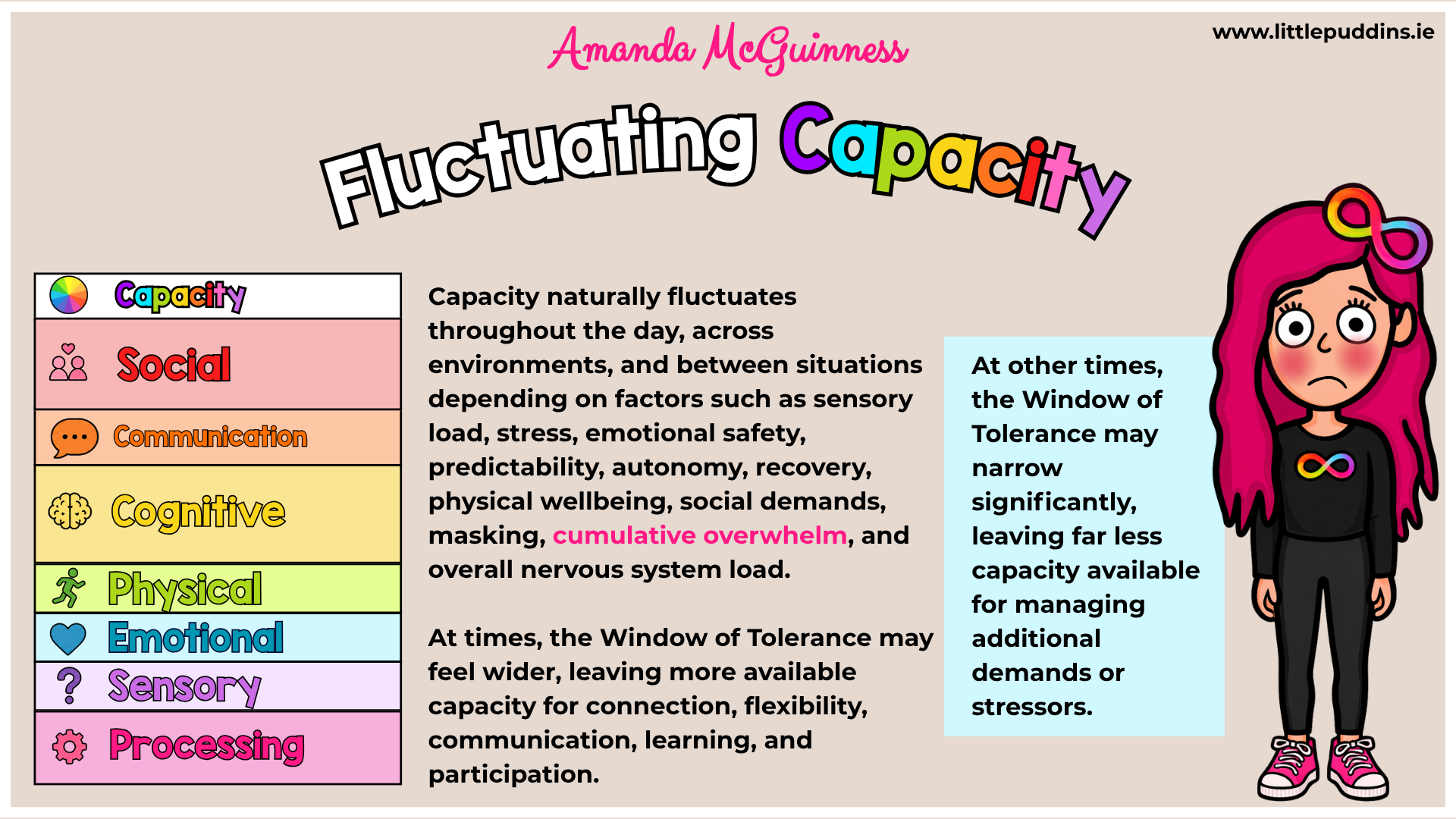
Window of Tolerance Capacity Fluctuates
One of the most important things to understand is that regulation capacity changes constantly.
A person may have:
a wider Window of Tolerance one day
a significantly narrower window the next
Factors influencing this may include:
sleep
illness
hormones
stress
sensory load
social demands
cumulative overwhelm
emotional experiences
environmental changes
This is why support needs cannot always remain identical from one day to another.
Understanding the Window of Tolerance helps shift the focus to self reflective practice that includes questioning such as:
What is the nervous system communicating?
What stressors may be narrowing capacity right now?
What support increases felt safety and flexibility?
What recovery does this nervous system need?
This shift in reflective practice is especially important within Autism and PDA support because many distress responses are connected to nervous system overwhelm.
Continue Exploring PDA
Understanding pressure is one part of the wider picture.
You may also find these Little Puddins guides helpful:
What is PDA? Learn about the characteristics of a Persistent Drive for Autonomy and why it is understood differently from traditional behaviour-based models.
PDA Parenting Guide Explore practical, neuroaffirmative approaches to supporting everyday life at home.
Declarative Language Discover how communication styles can influence autonomy, regulation and connection.
PDA and School Understand how classroom environments, expectations and relationships shape participation.
Autistic Burnout and Regulation Learn how accumulated stress can affect capacity across home, school and community.

About the Fluctuating Capacity Model
The Fluctuating Capacity model presented throughout this resource is an educational framework developed by Amanda McGuinness, Autism and PDA Specialist, drawing on established theoretical foundations including Siegel's Window of Tolerance (2010), Porges' Polyvagal Theory (2011), Beardon's 9 Energy Theory, and related literature on nervous system regulation, sensory processing, and Autistic experience. It is intended as a practitioner-informed conceptual tool to support understanding of how cumulative nervous system demands may influence available regulation capacity in Autistic individuals and PDAers. While grounded in current research and neuroaffirmative practice, the Fluctuating Capacity model represents Amanda's own applied synthesis and should be understood as an educational framework rather than a standalone empirical model. All underlying theoretical sources are referenced in full below.
References
Dana, D. (2018) The Polyvagal Theory in Therapy: Engaging the Rhythm of Regulation. New York: W.W. Norton & Company.
Fenning, R.M., Erath, S.A., Baker, J.K., Messinger, D.S., Moffitt, J., Baucom, B.R. and Kaeppler, A.K. (2019) ‘Sympathetic-Parasympathetic Interaction and Externalizing Problems in Children with Autism Spectrum Disorder’, Autism Research, 12(12), pp. 1805–1816.
Fidler, R. and Christie, P. (2019) Collaborative Approaches to Learning for Pupils with PDA: Strategies for Education Professionals. London: Jessica Kingsley Publishers.
Milton, D. (2012) ‘On the ontological status of Autism: The “double empathy problem”’, Disability & Society, 27(6), pp. 883–887.
Ogden, P., Minton, K. and Pain, C. (2006) Trauma and the Body: A Sensorimotor Approach to Psychotherapy. New York: W.W. Norton & Company.
Pellicano, E. and Burr, D. (2012) ‘When the world becomes “too real”: A Bayesian explanation of Autistic perception’, Trends in Cognitive Sciences, 16(10), pp. 504–510.
Porges, S.W. (2011) The Polyvagal Theory: Neurophysiological Foundations of Emotions, Attachment, Communication and Self-Regulation. New York: W.W. Norton & Company.
Siegel, D.J. (2010) The Mindful Therapist: A Clinician’s Guide to Mindsight and Neural Integration. New York: W.W. Norton & Company.
Spratt, E.G., Nicholas, J.S., Brady, K.T. et al. (2012) ‘Enhanced cortisol response to stress in children with Autism’, Journal of Autism and Developmental Disorders, 42(1), pp. 75–81.
van der Kolk, B. (2014) The Body Keeps the Score: Brain, Mind, and Body in the Healing of Trauma. New York: Viking.