Intellectual Disability and Family Carers Ireland
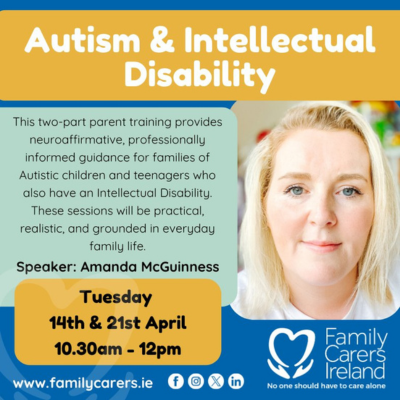
Recently, I had the privilege of delivering a two-part professional parent-focused training series with Family Carers Ireland on the topic of Autism and Intellectual Disability. The sessions focused on practical, neuroaffirmative, family-centred guidance for parents of Autistic children and teenagers who also have an intellectual disability.
As a mother of four, and as the parent of two sons, Conor and Jack, who have an intellectual disability, this topic is not something I simply teach. It is something I live, learn, and reflect on every day.
Why I Created This Free Intellectual Disability Social Story
Following years of both professional work and family experience, I recognised that many families need clear, respectful ways to talk about intellectual disability with their children.
Many parents want to explain:
why learning may look different
why extra support may be needed
why some tasks take more time
why asking for help is important
that difference does not reduce worth
that strengths and identity matter deeply
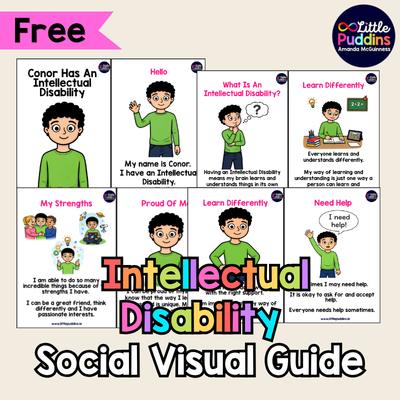
That is why through my role as Director of Autism Advocacy and Professional Practice at Flourish, I created the I Have an Intellectual Disability Social Story, a free visual resource designed to support understanding, confidence, and positive identity.
Inspired by Conor and Jack
This guide was developed with Conor and Jack at the heart of it. Their lived experiences, personalities, strengths, and support journeys helped shape the language and tone of the resource.
In our family, we speak openly about intellectual disability. We do not frame it as something shameful or hidden. We talk about support needs honestly while also celebrating humour, progress, relationships, passions, and the many ways a person can thrive.

What the Intellectual Disability Social Story / Social Visual Guide Teaches
The resource explains that people learn differently, may need support, can ask for help, and have valuable strengths. It uses visuals and accessible wording so children can engage with the message in a meaningful way.