
Understanding Autistic Stimming
A Neuroaffirmative Guide to Regulation, Communication and Sensory Experience
Stimming is one of the most recognised aspects of Autism, yet it is also one of the most misunderstood. It is often described simply as repetitive movement or behaviour, but this definition tells us very little about why stimming happens or the important role it can play in everyday life.
For many Autistic people, stimming is a meaningful way of interacting with the world, processing experiences, regulating the nervous system, expressing emotions, supporting concentration, communicating needs, and maintaining a sense of balance during everyday life.
Although stimming is commonly associated with Autism, it is not unique to Autistic people. Most people stim in some way, whether that is tapping a foot while thinking, twirling hair during a conversation, doodling while listening, pacing when on the phone, or humming a favourite song. What often differs for Autistic people is the significance, frequency, intensity, or function that stimming serves within daily life.
This guide explores what Autistic stimming is, why it happens, the many forms it can take, how it relates to sensory processing, regulation and communication, and how families, educators and professionals can create environments where Autistic people feel safe to stim authentically.
Whether you are an Autistic adult seeking to better understand your own experiences, a parent supporting your child, an educator wanting to create a more inclusive classroom, or a professional developing neuroaffirmative practice, this guide aims to provide evidence-informed, practical and compassionate information that recognises stimming as an important aspect of many Autistic people's lives.
Understanding Autistic Stimming at a Glance
Stimming is a natural part of the human experience and an important aspect of life for many Autistic people. The following overview introduces some of the most common questions about stimming. Each topic is explored in greater depth throughout this guide.
What Is Stimming?
Stimming is often one of the most recognised aspects of Autism, yet it is also one of the most misunderstood. It is frequently described as repetitive movements or behaviours, but this definition only captures what stimming may look like. It tells us very little about the important role stimming can play in a person's everyday life.
A more helpful way to understand stimming is to recognise it as a natural part of being human. People of all ages and neurotypes engage in repetitive movements, sounds, or sensory experiences throughout everyday life. Tapping a foot while concentrating, pacing during a phone call, twirling hair, doodling during a meeting, or humming a favourite song are all familiar examples. These experiences are part of the many ways humans interact with, process, and respond to the world around them.
For many Autistic people, however, stimming often takes on a particularly important role. It may help support how sensory information is processed, how emotions are expressed, how the nervous system responds to different environments, and how a person maintains comfort, participation, and connection throughout the day. Rather than viewing stimming as something unusual or separate from typical human experience, it can be understood as one example of the remarkable diversity in how people experience and engage with the world.
Stimming is also highly individual. There is no single reason why someone stims, no universal pattern, and no single meaning behind any particular movement or action. The same form of stimming may serve different purposes for different people, and even for the same person across different situations. Context, environment, sensory experiences, emotional wellbeing, cognitive demands, relationships, and feelings of safety all influence how and why stimming occurs.
Importantly, stimming is rarely meaningless. Although its purpose may not always be immediately obvious to others, stimming often reflects the dynamic relationship between a person's internal experiences and the environment around them. It may support regulation, communication, sensory processing, emotional expression, attention, thinking, or simply provide enjoyment.
The Many Functions of Stimming
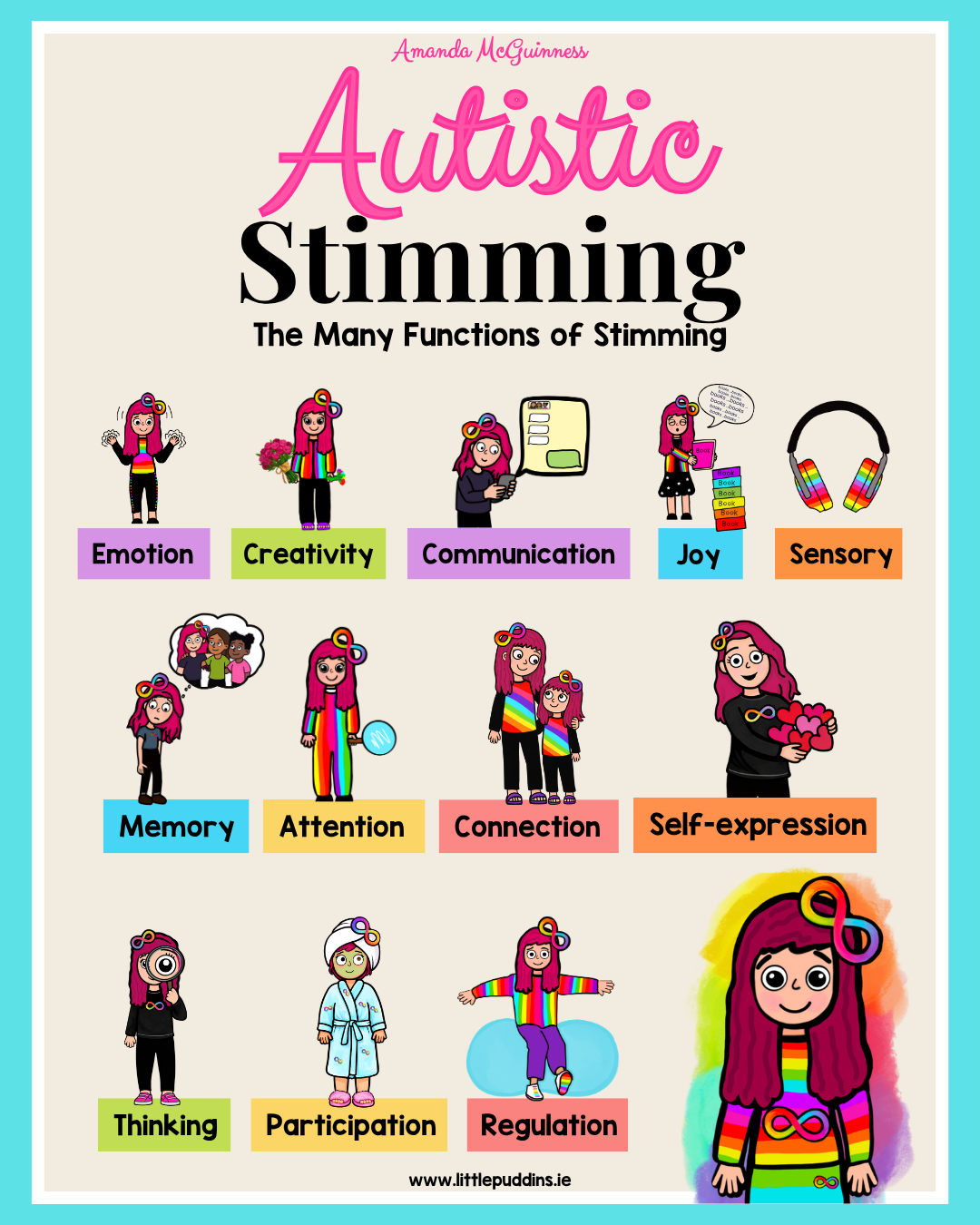
One of the greatest misconceptions about stimming is the idea that it serves a single purpose. In reality, stimming is highly dynamic and can support many different aspects of everyday life. Rather than thinking about stimming as a behaviour to be interpreted, it can be more helpful to consider the many functions it may serve for an individual.
For many Autistic people, stimming may support:
Processing sensory information.
Regulating the nervous system during changing experiences.
Expressing emotions that may be difficult to communicate through words alone.
Supporting communication and self-expression.
Maintaining attention and concentration.
Organising thoughts and cognitive processing.
Preparing for or anticipating change.
Supporting memory and information retrieval.
Experiencing joy, excitement, curiosity, or fascination.
Encouraging creativity and imaginative thinking.
Recovering following periods of stress, sensory overload, or cognitive effort.
Maintaining connection with oneself, other people, and the surrounding environment.
These functions are not mutually exclusive. A single form of stimming may support several of these experiences simultaneously, while its purpose may change depending on the person, the environment, and what they are experiencing in that moment.
This understanding reminds us that stimming is not simply something a person does. It is often one of the many ways people experience, organise, express, and respond to the world around them. By shifting our focus from the movement itself to the purpose it serves, we gain a far richer understanding of Autistic experience and can create environments that support authentic participation rather than encouraging unnecessary suppression or masking.
One aspect of stimming that is often overlooked is joy. Discussions about stimming frequently focus on stress, anxiety, or sensory overload, yet many Autistic people also stim because something feels enjoyable, exciting, comforting, or deeply satisfying. Stimming may accompany moments of happiness, anticipation, achievement, fascination, connection, or play. Recognising joyful stimming reminds us that stimming is not only associated with challenge or distress. It can also be an authentic expression of wellbeing, enthusiasm, and the pleasure of engaging with the world.
The Many Ways Stimming Can Look
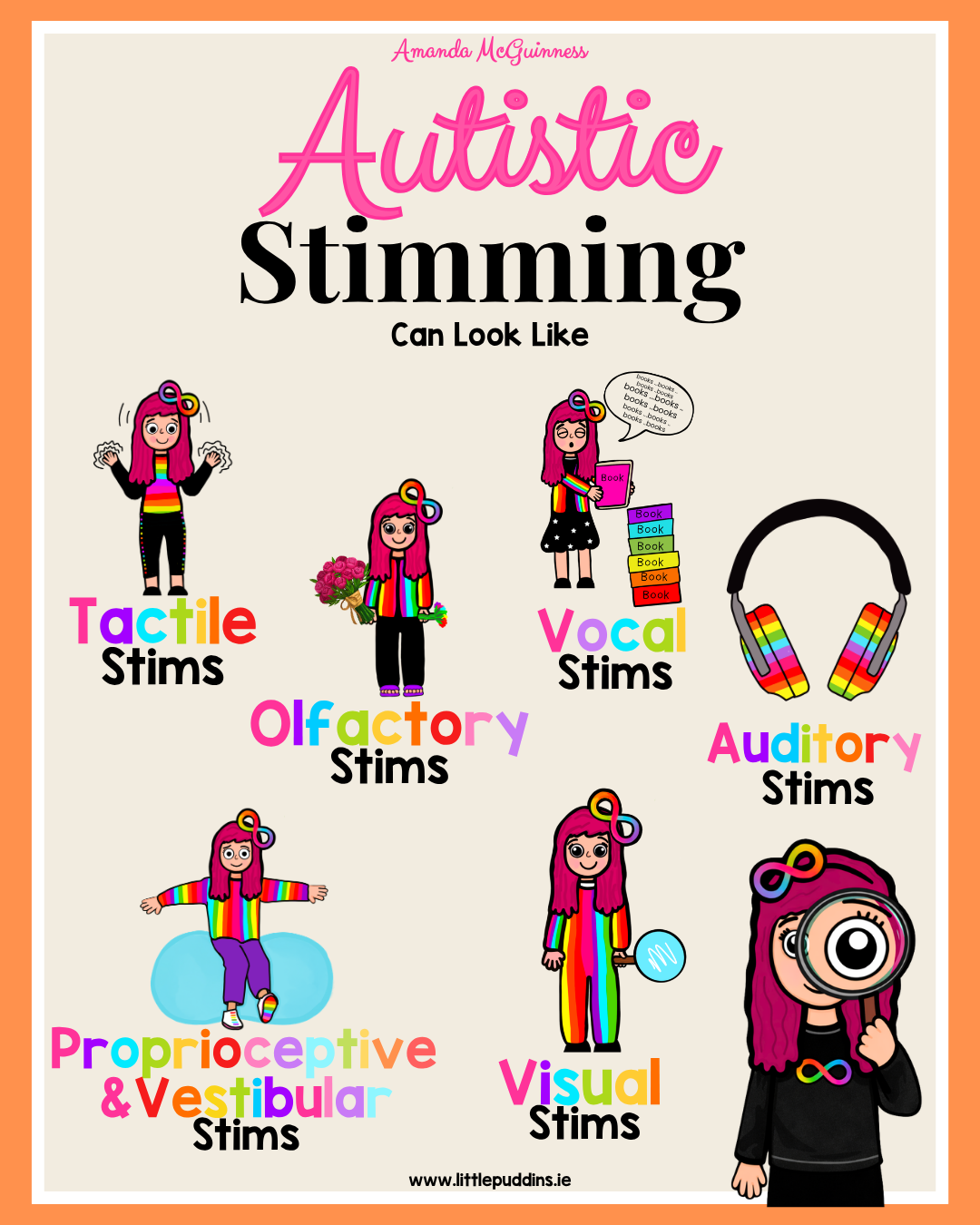
There is no single way to stim. Stimming is as individual as the person, and every Autistic person develops their own unique patterns, preferences, and sensory experiences over time. Some forms of stimming are highly visible, while others are subtle or entirely internal. A person may also use different forms of stimming depending on where they are, who they are with, what they are experiencing, and what their nervous system needs in that moment.
Importantly, the same form of stimming may serve different functions for different people. For one person, pacing may support concentration while solving a problem. For another, it may help process sensory information, express excitement, or recover following an overwhelming experience. Understanding the purpose of stimming is often far more meaningful than focusing solely on what it looks like.
Movement Stimming
Movement-based stimming involves repetitive body movements that support how a person experiences and interacts with the world around them.
Examples may include:
Hand flapping
Finger movements
Rocking forwards or backwards
Pacing
Spinning
Jumping
Walking in circles
Stretching
Dancing
Shifting body position repeatedly
For many people, movement-based stimming may support sensory processing, nervous system regulation, concentration, emotional expression, anticipation, or simply feel enjoyable.
Vocal Stimming
Vocal stimming involves producing sounds, words, or vocal patterns that support processing, communication, regulation, or enjoyment.
Examples may include:
Humming
Singing
Repeating favourite words or phrases
Echolalia
Clicking sounds
Whistling
Making sound effects
Repeating parts of songs
Creating rhythms with the voice
Vocal stimming may help organise thoughts, express emotions, process language, support communication, or provide familiar and predictable sensory input.
Vocal Stimming
Vocal stimming involves producing sounds, words, or vocal patterns that support processing, communication, regulation, or enjoyment.
Examples may include:
Humming
Singing
Repeating favourite words or phrases
Echolalia
Clicking sounds
Whistling
Making sound effects
Repeating parts of songs
Creating rhythms with the voice
Vocal stimming may help organise thoughts, express emotions, process language, support communication, or provide familiar and predictable sensory input.
Visual Stimming
Visual stimming involves engaging with visual experiences that feel interesting, enjoyable, or regulating.
Examples may include:
Watching spinning objects
Looking at moving lights
Watching reflections
Moving objects in front of the eyes
Exploring colours and patterns
Watching water or flowing movement
Many people find visual stimming calming, fascinating, or helpful for processing visual information.
Auditory Stimming
Auditory stimming involves creating or listening to sounds that provide meaningful sensory experiences.
Examples may include:
Listening to the same song repeatedly
Tapping rhythms
Clicking objects together
Repeating sounds
Listening to white noise
Exploring different tones or pitches
Auditory stimming may support sensory processing, attention, emotional regulation, or enjoyment.
Oral Stimming
Oral stimming involves sensory experiences centred around the mouth and jaw.
Examples may include:
Chewing jewellery or chew tools
Chewing food for sensory feedback
Sucking through a straw
Blowing bubbles
Chewing gum
Exploring different food textures
For many people, oral stimming provides predictable sensory input that supports regulation, concentration, or comfort.
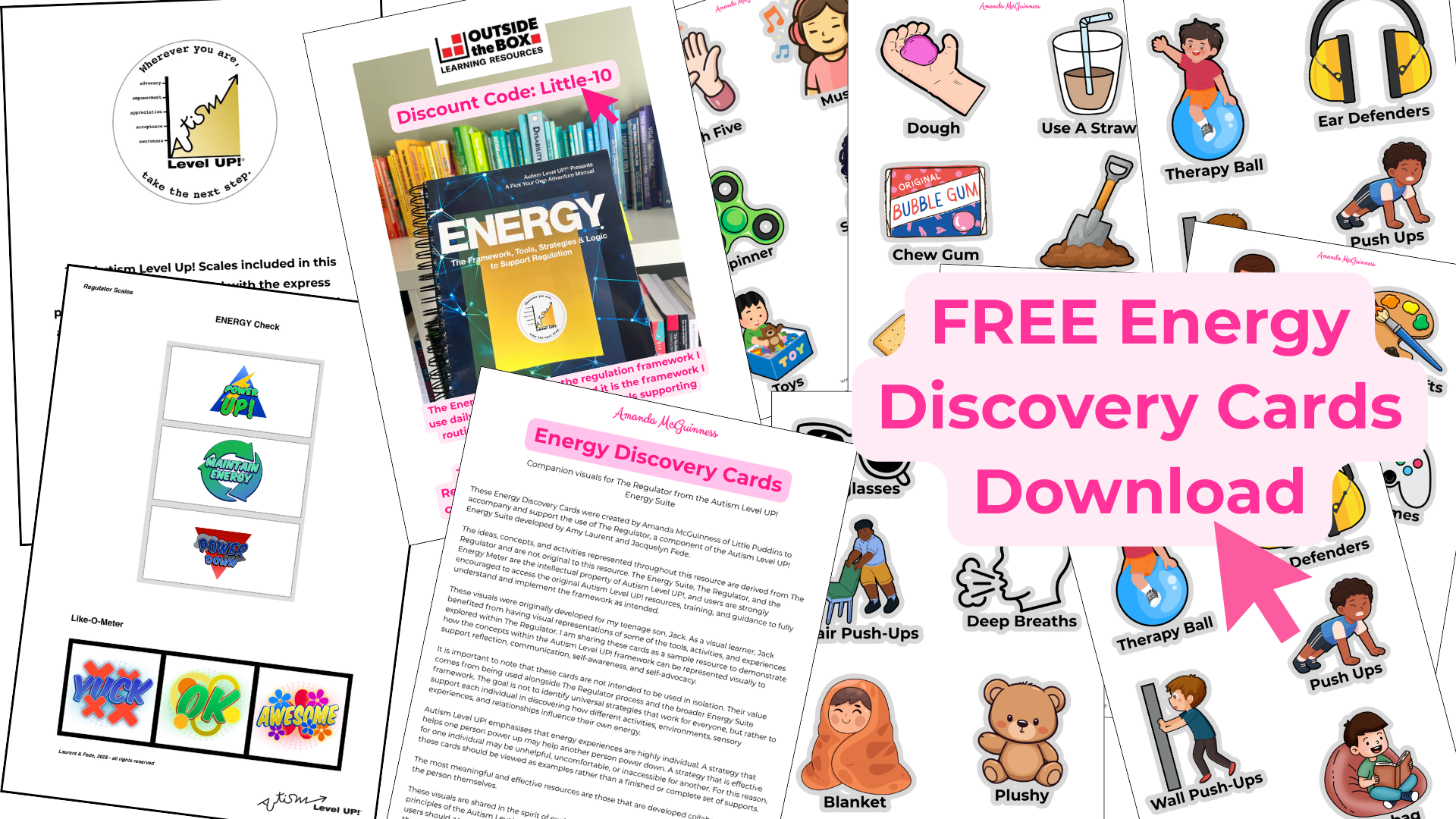
Vestibular and Proprioceptive Stimming
Some forms of stimming involve movement, balance, body awareness, or deep pressure.
Examples may include:
Swinging
Climbing
Jumping
Rolling
Hanging upside down
Carrying heavy objects
Wrapping up in blankets
Seeking deep pressure or firm hugs (where welcomed)
These experiences may help support body awareness, movement, regulation, and feelings of physical organisation.
Internal or Less Visible Stimming
Not all stimming is visible to other people. Many Autistic people describe forms of stimming that occur internally or are so subtle that they are rarely noticed.
Examples may include:
Repeating favourite songs internally
Mentally rehearsing conversations
Internal scripting
Silent echolalia
Small toe or finger movements inside shoes or pockets
Visualising patterns or favourite scenes
Imagining repetitive movements
Because these forms of stimming are less visible, they are often overlooked. However, they can be just as important in supporting thinking, regulation, sensory processing, communication, and wellbeing.
Every Person's Stimming Is Unique
Although stimming is often described using categories, everyday experiences rarely fit neatly into a single box. Many forms of stimming involve several sensory systems at once and may support multiple functions simultaneously. A person may flap their hands while laughing with excitement, hum quietly while concentrating, pace while organising their thoughts, or seek deep pressure following an overwhelming experience. The movement itself tells only part of the story.
Viewing stimming through a neuroaffirmative lens encourages curiosity instead of judgement and helps us better understand the relationship between the individual, their environment, and their lived experience.
Stimming, the Nervous System and Everyday Life
Stimming does not happen in isolation. Like every aspect of human experience, it is influenced by the ongoing interaction between the individual, their nervous system, and the world around them. As our environments, experiences, energy levels, emotions, relationships, and daily demands change, the ways we process information and respond to those experiences may also change. Stimming is no different.
For many Autistic people, stimming is a dynamic and responsive experience rather than a fixed behaviour. It may look different from one day to the next, or even from one moment to another. A person may flap their hands while celebrating exciting news, pace while organising their thoughts, hum quietly while concentrating, or seek deep pressure after a busy day. The movement itself may appear similar, but the purpose it serves can be entirely different.
Stimming Reflects More Than One Experience
Stimming may be influenced by many different aspects of everyday life, including:
Sensory experiences and the surrounding environment.
Changes in routine or predictability.
Emotional experiences such as excitement, anticipation, frustration, or joy.
Cognitive demands, including learning, problem-solving, or decision-making.
Executive functioning demands such as planning, organising, or transitioning between activities.
Physical wellbeing, including illness, pain, fatigue, or hunger.
Social interactions and relationships.
Feelings of safety, comfort, and acceptance.
Energy levels throughout the day.
Recovery following busy or demanding experiences.
Rather than viewing stimming as a response to a single trigger, it is often more accurate to understand it as part of the ongoing relationship between the individual and their environment.
Stimming and Regulation
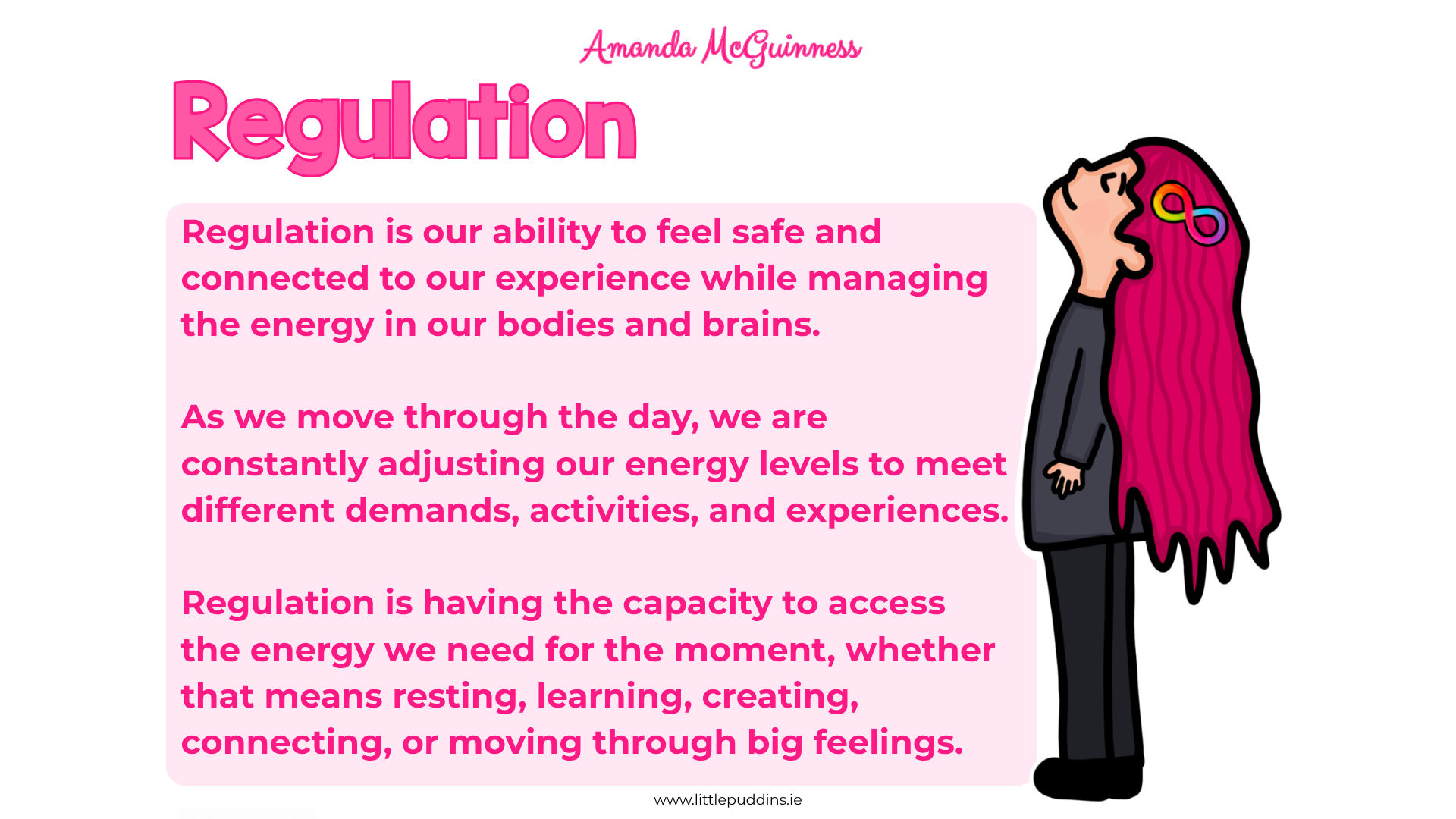
Regulation is often misunderstood as becoming calm. In reality, regulation is much broader than this. It involves how we maintain, restore, or adapt our physical, emotional, cognitive, and sensory wellbeing so that we can participate in everyday life.
Stimming may support regulation in many different ways. For one person it may help maintain concentration during a lesson or meeting. For another it may provide familiar sensory input while navigating a noisy environment. Someone may stim while anticipating an exciting event, processing disappointment, organising their thoughts, or recovering after an overwhelming experience.
Importantly, regulation is not about achieving one ideal emotional state. Feeling calm is not always the goal. Sometimes regulation means maintaining energy, sustaining attention, processing excitement, preparing for change, or supporting participation during challenging situations. Stimming may contribute to all of these experiences.
Why Stimming May Change
Many people notice that their stimming changes over time. This is both common and expected.
A person's stimming may become more noticeable during periods of increased sensory input, greater cognitive demands, illness, significant life changes, transitions, or Autistic burnout. Equally, stimming may also increase during moments of excitement, achievement, creativity, enjoyment, or deep interest.
The forms of stimming someone uses may also change throughout childhood, adolescence, and adulthood as they discover new ways of supporting themselves, encounter different environments, or develop greater understanding of their own sensory and regulatory preferences.
Some Autistic people also describe reducing or suppressing their stimming in environments where they feel pressure to fit in or fear being judged. While this may make stimming less visible to others, it does not necessarily mean that the person's need for stimming has disappeared. Instead, it may reflect the significant effort involved in masking or adapting to environments that feel less accepting.
Context Matters
One of the greatest misconceptions about stimming is the belief that a particular movement always has the same meaning. In reality, context is often far more informative than the movement itself.
For example, hand flapping may accompany excitement, anticipation, sensory exploration, joy, uncertainty, concentration, or emotional intensity. Pacing may support thinking, communication, sensory processing, or recovery following a busy day. Humming may provide familiar sensory input, assist concentration, or simply reflect enjoyment.
Without understanding the person's environment, experiences, and perspective, it is impossible to know why they are stimming simply by observing the movement.
This is why neuroaffirmative practice encourages curiosity over assumption. Rather than focusing on reducing visible movements, it invites us to understand the experiences those movements may be supporting.
Looking Beyond What We Can See
Stimming is often one of the most visible aspects of Autistic experience, but its significance extends far beyond the movement itself. It reflects the ongoing relationship between a person's body, mind, sensory experiences, emotions, environment, and everyday life.
When we begin to understand stimming in this broader manner, the conversation shifts. Instead of asking whether someone should stop stimming, we begin asking how we can create environments where they feel safe to process information, express themselves authentically, and participate in ways that support their wellbeing.
