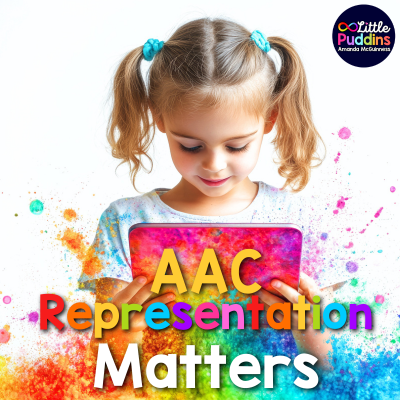
AAC Representation Matters
The Importance of AAC Representation in Media and Education
Why AAC Representation Matters
Augmentative and Alternative Communication (AAC) is a vital and legitimate means of communication for many children and teenagers. For AAC users, seeing communication devices represented in books, television programmes, films, and educational materials is not simply a matter of visibility. It is a matter of validation, belonging, and recognition.
Media and educational representation plays a powerful role in shaping societal attitudes, influencing peer understanding, and supporting identity development. Yet AAC remains significantly underrepresented across mainstream media and learning resources. This absence limits opportunities for AAC users to see themselves reflected in the world around them and restricts wider understanding of diverse communication methods.
This post explores why AAC representation matters and introduces a free downloadable AAC-focused visual resource designed to support visibility and inclusion in everyday learning and media contexts.
The Impact of AAC Representation on Identity and Inclusion
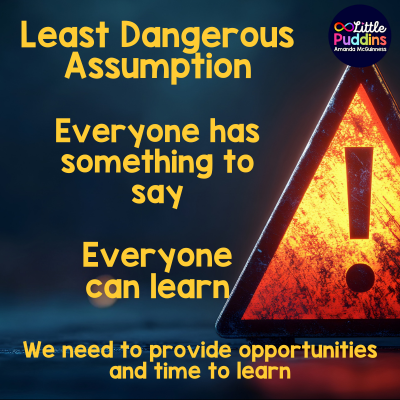
Children and teenagers develop their sense of self through the environments and media they engage with. When AAC is absent from stories, screens, and classrooms, AAC users may experience reduced visibility and a sense of exclusion. When AAC is represented, the impact is both affirming and far-reaching.
Identity Affirmation
Seeing AAC users reflected in media helps normalise diverse communication and reduces isolation. Research indicates that authentic representation supports self-esteem and contributes to a stronger sense of identity for disabled young people who use AAC.
Peer Understanding and Acceptance
When AAC is visible in books and media, peers are more likely to approach communication differences with curiosity and respect. Representation supports empathy and reduces the likelihood of misunderstanding or exclusion in social and educational settings.
Educational Awareness and Support
Including AAC in educational materials increases familiarity among educators, classmates, and professionals. Greater visibility supports inclusive practice, improves accommodations, and contributes to reduced stigma within learning environments.
Enhancing AAC Representation Through Visual Resources
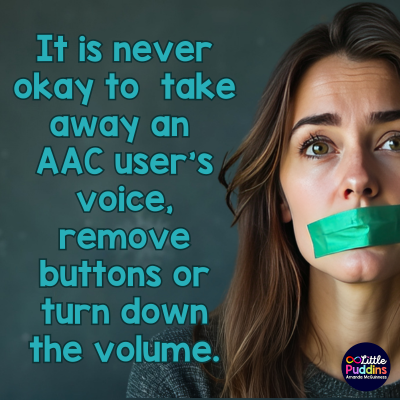
To support the visibility and normalisation of AAC, a free downloadable AAC device visual has been created. This resource is designed to be practical, flexible, and easy to integrate into daily environments.
The visual can be printed and attached to books, classroom materials, visual supports, and learning resources, ensuring that AAC is represented alongside spoken and written communication.
How This Resource Supports AAC Representation
Increases visual representation of AAC in books, activities, and learning materials
Encourages open conversations about diverse communication methods
Builds familiarity with AAC systems through consistent exposure
Supports inclusive attitudes among peers, families, and educators
Regular visual exposure helps position AAC as an expected and valued form of communication rather than an exception.

What the Research Tells Us About AAC Representation
Research consistently highlights the importance of representation for AAC users across media and education.
Identity and Voice
Wickenden (2011) explored how disabled teenagers who use AAC develop identity and voice, highlighting the role of representation in shaping self-perception and social participation.Digital and Media Inclusion
Hynan, Goldbart, and Murray (2015) examined AAC users’ engagement with online and digital spaces, identifying representation as central to self-expression and inclusion beyond traditional settings.AAC in Literature and Education
Smith and Arthur (2024) analysed AAC representation in contemporary young adult fiction, finding that visibility in books and classroom materials increases peer acceptance and validates AAC users’ lived experiences.
AAC Representation Is a Necessity, Not an Option
The inclusion of AAC in media and education is not optional or supplementary. It is essential for creating environments where all forms of communication are recognised and respected.
Representation validates AAC users, educates the wider community, and challenges narrow assumptions about communication. By embedding AAC visuals into books and learning resources and advocating for inclusive representation, we contribute to a culture where all communication methods are equally valued.
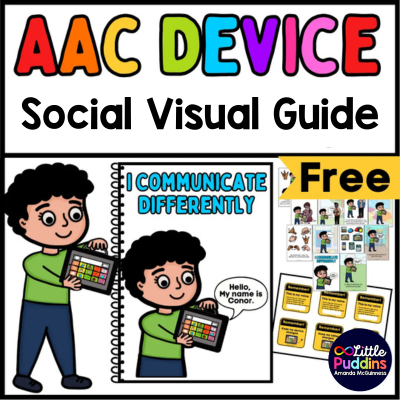
Download the Free AAC Representation Resource
A free AAC Representation Matters resource is available to download and print.
This resource includes AAC imagery that can be attached to books, media, classroom materials, and learning resources to increase visibility and representation in everyday contexts.
By using this resource, families and educators can take a practical step towards making AAC visible, normalised, and respected within learning environments.
Download Your FREE AAC Resource Here.
References
Hynan, A., Goldbart, J., and Murray, J. (2015). A grounded theory of internet and social media use by young people who use augmentative and alternative communication. Disability and Rehabilitation: Assistive Technology, 10(4), 259–270.
Smith, E. J., and Arthur, D. T. (2024). Representation of aided AAC in contemporary young adult fiction. Augmentative and Alternative Communication.
Wickenden, M. (2011). Whose voice is that? Issues of identity, voice, and representation arising in an ethnographic study of the lives of disabled teenagers who use augmentative and alternative communication. Disability Studies Quarterly, 31(4).
