Periods and Autism

Autism Periods Support
Puberty and menstruation are significant developmental milestones, yet they are often discussed through narrow, neuronormative lenses that do not reflect the lived realities of many Autistic children and young people. For Autistic individuals, periods are not simply a biological event. They intersect with sensory processing differences, interoception, communication preferences, anxiety, executive functioning, and emotional regulation.
At Little Puddins, Autism periods support is grounded in a neuroaffirmative, dignity-led approach. This means recognising that Autistic children may need information, preparation, and support that looks different from standard puberty education, and that difference is not deficit.
Why Autistic children need different support around periods
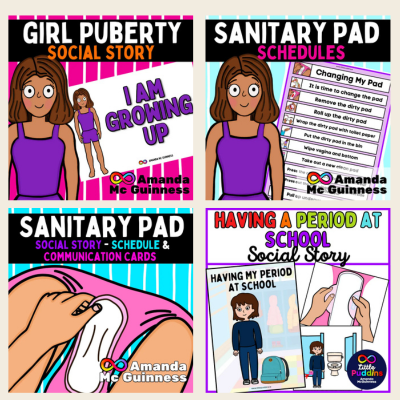
Traditional period education often assumes that Autistic people will intuitively understand body signals, tolerate sensory discomfort, follow verbal explanations, and generalise skills across contexts. For many Autistic people, these assumptions do not hold.
Autistic people may experience:
Differential sensory sensitivity to blood, smells, textures, or the feeling of sanitary products
Differences in interoception, making it harder to recognise early signs of menstruation
Increased anxiety around unexpected bodily changes
Difficulties with sequencing and motor planning for self-care tasks
A need for concrete, visual, and predictable information rather than abstract explanations
When these needs are not acknowledged, periods can become a source of distress, shame, or confusion rather than a supported transition.
A neuroaffirmative approach to periods and menstruation
Neuroaffirmative periods support starts from the understanding that Autistic bodies are not problems to be fixed. Instead, environments, education, and expectations must be adapted to meet the child where they are.
This approach prioritises:
Clear, factual information without euphemisms or moral framing
Visual supports to reduce cognitive and processing load
Predictability and preparation rather than reactive teaching
Respect for privacy, autonomy, and bodily boundaries
Emotional safety alongside practical skills
Periods education should not be rushed or delivered only once. It benefits from being scaffolded over time, revisited regularly, and adapted as the child’s understanding and needs evolve.
The role of visual supports in autism periods support
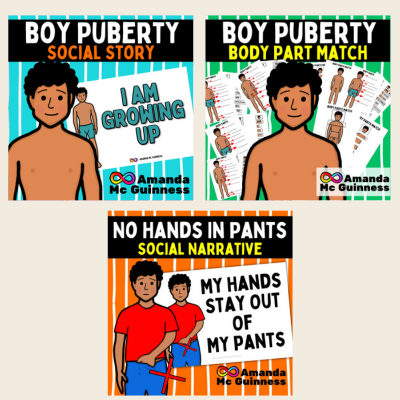
Visual supports are particularly effective when supporting Autistic people through menstruation-related self-care. They externalise information that would otherwise need to be held in working memory and reduce reliance on verbal instruction during moments of stress or sensory overload.
Visuals can support:
Understanding what is happening in the body
Knowing what step comes next in a routine
Reducing anxiety during unfamiliar or uncomfortable tasks
Increasing independence while maintaining dignity
Crucially, visual supports are not about forcing independence. They are about access to reliable information.
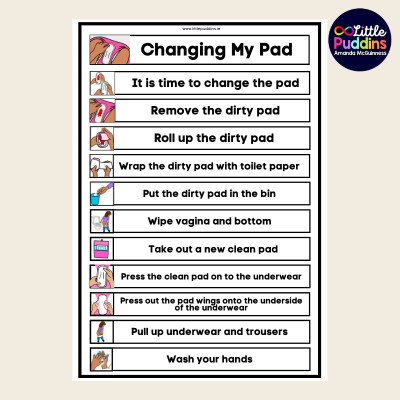
Free putting on a sanitary towel visual support
To support Autistic people during menstruation, a free putting on a sanitary towel visual support is included as part of this resource offering. This visual breaks the process down into clear, manageable steps using simple imagery and minimal language.
The visual is designed to:
Reduce overwhelm during period care routines
Support sequencing and motor planning
Be used discreetly and respectfully
It can be used at home or in educational settings and adapted to suit the person'’s communication style and level of support needs.
Supporting dignity, not just skills
Periods support for Autistic people must centre dignity above all else. This includes respecting the child’s comfort with language, offering choices around products where possible, and understanding that some days will be harder than others.
Support may look like co-regulation, reduced demands, additional time, or simply reassurance that discomfort and emotional changes are real and valid. Autistic people do not need to be desensitised to their bodies. They need to be supported to understand and care for them safely.
Building inclusive puberty support
Autism period education is not an optional extra. It is a necessary part of inclusive education and care. When Autistic children are supported thoughtfully through menstruation, they are more likely to develop body confidence, self-advocacy, and trust in the adults around them.
By using visual supports, clear language, and neuroaffirmative practices, families and professionals can ensure that periods are approached with preparation rather than fear.
The free putting on a sanitary towel visual support is one small but meaningful step towards making menstruation more accessible, predictable, and respectful for Autistic children.
