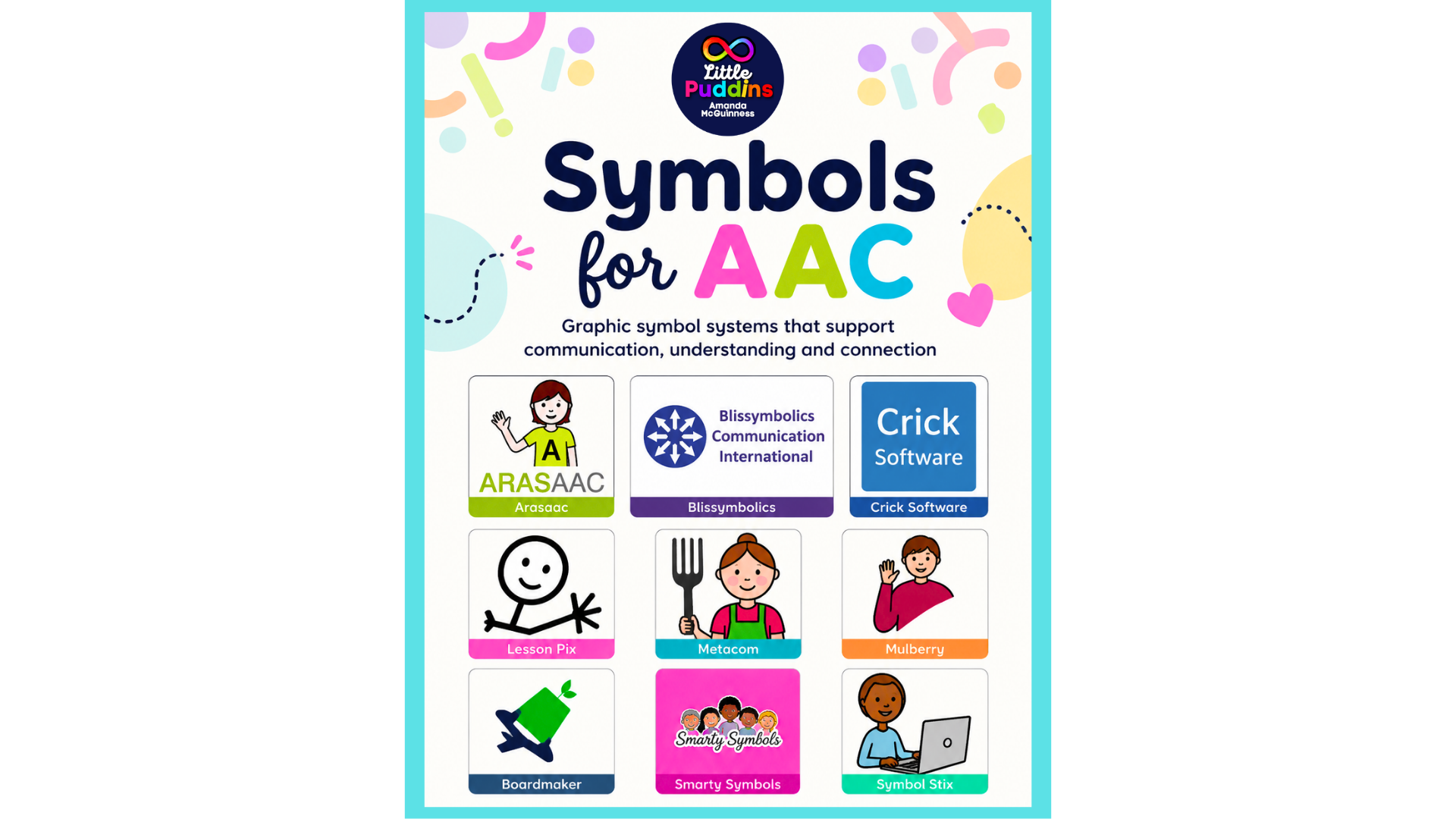
Symbols for AAC
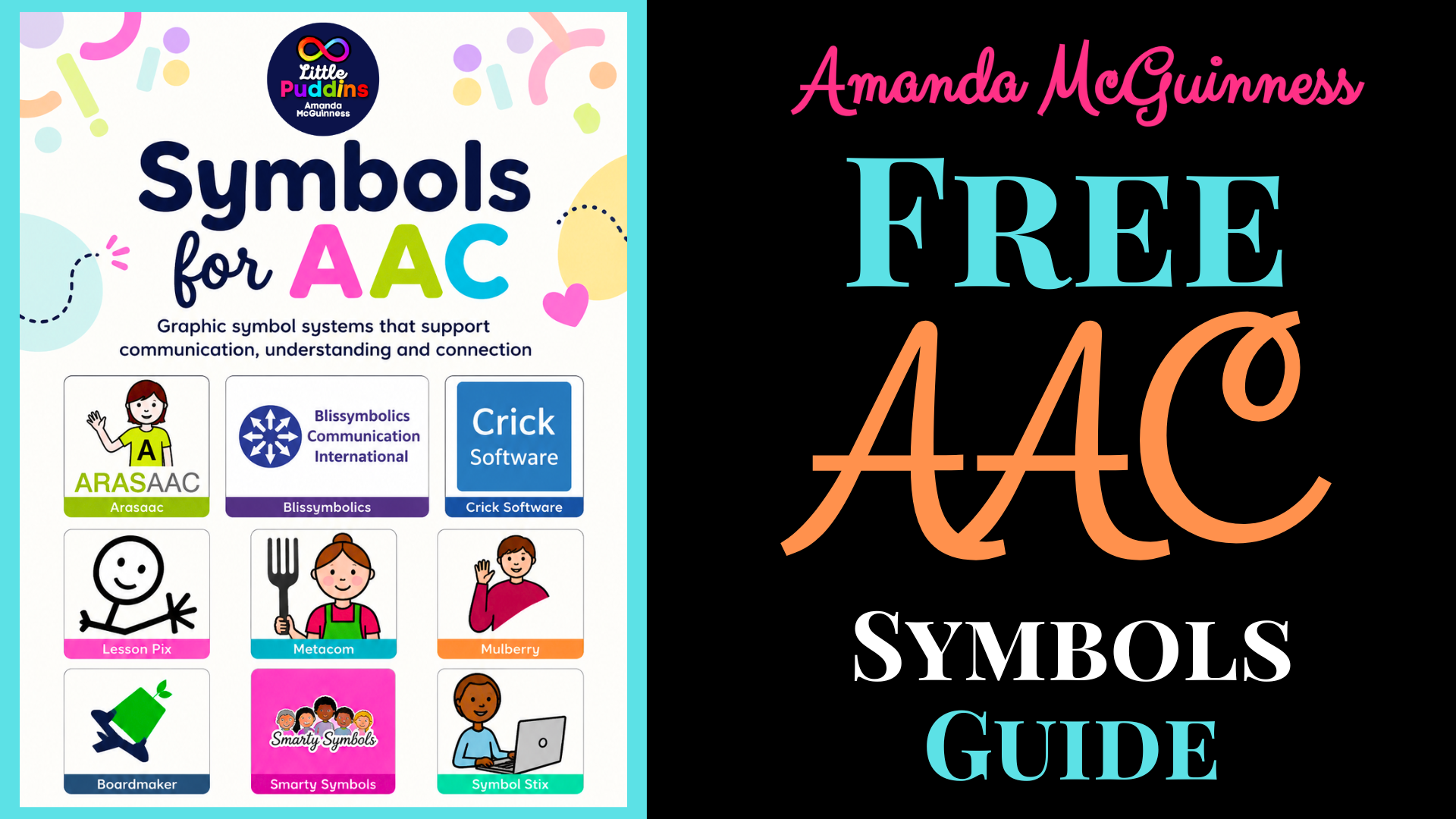
A Guide to Graphic Symbol Systems for Communication
AAC Symbol Based Communication
Understanding Symbols for AAC Communication
Choosing the right symbol system is an important part of creating accessible AAC resources. Whether you are developing communication boards, visual supports, Social Visual Guides, communication passports or classroom resources, selecting appropriate graphic symbols can improve understanding, consistency and participation.
As both the parent of a primarily non-speaking Autistic young person who uses AAC and a professional supporting AAC users, I understand how overwhelming it can feel when you first begin exploring the different symbol libraries available.
This guide introduces some of the most widely used graphic symbol systems for Augmentative and Alternative Communication (AAC) and includes a free downloadable reference resource to help parents, educators and professionals compare the available options.
What Are AAC Symbols?
AAC symbols are visual representations of words, ideas, actions and concepts. They are used within communication systems to support understanding and expression.
Symbol-based communication may be used within:
communication books
communication boards
speech-generating devices
visual schedules
first then boards
Social Visual Guides
communication passports
classroom supports
healthcare resources
Different symbol libraries have their own visual style, vocabulary and licensing arrangements.
Who Uses AAC?
AAC is used by many people across the lifespan, including:
non-speaking Autistic people
minimally speaking individuals
people with unreliable speech
people with motor speech differences
individuals with intellectual disability
people recovering from illness or injury
anyone who benefits from an additional way to communicate
AAC is not a last resort.
Research consistently demonstrates that AAC supports language development, participation, autonomy and communication without preventing speech development.

Choosing an AAC Symbol Library
There is no single "best" symbol system.
The most appropriate choice depends on:
the individual's communication preferences
familiarity with the symbols
the communication partner
available software
licensing requirements
educational or clinical setting
For families beginning their AAC journey, I often recommend exploring ARASAAC, which provides an extensive free symbol library alongside editable templates and resources.
Other symbol systems offer additional visual styles, specialist vocabularies and software integrations depending on your needs.
AAC Symbol Libraries Included in the Free Guide
The downloadable guide includes a visual overview of several commonly used AAC symbol providers, including:
ARASAAC
Boardmaker
Smarty Symbols
SymbolStix
LessonPix
Metacom
Mulberry Symbols
Blissymbolics
Crick Software
Some of these resources are freely available, while others require a one-off purchase or subscription. Before purchasing any commercial symbol library, it is worth considering how you intend to use the symbols and reviewing each provider's licensing arrangements.
Why AAC Matters
Communication is a fundamental human right.
AAC is not simply about requesting items or answering questions.
It provides access to:
relationships
education
healthcare
self-advocacy
emotional expression
autonomy
decision-making
participation in everyday life
Access to communication should never depend on someone proving they are "ready" or "deserving" of AAC.
Download Your Free AAC Symbol Guide
This free reference guide provides a simple visual overview of commonly used AAC graphic symbol systems to help families, educators and professionals become familiar with the options available.