
Autism Poo Withholding

Why Is My Child Holding Their Poo?
Understanding Stool Withholding in Children
If your child crosses their legs, hides when they need a poo, stands on tiptoes, or seems determined not to use the toilet, you may be wondering why they are holding their poo.
Stool withholding is one of the most common yet misunderstood toileting challenges experienced by Autistic children. Many parents are told their child is constipated, advised to increase fluids and fibre, or prescribed medication to soften stools. Whilst these interventions can be important, they do not always explain why the problem started in the first place.
For many children, constipation is only part of the story.
Behind ongoing constipation often lies a pattern known as stool withholding.
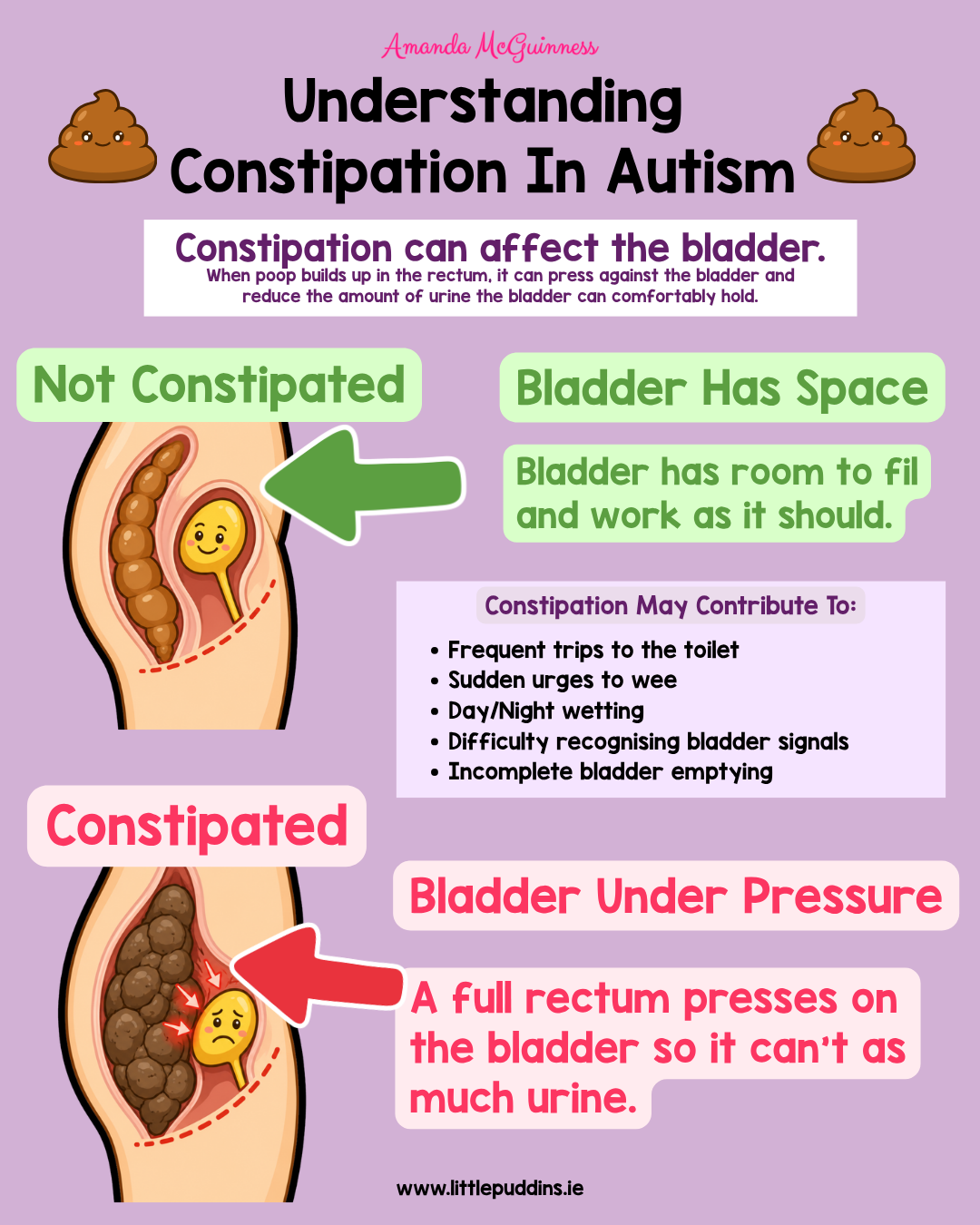
What Is Stool Withholding?
Stool withholding occurs when an Autistic child responds to the urge to have a bowel movement by tightening their body and attempting to prevent the poo from coming out.
This response is frequently misunderstood as stubbornness, refusal, laziness, or a lack of cooperation. In reality, stool withholding is often a protective response that develops following discomfort, fear, anxiety, sensory differences, or previous painful experiences.
Many children begin withholding after experiencing a hard stool, constipation, an anal fissure, or another unpleasant bowel movement. Their body learns that pooing feels uncomfortable, and the next time the urge appears, they instinctively try to hold on.
What Causes Stool Withholding?
There is rarely a single cause.
Common contributing factors include:
Painful Bowel Movements
A child who has experienced pain when pooing may become worried about repeating the experience.
Constipation
Constipation often leads to larger, harder stools, which can increase discomfort and contribute to withholding.
Fear and Anxiety
Some children become anxious about the sensations associated with pooing or worry that bowel movements will hurt.
Sensory Processing Differences
The sensations of needing a poo, sitting on the toilet, wiping, flushing, or using a busy bathroom can feel overwhelming for some children.
Interoceptive Differences
Some children find it difficult to recognise and interpret the body's signals that indicate a bowel movement is needed.
Changes in Routine
Starting school, travelling, moving house, illness, or changes in daily routines can influence bowel habits and contribute to withholding.
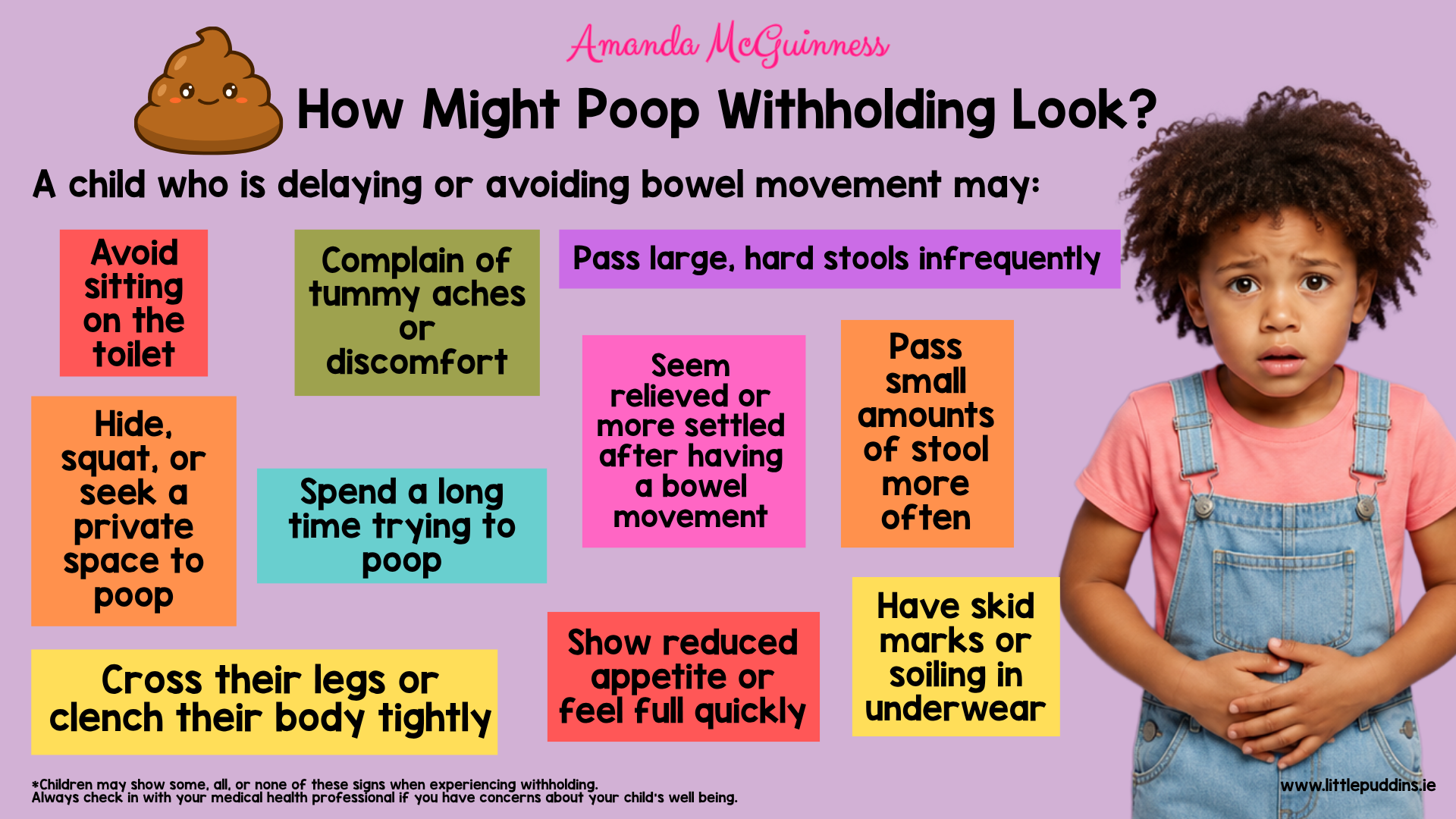
What Are the Signs of Stool Withholding?
Many Autistic children display recognisable signs when they are trying to hold on.
These may include:
Crossing their legs tightly
Clenching their bottom muscles
Standing rigidly
Walking on tiptoes
Squatting or crouching
Hiding behind furniture
Freezing during play
Becoming red in the face
Appearing distracted or distant
Avoiding conversations about poo
Withholding for several days
These body positions are often referred to as retentive posturing.
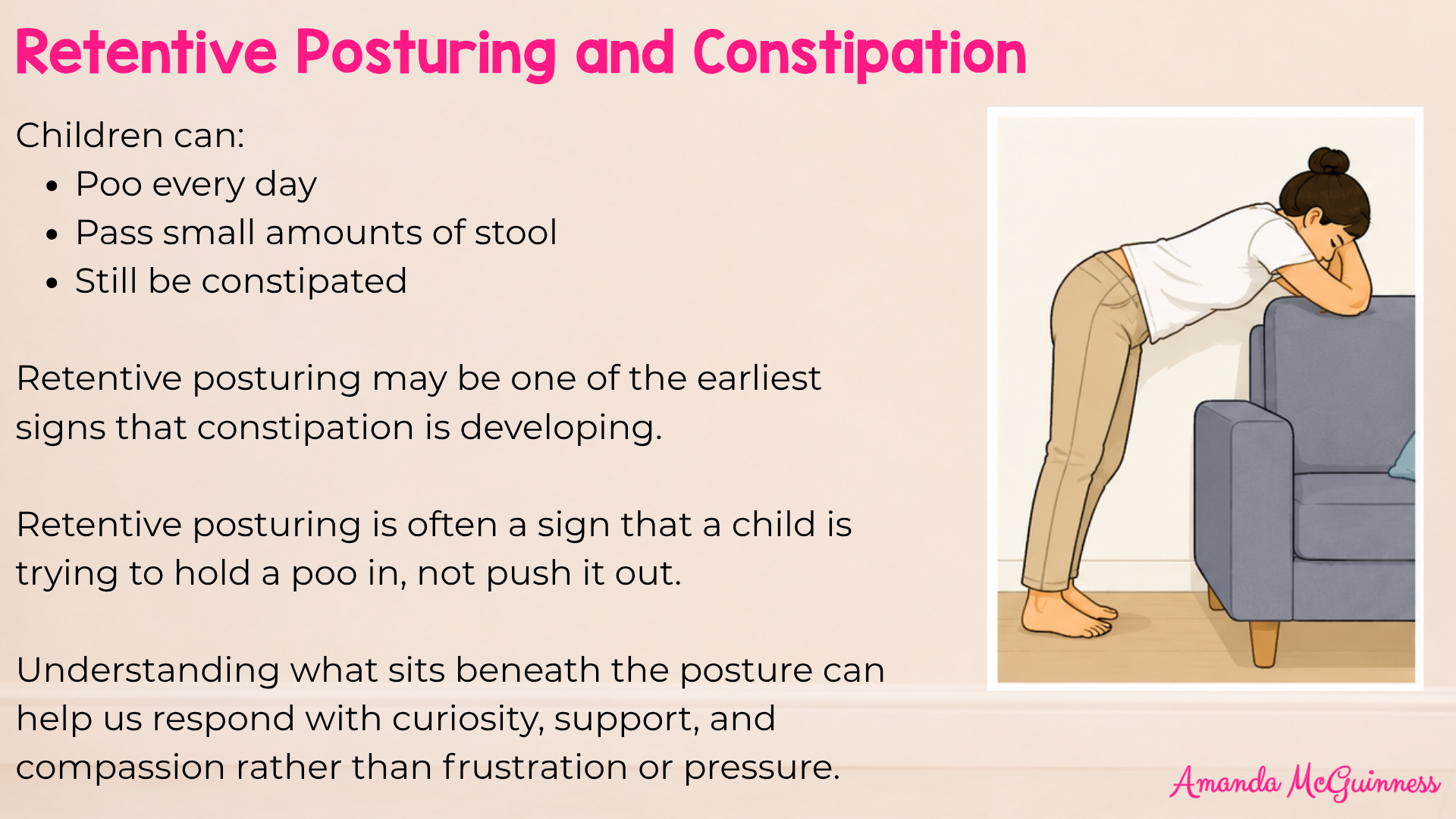
Understanding Retentive Posturing
Retentive posturing occurs when a child uses specific body positions to prevent a bowel movement from happening.
Parents often believe their child is trying to poo because they appear to be straining. In many cases, the opposite is true. The child's body is actively trying to stop the poo from coming out.
Retentive posturing can include:
Leg crossing
Tiptoe walking
Buttock clenching
Squatting
Standing very still
Arching the back
Hiding
These positions help the child resist the urge to empty their bowels.
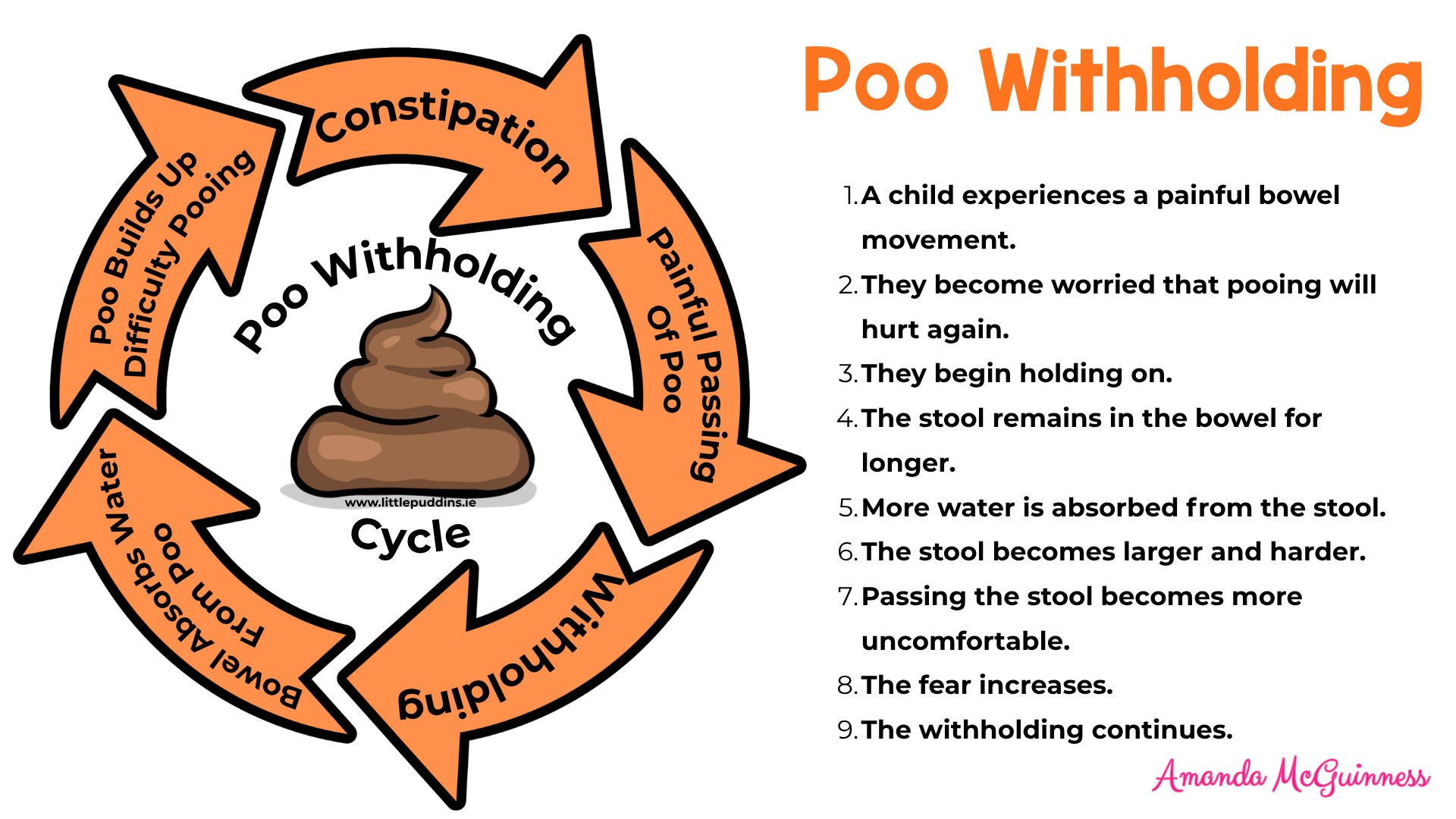
The Stool Withholding Cycle
One of the most important concepts for families to understand is the withholding cycle.
A child experiences a painful bowel movement.
They become worried that pooing will hurt again.
They begin holding on.
The stool remains in the bowel for longer.
More water is absorbed from the stool.
The stool becomes larger and harder.
Passing the stool becomes more uncomfortable.
The fear increases.
The withholding continues.
Without support, this cycle can become increasingly difficult to break.
Why Stool Withholding Is Not Just a Physical Problem
Although stool withholding affects the bowel, it is rarely only a digestive issue.
Many children also experience:
Fear
Anxiety
Reduced confidence
Sensory discomfort
Shame
Embarrassment
Difficulty understanding body signals
These experiences can continue even after constipation begins to improve.
This is one reason some children continue withholding despite receiving treatment for constipation.
Supporting Children Who Withhold Stool
Supporting stool withholding often involves addressing both the physical and emotional aspects of the experience.
Children may benefit from:
Medical support for constipation
Soft and comfortable stools
Visual supports
Predictable toileting routines
Understanding how digestion works
Opportunities to discuss worries and fears
Sensory adaptations within the bathroom
Calm and supportive adult responses
Most importantly, children benefit when adults approach withholding with curiosity and understanding.
Stool withholding is one of the most common yet misunderstood toileting difficulties experienced by children.
It is rarely a sign that a child is being difficult. More often, it reflects a body that is trying to protect itself from discomfort, uncertainty, fear, or previous painful experiences.
When we understand what sits beneath the withholding, we can begin supporting children in ways that build confidence, comfort, and trust in their bodies once again.

References
Fu SC, Lee CH, Wang H. Exploring the Association of Autism Spectrum Disorders and Constipation through Analysis of the Gut Microbiome. Int J Environ Res Public Health. 2021 Jan 14;18(2):667. doi: 10.3390/ijerph18020667. PMID: 33466802; PMCID: PMC7830459.
Maslen C, Hodge R, Tie K, Laugharne R, Lamb K, Shankar R. Constipation in autistic people and people with learning disabilities. Br J Gen Pract. 2022 Jun 30;72(720):348-351. doi: 10.3399/bjgp22X720077. PMID: 35772989; PMCID: PMC9256070.
McElhanon, B. O., McCracken, C., Karpen, S., & Sharp, W. G. (2014). Gastrointestinal symptoms in autism spectrum disorder: a meta-analysis. Pediatrics, 133(5), 872–883. https://doi.org/10.1542/peds.2013-3995
Mulay, Kalyani Vijaykumar, and Sivaramakrishnan Venkatesh Karthik. “Managing Constipation in Children with ASD – a Challenge Worth Tackling.” Pediatrics & Neonatology, Jan. 2022, https://doi.org/10.1016/j.pedneo.2021.11.009. Accessed 14 Mar. 2022.
Heaton, K W & Lewis, S J 1997, ‘Stool form scale as a useful guide to intestinal transit time’. Scandinavian Journal of Gastroenterology, vol.32, no.9, pp.920 – 924.
Harvey S, Matthai S, King DA – How to use the Bristol Stool Chart in childhood constipation –Archives of Disease in Childhood – Education and Practice 2023;108:335-339.
