
What Is an Autism Communication Passport?

What Is an Autism Communication Passport?
Free Guide & Templates
A Neuroaffirmative Guide for Parents, Teachers and Professionals
If you've recently heard someone mention an Autism Communication Passport, you may be wondering what it is, who it is for, and whether your child would benefit from having one.
Communication passports are becoming increasingly recognised as one of the most practical ways to help schools, healthcare professionals, and support services understand an Autistic person's individual needs. Rather than focusing on deficits or diagnoses, a well-designed communication passport helps others understand the individual behind the label.
In this guide, I'll explain what an Autism Communication Passport is, why it matters, what should be included, and where you can download free communication passport templates.
What Is an Autism Communication Passport?
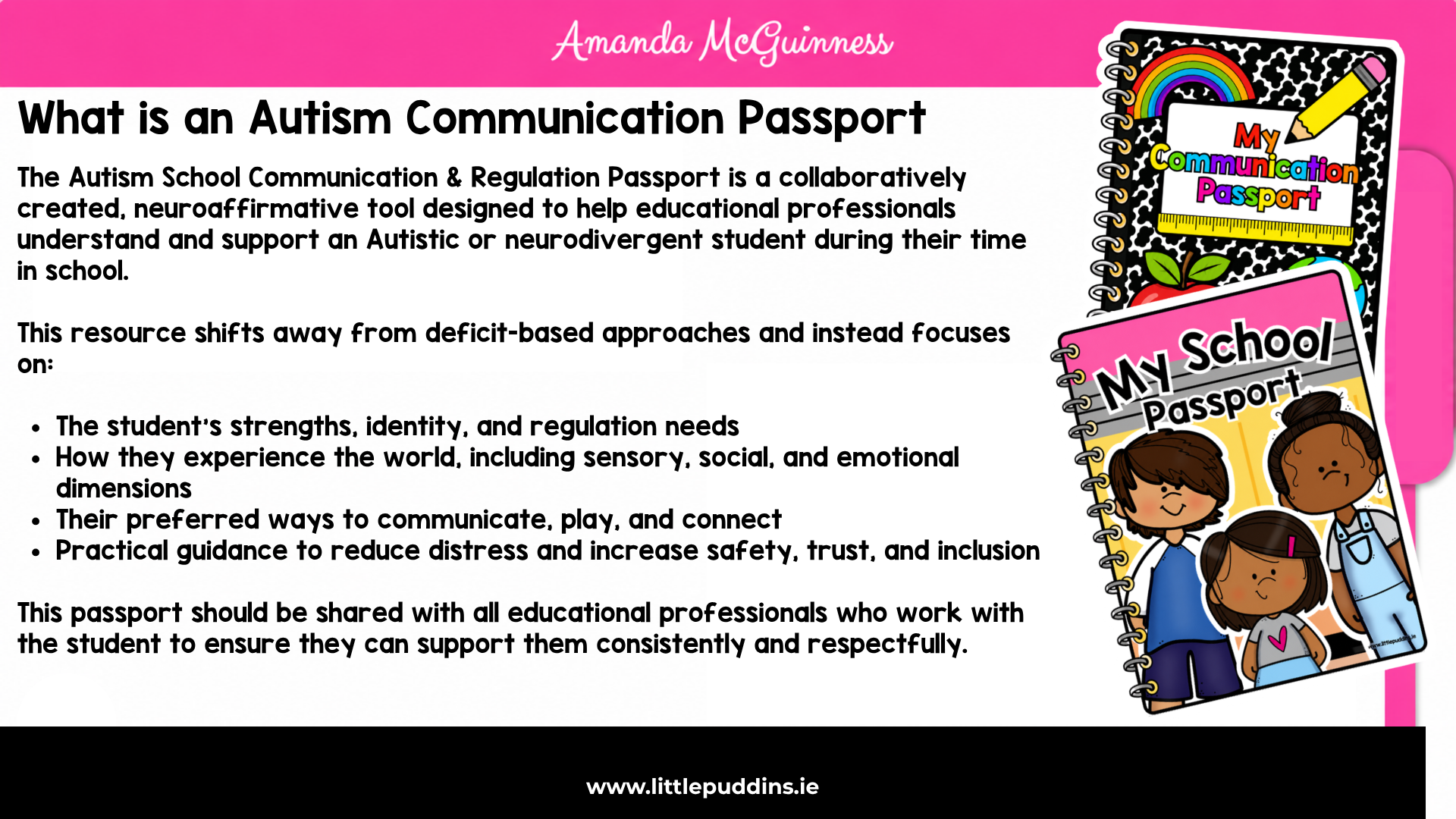
An Autism Communication Passport is a personalised document that shares important information about how an Autistic person experiences, communicates with, and navigates the world.
It provides practical guidance that helps others understand:
how the person communicates
what helps them feel safe
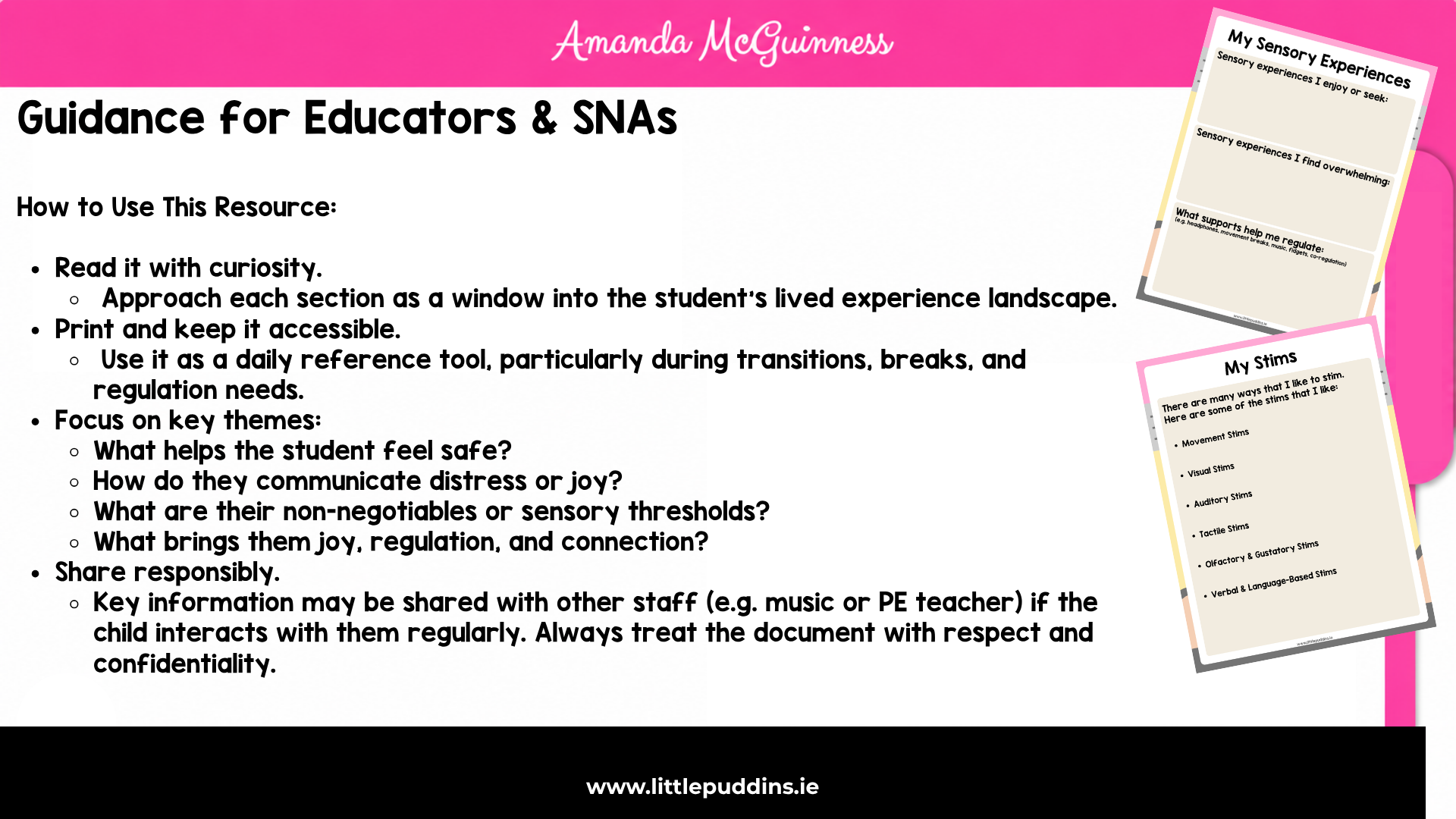
sensory preferences and differences
regulation needs
strengths and interests
how to reduce distress
ways to support meaningful participation
Rather than expecting the Autistic person to repeatedly explain themselves, the passport allows important information to travel with them across different environments.
Why Are Autism Communication Passports Important?
Every Autistic person experiences the world differently.
Two children in a setting may both be Autistic but may communicate differently, regulate differently, experience sensory information differently, and need completely different supports. Without a Communication Passport, professionals may not have enough information on how to support a student correctly.
Communication passports help bridge this gap by giving professionals insight into the individual's lived experience.
What Should Be Included in an Autism Communication Passport?
Every communication passport should be unique to the individual, but many include:
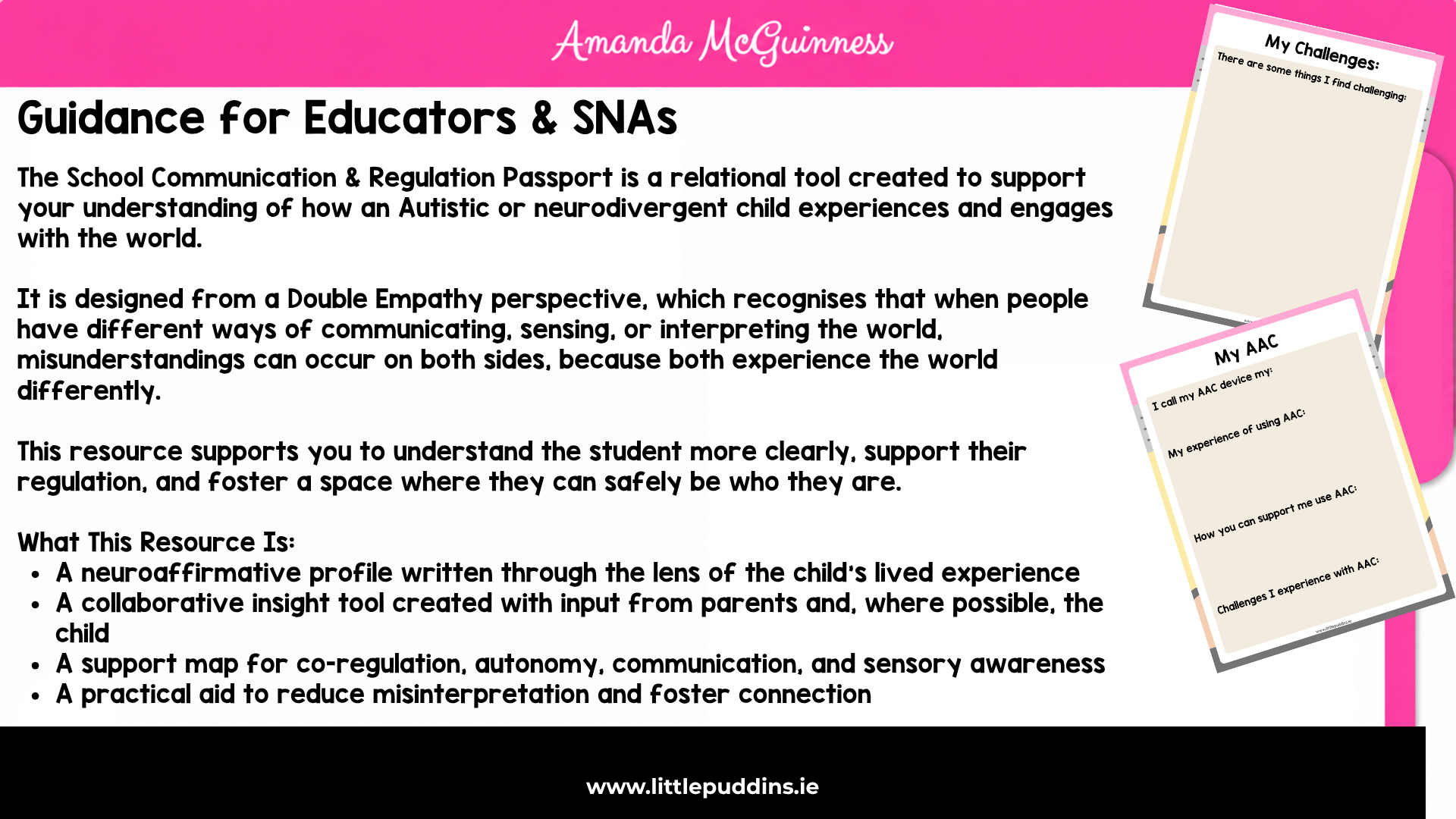
Personal identity
Preferred name
Communication preferences
AAC or visual supports used
Sensory experiences
Strengths and interests
What may cause distress
Regulation strategies
Medical or allergy information
Important relationships
Environmental adaptations
Helpful language to use
Language to avoid
What helps during moments of overwhelm
How the individual prefers adults to support them
The most valuable communication passports are created collaboratively with the individual wherever possible.
Communication Passports Are Not Behaviour Plans
One of the biggest misconceptions is that communication passports exist to manage behaviour.
They do not.
Instead, they exist to improve understanding.
A neuroaffirmative communication passport supports the identification of unmet needs, sensory differences, emotional overwhelm, communication differences, or attempts to protect wellbeing.
Rather than trying to change the individual, the passport helps adults adapt their approach.
Who Can Use a Communication Passport?
Although many people first encounter communication passports in primary school, they are valuable throughout life.
Communication passports can support:
preschool children
primary school students
secondary school students
college and university students
adults in employment
healthcare appointments
hospitals
therapists
community services
residential settings
supported living
social care services
The passport should evolve alongside the individual as their communication, preferences, strengths and support needs change.
When selecting and using visual or printable resources, it is important to prioritise:
Flexibility over rigidity
Collaboration over compliance
Understanding over performance
No single resource is universally appropriate. The value lies in how materials are introduced, adapted, and embedded within relationships that centre safety, respect, and autonomy.
Communication Passports and the Double Empathy Theory
At Little Puddins, communication passports are designed from a neuroaffirmative perspective informed by the Double Empathy Theory.
This recognises that misunderstandings do not occur because Autistic people communicate incorrectly.
Instead, communication differences exist between people who experience the world differently.
Communication passports help build mutual understanding by making those differences visible in respectful and practical ways.
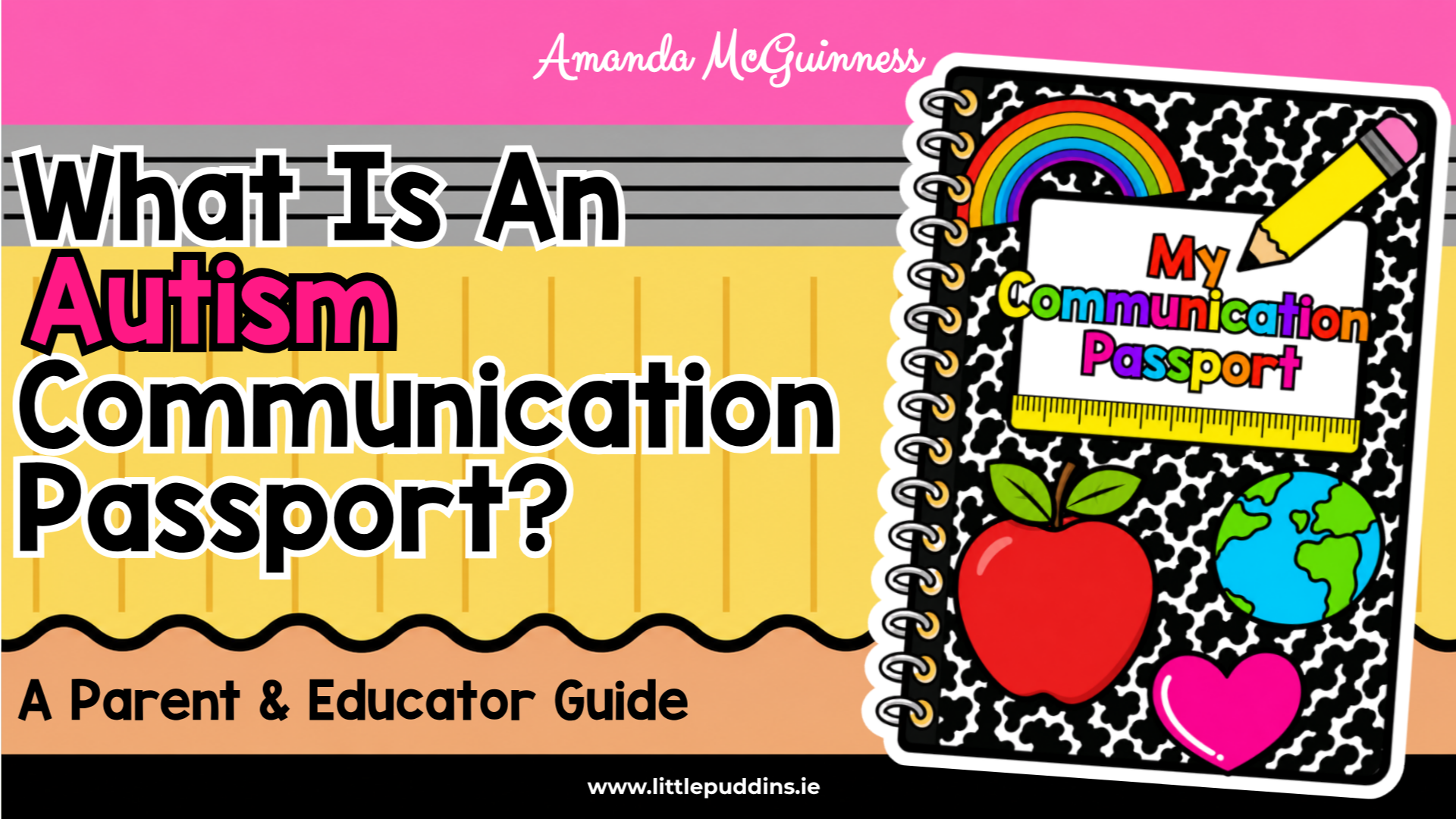
How Do You Create an Autism Communication Passport?
The most meaningful passports are created with the individual whenever possible.
Depending on the person's age and communication preferences, this might include:
conversation
photographs
drawing
AAC
choosing symbols
written responses
favourite objects
videos
shared observations from trusted family members
Remember that a communication passport is a living document.
It should be reviewed regularly as the individual grows and their needs change.
Download Free Autism Communication Passports
Over the years, I have developed a range of free Autism Communication Passports for different ages, environments and support needs.
You'll also find guidance explaining:
how to complete each section
practical examples
downloadable templates
advice for parents
guidance for teachers and SNAs
neuroaffirmative support strategies
Whether you're supporting a child, teenager or adult, the goal remains the same:
To increase understanding, strengthen relationships, and create environments where Autistic people can thrive.
Browse the free Autism Communication Passports and resources today at Little Puddins.
Free Autism Communication Passport
Download the Free Autism Communication Passport
Autism Communication Passport Free Resource
Download the free Communication Passport and access the explainer information
Autism Teen Communication Passport
Download your free Teen Autism Communication Passport and support their transition to Secondary
Starting School Autism Social Visual Workbook
Download your free Autism Starting School Social Visual Workbook, created to support Autistic children making the move to school
Autism School Bus Escort Free Communication Passport
Download your free Bus Escort Communication Passport to support your child’s transition to and from school each day.
