
Free AAC Social Visual Guides for Autism
Free AAC Social Stories and Social Visual Guides to Support Communication Understanding
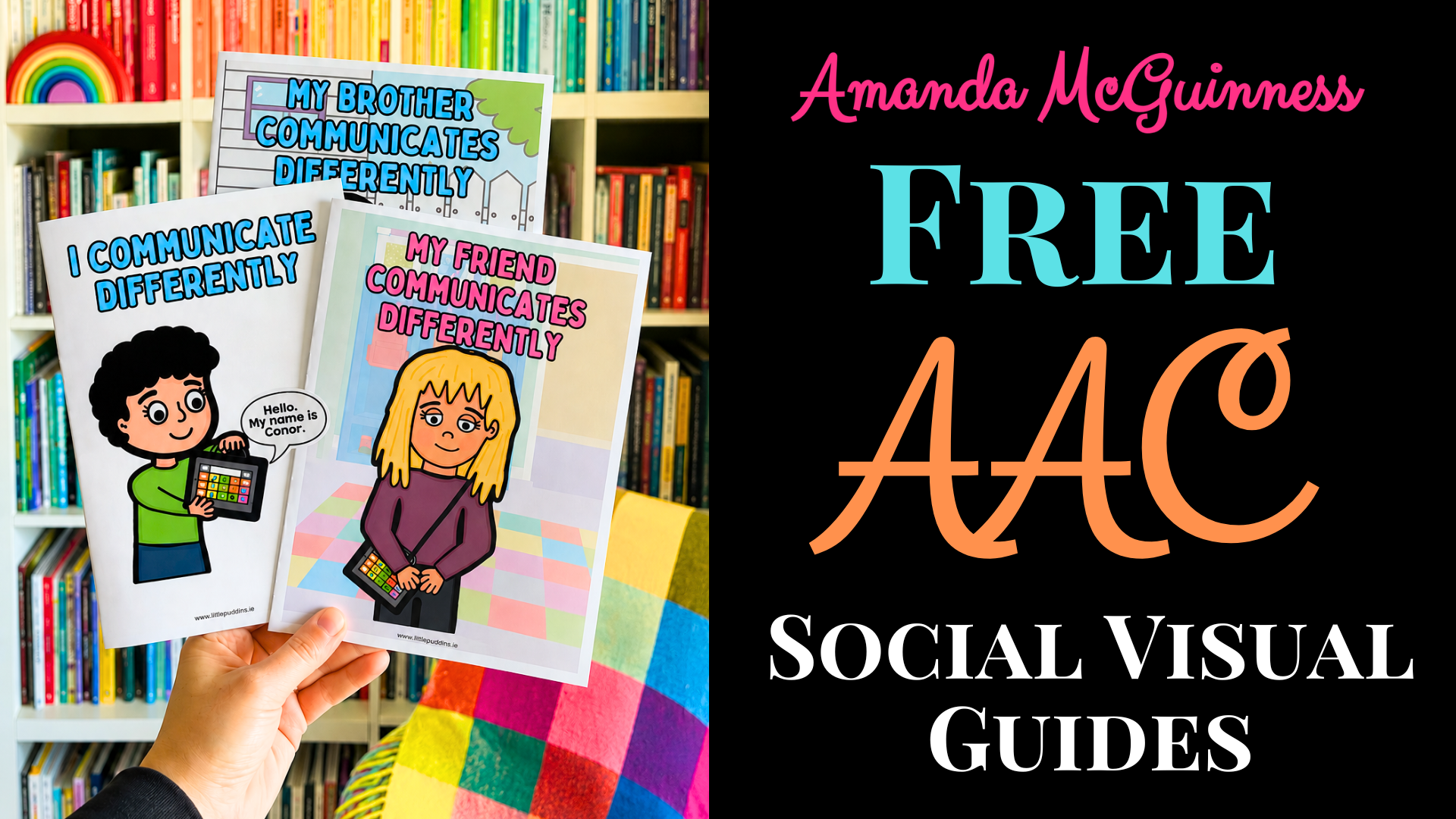
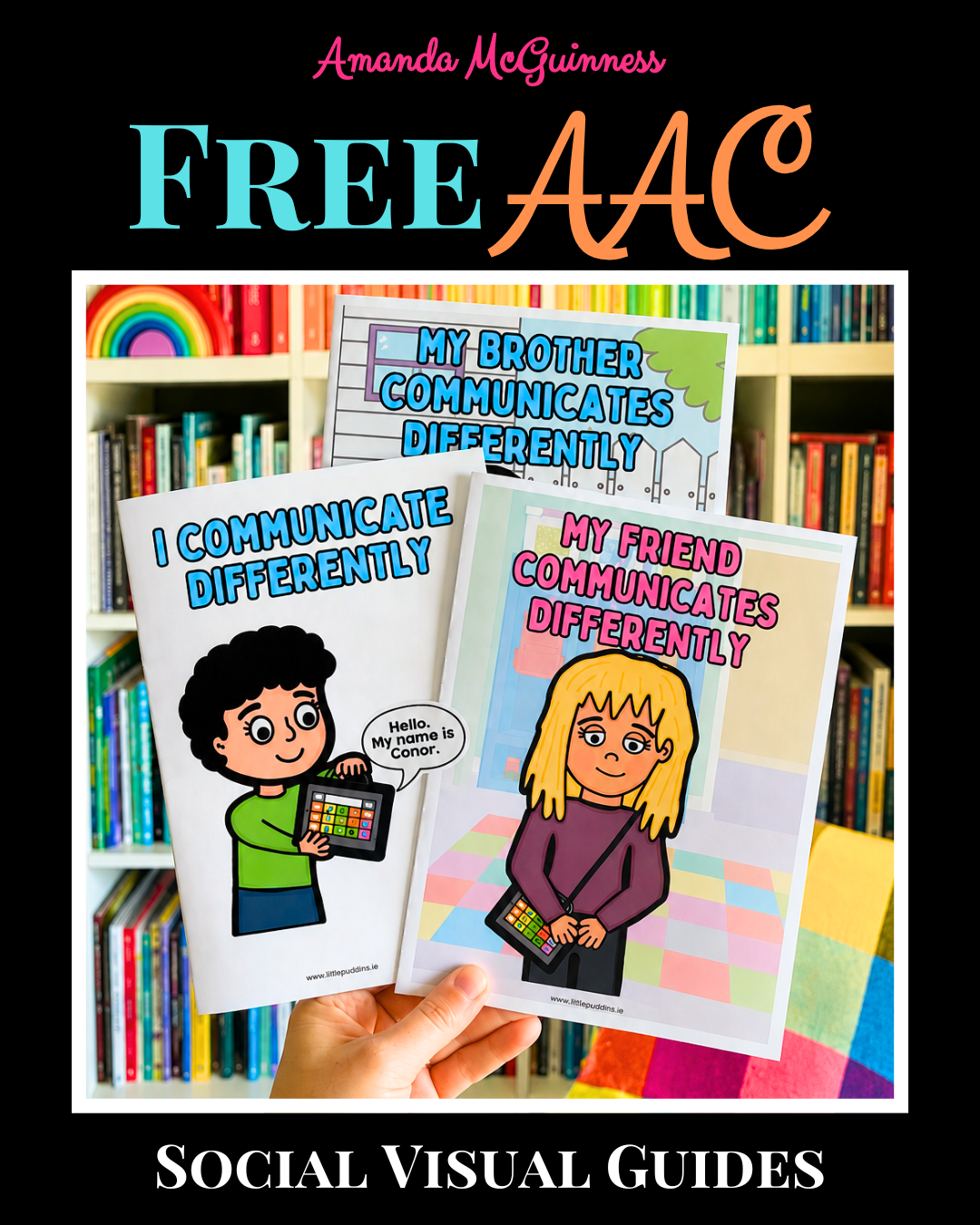
If you are looking for a free AAC social story, you will find a variety of 3 free AAC Social Visual Guides.
Understanding Augmentative and Alternative Communication (AAC) can feel unfamiliar for many children, siblings, classmates and even adults. Questions such as Why does my friend use an iPad to talk?, Can I play with someone who uses AAC? or Why does my brother communicate differently? are completely natural.
One of the simplest ways to answer these questions is through clear, accessible visual information.
To support families, schools and professionals, I have created a collection of free AAC Social Visual Guides designed to help children understand that there are many different ways to communicate and that every form of communication deserves respect.
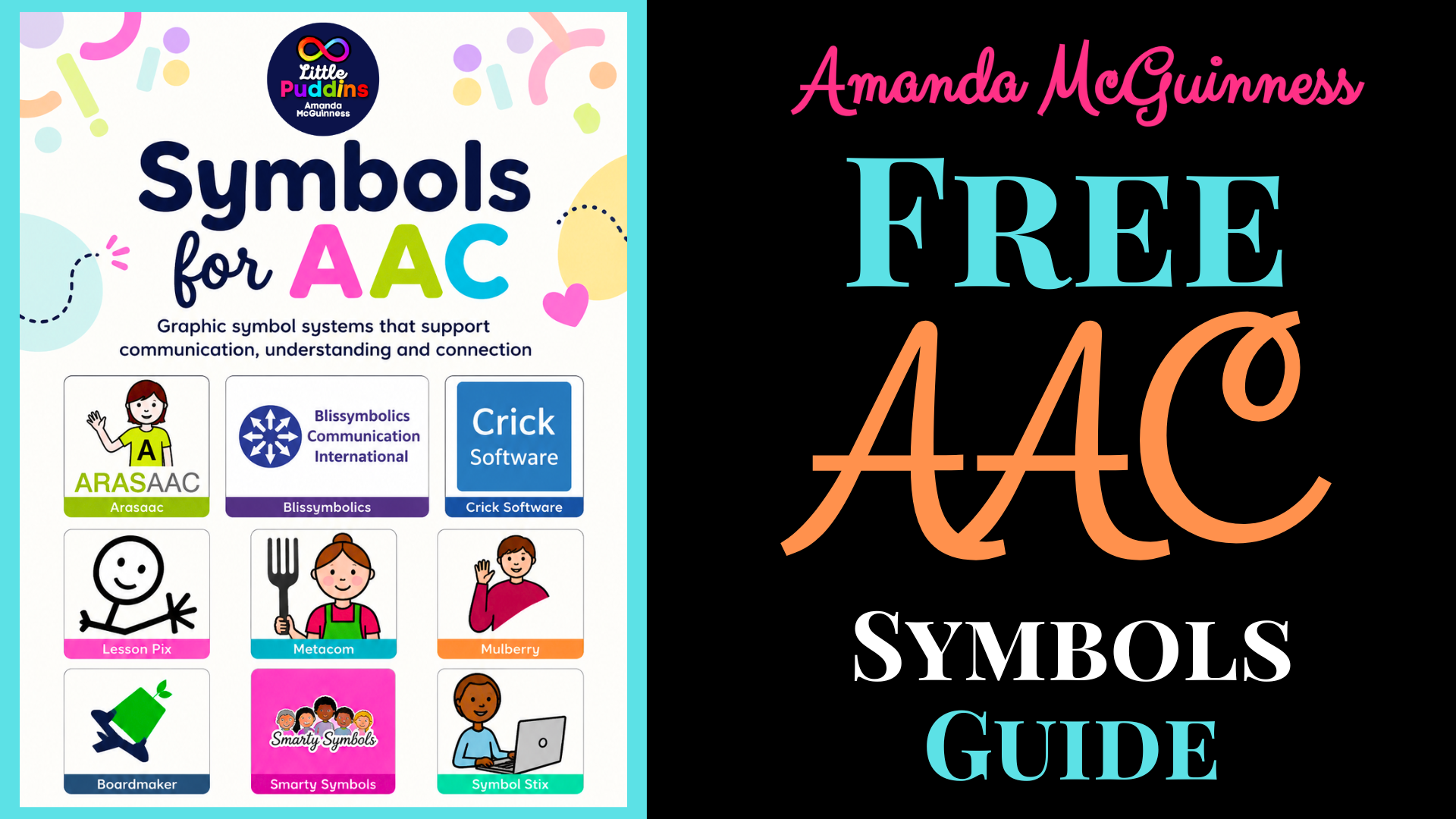
If you are new to AAC, I also recommend reading my comprehensive guide to What is AAC?, where I explain what AAC is, who uses it and why communication is a fundamental human right. You can also access my free AAC Symbols Guide where you can access free AAC symbols and low cost options to get started with visual symbology.
What is AAC?
Augmentative and Alternative Communication (AAC) includes every way a person communicates other than, or alongside, spoken language.
AAC may include:
Speech generating devices
Communication apps
Communication books
Picture symbols
Communication boards
Eye gaze
Key Word Sign
Gestures
Facial expressions
AAC is used by many people, including non-speaking Autistic people, minimally speaking individuals, people with unreliable speech and those with motor speech differences.
Importantly, AAC does not prevent speech development. Research consistently shows that AAC supports language development, participation, autonomy and communication.

Why Children Need to Learn About AAC
Children are naturally curious. When they meet someone who communicates differently, they often have questions.
Without accurate information, children may make assumptions or avoid interacting because they simply do not understand.
Providing accessible information helps children recognise that:
everyone communicates differently
AAC is another way of communicating
communication devices are someone's voice
friendships are built through communication, not speech alone
everyone deserves opportunities to participate and belong

Download Your Free AAC Social Visual Guides
This free collection includes three printable Social Visual Guides that introduce AAC in an accessible, respectful and neuroaffirmative way.
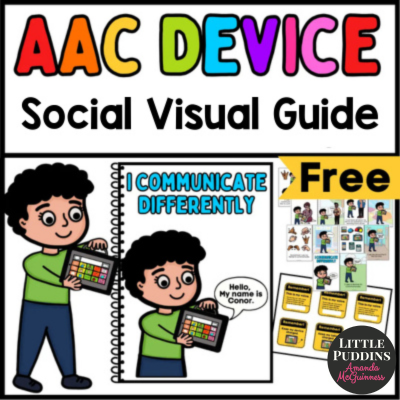
1. I Communicate Differently: AAC Social Visual Guide
Designed for AAC users themselves, this guide celebrates different ways of communicating and reinforces that an AAC device is a person's voice.
Topics include:
different ways of communicating
communicating at home and school
using an AAC device
communication choices
respecting communication differences
2. My Friend Communicates Differently
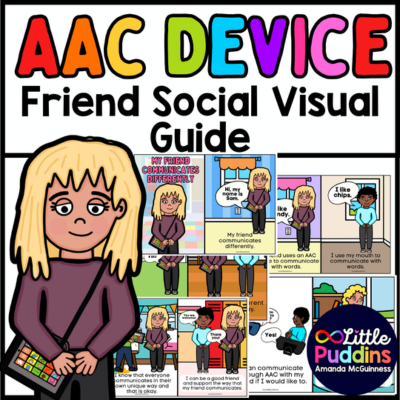
This guide helps classmates understand how an AAC user communicates.
Children learn:
everyone communicates differently
how AAC works
how they can communicate with an AAC user
that communication devices deserve respect
how friendships can develop through communication
This resource is ideal for mainstream and special schools preparing classmates for a new student who uses AAC.
3. My Brother Communicates Differently
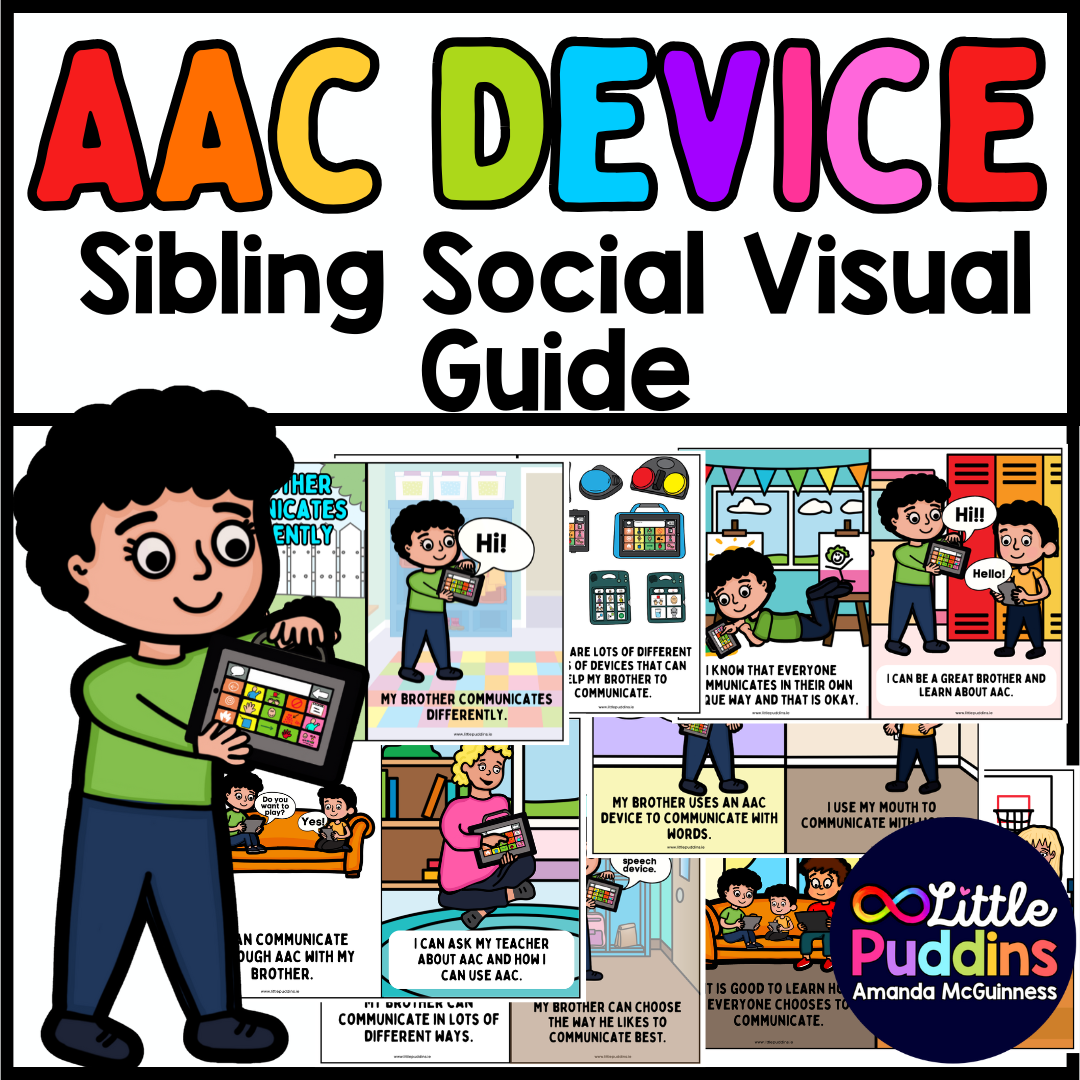
Siblings often have lots of questions about AAC.
This guide supports brothers in understanding:
why AAC is used
different communication styles
learning about AAC together
communicating with a sibling who uses AAC
respecting communication differences
Although written for brothers, many families find the information useful when introducing AAC to siblings generally.
When Might These AAC Social Visual Guides Be Helpful?
These resources may be particularly useful when:
preparing classmates before an AAC user joins the class
introducing AAC during circle time
supporting siblings to understand AAC
explaining communication differences to extended family
preparing early years settings
supporting inclusive classrooms
helping an AAC user explain how they communicate
promoting Autism acceptance and communication inclusion
supporting speech and language therapy programmes
introducing AAC within schools
Who Are The FREE AAC Social Visual Resources For?
These free AAC Social Visual Guides have been created for:
Autistic children
non-speaking children
minimally speaking children
AAC users
siblings
classmates
parents
teachers
SNAs
speech and language therapists
occupational therapists
psychologists
early years educators
schools
Continue Exploring AAC Resources
If you found these free AAC Social Visual Guides helpful, you may also like these free resources available on Little Puddins:
What is AAC?(Start here if you are new to AAC.)
Free AAC Apps
AAC Communication Passports
AAC Communication Boards
AAC Symbol Libraries
Gestalt Language Processing
Free Autism Visual Supports
Social Visual Guides Library
Together these resources form part of the Little Puddins AAC Knowledge Centre, supporting families, educators and professionals to create accessible communication environments.
Download Your Free AAC Social Visual Guides
Whether you searched for a free AAC social story, an AAC classroom resource or information to help children understand communication differences, I hope these Social Visual Guides support meaningful conversations about communication, inclusion and belonging.
Communication is not defined by speech.
Everyone communicates.
Everyone deserves to be understood.
References
Hynan, A., Goldbart, J., and Murray, J. (2015). A grounded theory of internet and social media use by young people who use augmentative and alternative communication. Disability and Rehabilitation: Assistive Technology, 10(4), 259–270.
Smith, E. J., and Arthur, D. T. (2024). Representation of aided AAC in contemporary young adult fiction. Augmentative and Alternative Communication.
Wickenden, M. (2011). Whose voice is that? Issues of identity, voice, and representation arising in an ethnographic study of the lives of disabled teenagers who use augmentative and alternative communication. Disability Studies Quarterly, 31(4).
