
Kelly Mahler OT & Interoception
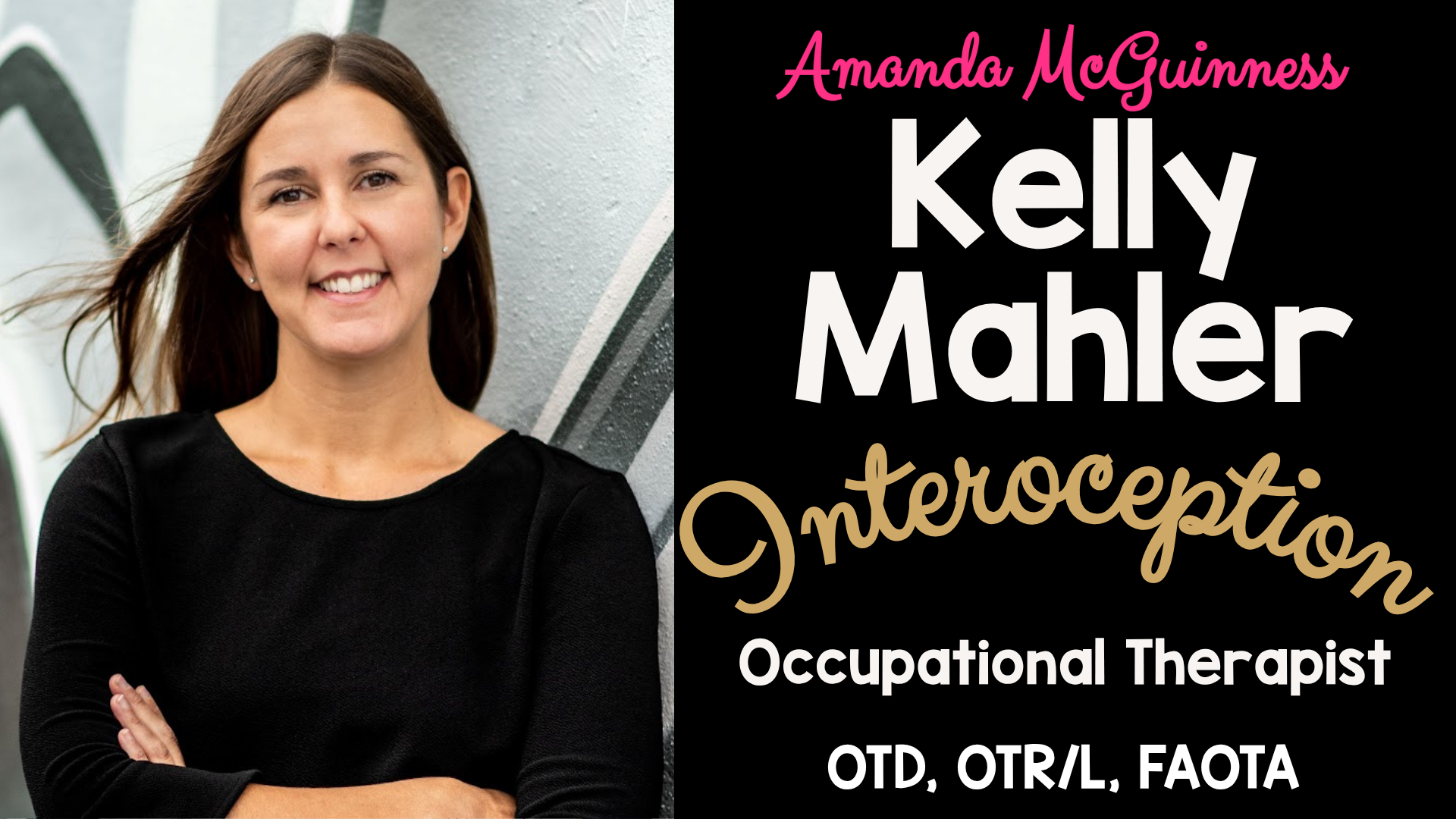
Autism, Interoception and Toilet Learning: A Conversation with Kelly Mahler OT
What if we stopped asking, “How do we get an Autistic child to use the toilet?” and started asking what their body needs in order to feel safe enough to go?
I recently had the opportunity to sit down with Kelly Mahler, OTD, OTR/L, FAOTA, for an episode of The Unfiltered Autistic Podcast. Kelly is an occupational therapist, researcher, author and internationally recognised voice in the field of interoception.
Our conversation explored Autism, interoception, toilet learning, constipation, bodily autonomy, regulation and felt safety, but one message threaded through almost every part of our discussion: we cannot understand what is happening for a person without considering their internal bodily experience.
For me, this is particularly important when we think about toilet learning.
What is interoception?
Interoception is our sense of what is happening inside our body. It encompasses the body signals associated with experiences such as hunger, thirst, temperature, pain, tiredness, needing to pee or poo, heart rate, breathing and many of the physiological sensations associated with emotion.
However, noticing a body signal is only part of the process.
We also need to make sense of what that signal means and determine what, if anything, our body needs us to do in response.
For Autistic people, interoceptive experiences can be highly individual. Signals may be difficult to notice, may become apparent only when they are intense, or may be experienced in ways that do not correspond with how another person expects them to feel.
This is why an adult cannot simply decide what someone else's internal experience means.
That principle became particularly significant during my conversation with Kelly.
Autism and toilet learning: felt safety comes first
One of the most important parts of our discussion focused on Autism and toilet learning. Kelly explained that when a body is under stress or does not feel safe, disconnecting from internal bodily experiences can itself function as a protective process.
This fundamentally changes where we begin. As Kelly explained: “Toileting has to start not on the toilet, it has to start with regulation.” Before concentrating on sitting on the toilet, rewards or completing a toileting routine, we may need to ask much more fundamental questions.
Does this person's body feel safe?
Does the bathroom feel safe?
What does the sensory environment feel like?
Can they comfortably notice the signals coming from inside their body?
Kelly discussed considering everything from the sound of flushing to smells and the wider sensory experience of the bathroom. The aim is to gradually establish an environment that feels sufficiently safe before expecting elimination on the toilet. This is a very different starting point from many traditional toilet training approaches.
When the body remembers pain
We also discussed a situation familiar to many families: a child who may no longer be constipated but continues to experience difficulty around pooing or using the toilet. Kelly explained that she considers whether the person has experienced constipation or even one painful poo in the past because: “The body remembers.”
The original constipation may have resolved medically, but that does not necessarily mean the body's expectation of pain disappears immediately. Kelly described the need to gradually support the body to develop new experiences through which it can learn that pooing does not have to hurt. What this looks like will differ significantly between individuals.
She later captured this beautifully when she said: “There could be one past experience that's still living in the body.” This invites us to interpret toileting difficulties through a very different lens. Rather than asking why a child will not use the toilet, we can become curious about what their nervous system may have learned from previous experiences.
Moving away from compliance in toilet learning
This conversation also raises a wider question about compliance-based toilet training. Traditional approaches can focus heavily on getting the child to sit, encouraging successful toileting and rewarding predetermined outcomes. Kelly contrasted this with an approach that first considers whether the person feels safe within their body and then within the bathroom environment.
Toilet learning is not simply the acquisition of an externally observable behaviour. Successful elimination involves complex internal physiological processes, sensory experiences, interoception, nervous system regulation and the ability to release pee or poo.
That reframing is also reflected in Kelly's recent online learning course that focuses on interoception and elimination.
Believing the internal experiences of non-speaking Autistic people
Another particularly important part of our conversation concerned non-speaking Autistic people.
A person's inability to describe an internal experience through speech does not mean that internal experience is absent. Communication about bodily experiences can take many forms, and our responsibility is not to assume that we know another person's body better than they do. This requires curiosity. It requires observation.
Most importantly, it requires us to approach the person's communication from a position of belief rather than disbelief. This principle extends far beyond toilet learning. It asks us to consider how frequently Autistic people's expressions of pain, sensory discomfort, distress or bodily difference are interpreted according to what an observer thinks should be happening rather than what the person may actually be experiencing.
Book Recommendation: Noticing My Body Signals
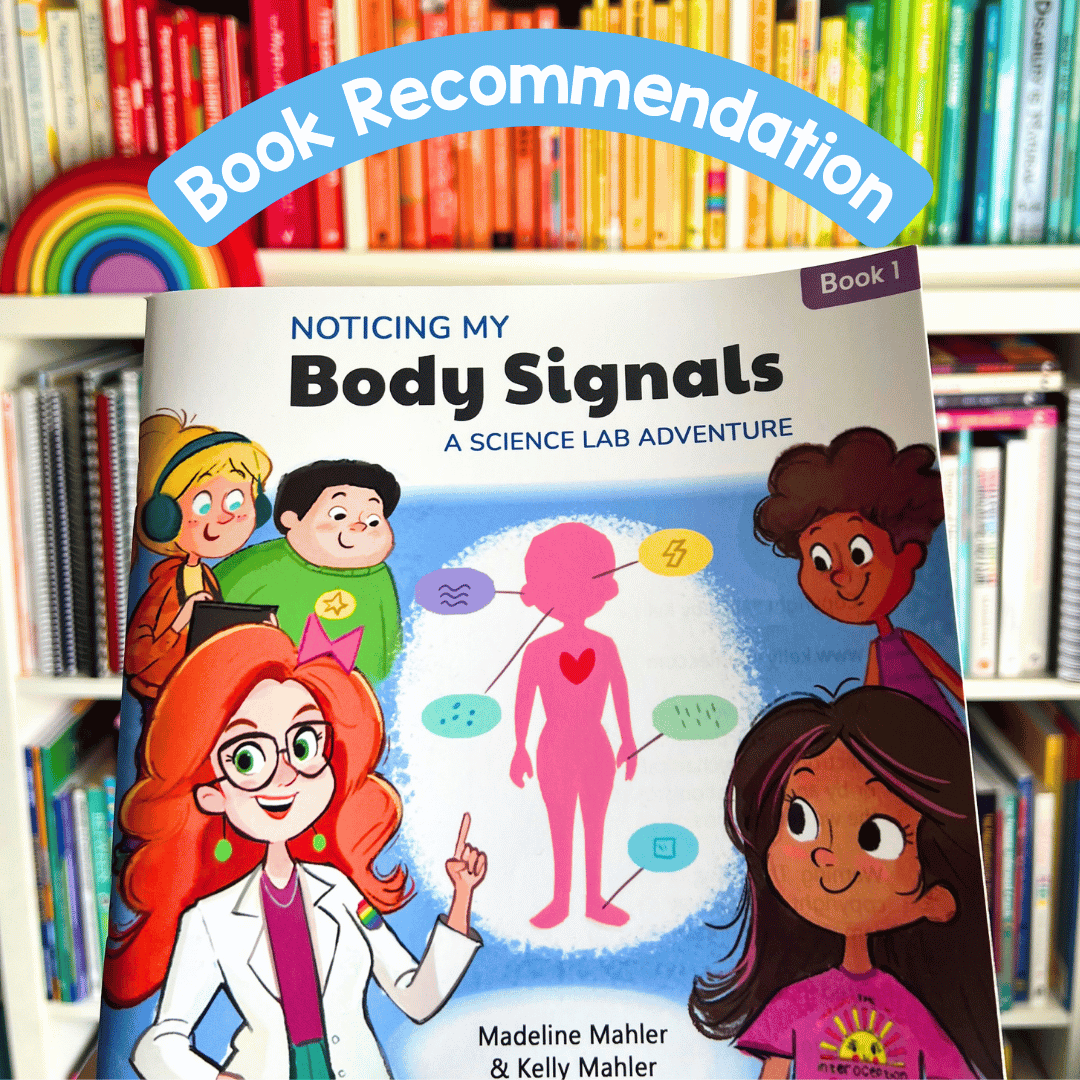
Alongside our wider conversation, I also had the opportunity to read Kelly's new children's book, Noticing My Body Signals: A Science Lab Adventure, co-authored with Madeline Mahler. I would highly recommend it. The book introduces interoception by inviting children to become curious scientists exploring their own bodies. Rather than teaching children what they are supposed to feel, it creates opportunities for them to investigate their own individual body signals.
Throughout the book, children encounter examples of people experiencing and communicating bodily sensations differently. There is no single "correct" internal experience. What particularly stood out to me was the respect afforded to autonomy and communication. Participation is not treated as compulsory, and bodily experiences are not corrected simply because they differ from someone else's.
The book is the first in a three-part series that follows the pattern of Kelly's Interoception Curriculum: Notice. Connect. Regulate.
Kelly explained during our conversation that the series progresses from noticing body signals, to connecting those signals with meaning, and finally to understanding how we might regulate or respond to them. Beginning with noticing matters. Before we can expect someone to identify what their body needs, we first need to make space for them to discover what their body actually feels like.
Watch The Unfiltered Autistic Podcast with Kelly Mahler
In the full episode, Kelly and I discuss Autism and interoception, toilet learning, constipation and painful elimination, felt safety, nervous system regulation, bodily autonomy, compliance, non-speaking Autistic people and her new children's book Noticing My Body Signals.
You can also learn more about Kelly's work, research, courses, books and free interoception resources through Kelly Mahler's official website.
