
PDA and Declarative Language
Understanding PDA and Declarative Language: A Neuroaffirmative Guide for Parents and Professionals
If you've been searching for PDA and declarative language, you're probably trying to answer one important question:
How can I communicate in ways that reduce pressure rather than increase it?
For many Autistic people, particularly those with a Persistent Drive for Autonomy (PDA) profile, everyday communication can unintentionally increase nervous system activation. A simple instruction, question, or well-meaning reminder may be experienced very differently from how it was intended.
What is Persistent Drive for Autonomy?
We have created a comprehensive guide that explains PDA comprehensively.
If you would like to understand what PDA is, current perspectives, autonomy, regulation, communication, education and practical support, start with our detailed guide before continuing with this article.
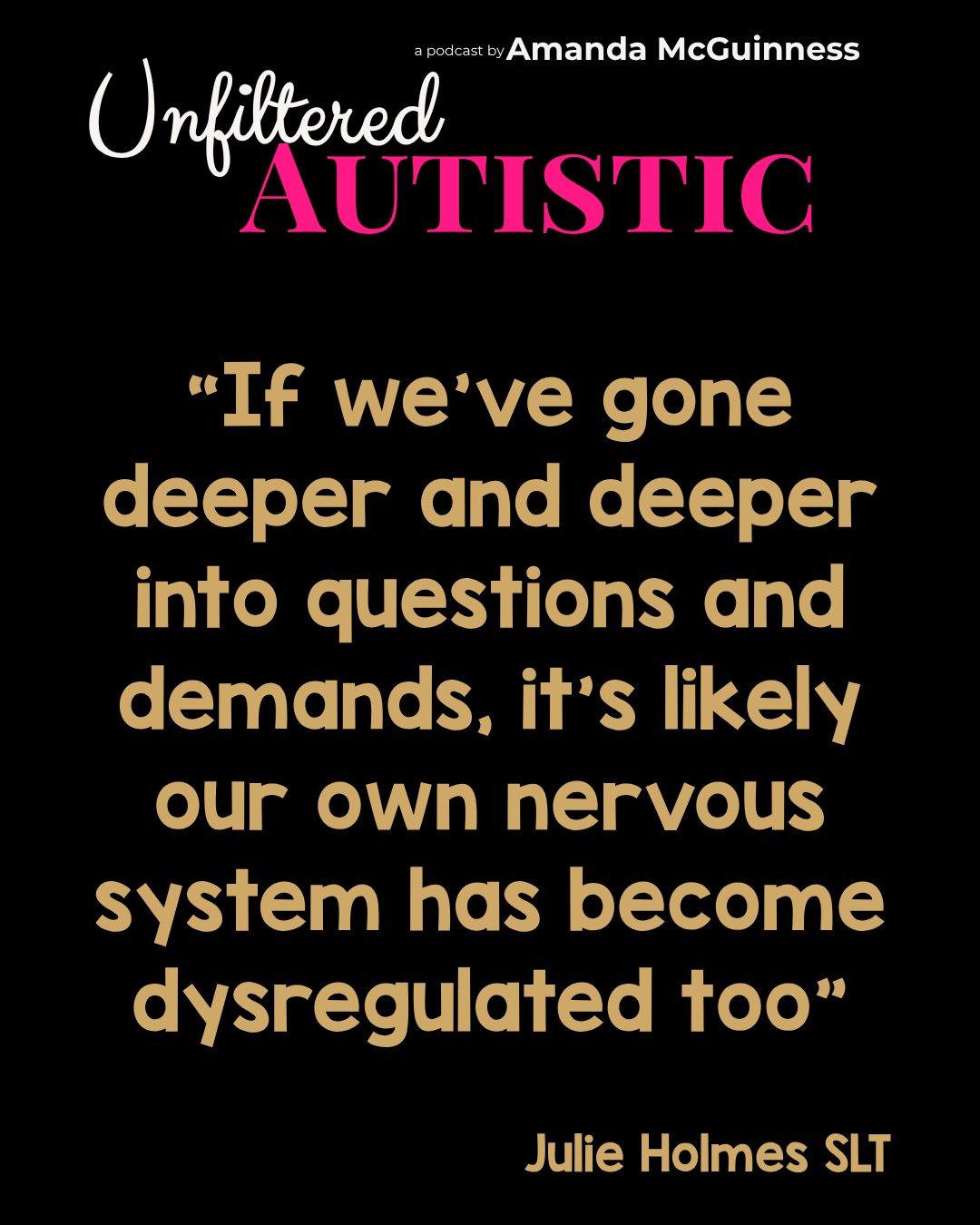
In this episode of The Unfiltered Autistic Podcast, I sat down with Speech and Language Therapist Julie Holmes, founder of BeMe Therapy, to explore declarative language, why it has become such an important neuroaffirmative communication approach, and how it can support Autistic children, young people, and families.
Rather than focusing on behaviour, compliance, or getting children to "do the thing", our conversation explored communication through the lenses of autonomy, connection, nervous system safety, and relationships.
What is Declarative Language?
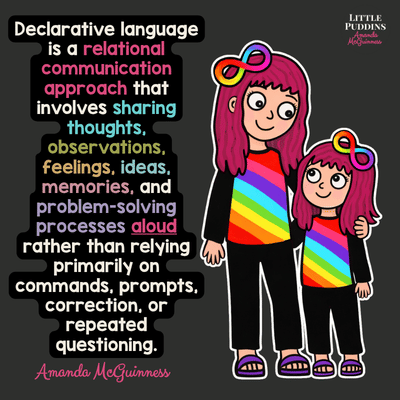
Declarative language is a style of communication that focuses on:
sharing observations
wondering aloud
commenting
thinking together
describing experiences
modelling thoughts
Instead of directing someone towards an expected response, declarative language provides information without demanding immediate action.
In the podcast, Julie explains that declarative language centres around sharing thoughts and information rather than giving commands or asking repeated questions. It shifts communication away from control and towards collaboration.
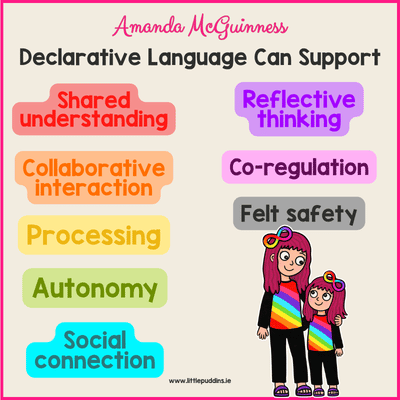
Rather than focusing on obtaining compliance or “correct” responses, declarative language aims to support:
shared understanding
collaborative interaction
processing
autonomy
social connection
reflective thinking
co-regulation
felt safety
For example:
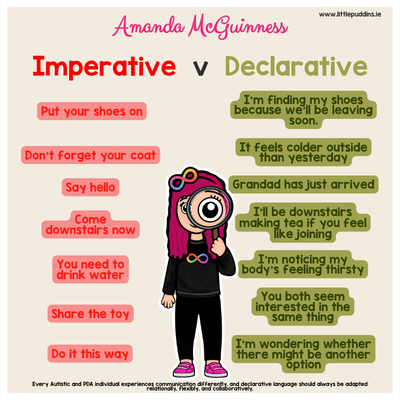
Instead of:
"Put your shoes on."
You might say:
"I'm putting my shoes on now."
Instead of:
"Where's your coat?"
You might say:
"It's getting cooler outside."
These may seem like small changes, but for many Autistic people, they can feel profoundly different.
Why Does Declarative Language Matter for PDA?
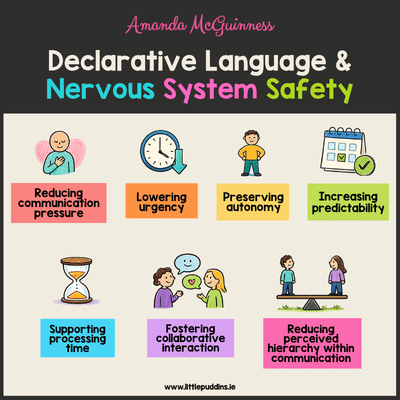
PDA is increasingly understood through a neuroaffirmative lens as a profile in which autonomy, agency, and perceived pressure have particular significance for wellbeing and nervous system safety.
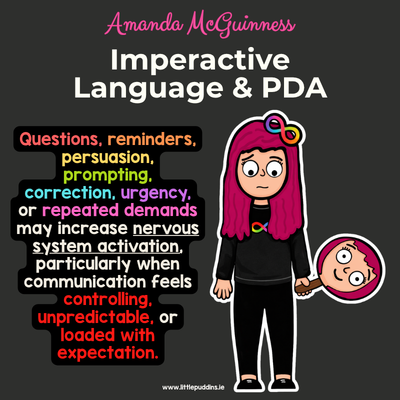
Traditional communication often relies heavily on:
instructions
repeated questions
reminders
prompts
praise
correction
For many people with a PDA profile, these forms of communication may unintentionally increase experiences of pressure and loss of autonomy.
In the podcast, Julie discusses how imperative language and repeated questioning can contribute to a nervous system moving towards a fight, flight, freeze, or other protective response. Declarative language offers an alternative that supports collaboration while reducing unnecessary communication pressure.
Communication Is About More Than Words
One of the strongest themes throughout our conversation was that declarative language is far more than replacing commands with statements.
Authenticity matters.
Children are remarkably perceptive.
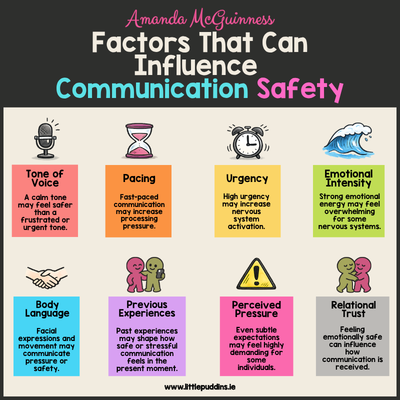
If our words sound gentle but our body language, facial expression, urgency, or internal expectation communicate pressure, that pressure is often still felt and the loss of autonomy occurs.
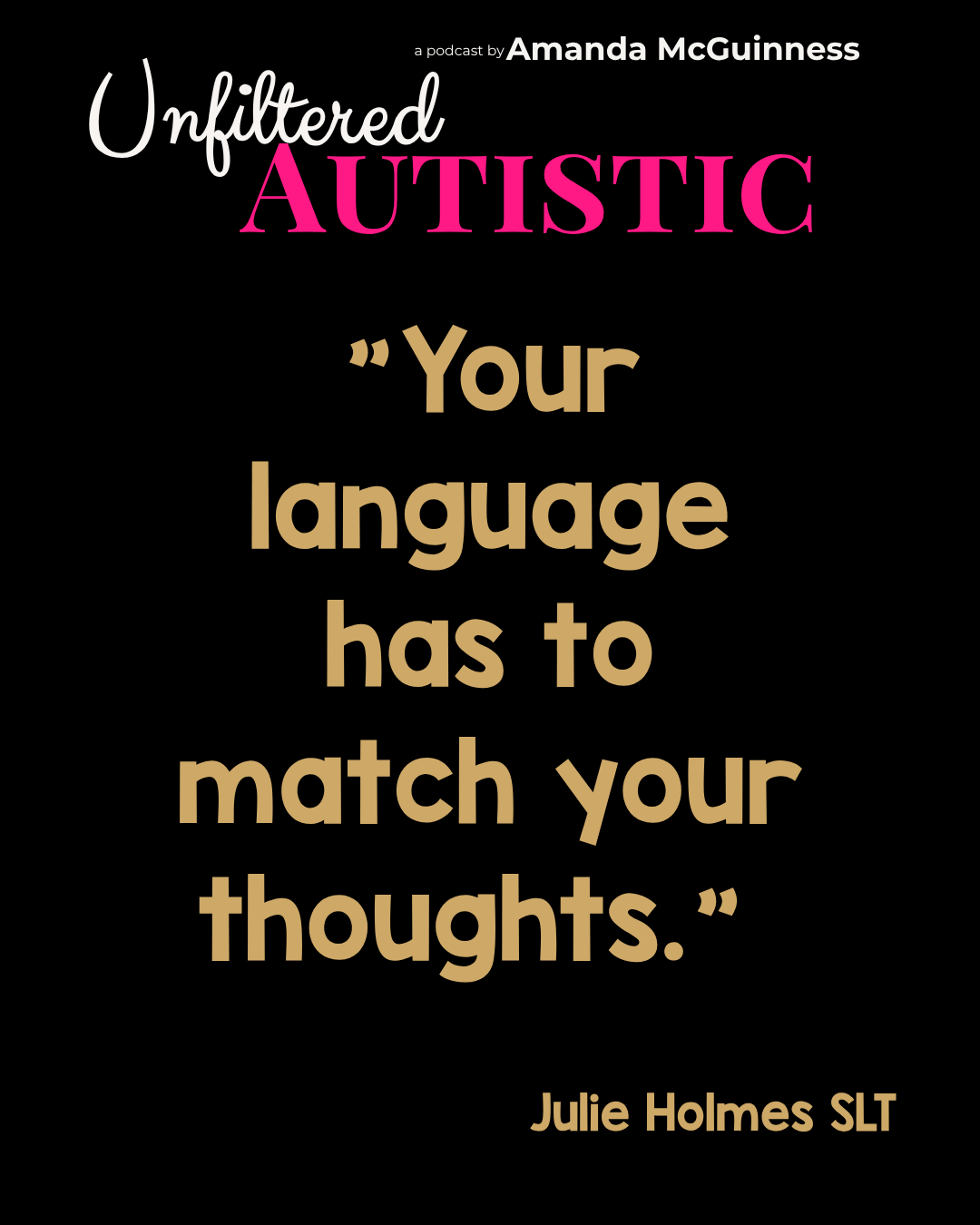
Julie highlights that declarative language works best when it reflects a genuine mindset of curiosity, flexibility, and shared problem solving rather than simply disguising directives as comments.
The Importance of Nervous System Safety
Throughout the episode we repeatedly return to one central idea:
Communication does not happen in isolation from the nervous system.
The way we communicate influences how safe another person feels.
For many PDAers, communication that protects autonomy may support:
emotional regulation
flexibility
problem solving
trust
collaboration
authentic engagement
This is not about avoiding every demand.
It is about reducing unnecessary pressure wherever possible.
Declarative Language Supports More Than PDA
Although declarative language is frequently discussed alongside PDA, Julie emphasises that its benefits extend much further.
Declarative language can support:
language development
problem solving
collaborative thinking
emotional safety
flexible thinking
child-led learning
relationship building
Gestalt Language Processing
Rather than giving children all the answers, declarative language models thinking aloud and creates opportunities for children to develop their own solutions.
Practical Ways to Start Using Declarative Language
If you're completely new to declarative language, Julie suggests beginning with small changes rather than trying to change everything overnight.
You might begin by:
noticing how often you ask questions
changing some questions into comments
describing what you can see
thinking aloud
sharing observations
slowing your pace of communication
allowing longer processing time
observing how your child responds
Every child is different.
The goal is not to follow a script.
The goal is to become increasingly responsive to the individual in front of you.
Linda K. Murphy's Influence
Our conversation also acknowledges the enormous contribution of Linda K. Murphy, whose work has shaped declarative language practice internationally.
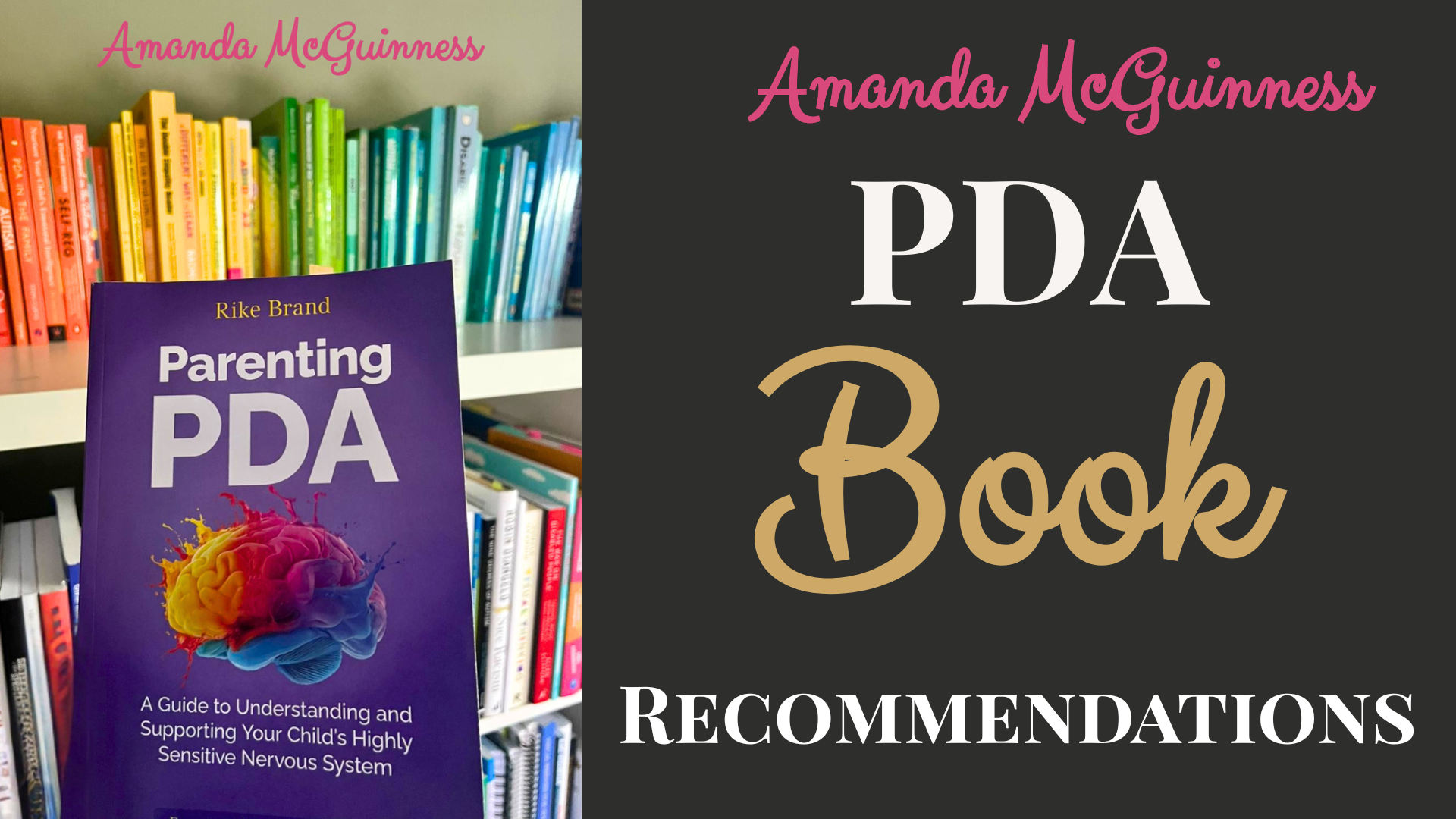
Julie describes The Declarative Language Handbook as one of the most accessible and practical resources available for parents and professionals wanting to understand this communication approach. Throughout the episode, we discuss how Linda's work has influenced both of our own practice and understanding.
Listen to the Full Conversation
This article captures only a small part of our discussion.
In the full podcast episode we also explore:
understanding PDA through autonomy and nervous system safety
practical examples of declarative language
communication during transitions
praise and communication pressure
hidden demands
Gestalt Language Processing
child-led communication
supporting Autistic children through connection rather than compliance
why declarative language benefits many children, not only those with PDA
Julie shares both her professional expertise as a Speech and Language Therapist and practical examples from everyday clinical practice, making this one of our most practical podcast episodes to date.
If you're a parent, educator, therapist, healthcare professional, or simply someone wanting to better understand Autistic communication, I highly recommend listening to the full conversation.
Together, we explore how changing the way we communicate can create greater safety, trust, collaboration, and authentic connection for Autistic people and those who support them.
Learn More About Julie Holmes SLT
Julie Holmes is a Speech and Language Therapist, founder of BeMe Therapy, with a passion for neuroaffirmative communication supports, child-led practice, and supporting Autistic and neurodivergent individuals across a range of communication profiles.
BeMe Therapy - Click HERE
Let's Communicate Together - Click HERE
AAC Advocates - Click HERE
If you enjoyed this episode, subscribe to Unfiltered Autistic for honest conversations exploring Autism, PDA, neurodiversity, communication, lived experience, and neuroaffirmative practice.
New episodes feature leading professionals, Autistic voices, and practical insights for families, educators, therapists, and organisations.
Learning More About Declarative Language
Much of the contemporary understanding of declarative language has been shaped by the work of Speech and Language Pathologist Linda Murphy, MS, CCC-SLP.
I first purchased Linda Murphy’s Declarative Language Handbook in late 2020, and it has remained one of the professional resources I have consistently recommended to parents, educators, therapists, and support professionals in the years since. Her work has played an important role in shaping broader conversations around autonomy-supportive communication, co-regulation, social information processing, and reducing pressure within interactions for Autistic and neurodivergent individuals.
You can explore her work here:
Linda Murphy Declarative Language Resources
References
Murphy, L. (2010). The Critical Importance of Declarative Language Input for Children with ASD. Autism Spectrum Quarterly, Winter 2010.
Murphy, L. (2018). What We Say and How We Say It Matters!. Autism Asperger’s Digest.
Murphy, L. Declarative Language professional resources and handbook materials. Available at:
Declarative Language WebsitePorges, S. (2011). The Polyvagal Theory: Neurophysiological Foundations of Emotions, Attachment, Communication, and Self-Regulation. New York: Norton.
Milton, D. (2012). “On the ontological status of autism: the ‘double empathy problem’.” Disability & Society, 27(6), 883–887.
Murray, D., Lesser, M., & Lawson, W. (2005). “Attention, monotropism and the diagnostic criteria for autism.” Autism, 9(2), 139–156.
