
Understanding Pressure in PDA

Why Everyday Experiences Can Feel Overwhelming and What Parents Can Look for Instead
Supporting an Autistic child or young person with a Persistent Drive for Autonomy (PDA) profile often means trying to make sense of experiences that can appear inconsistent or unpredictable. Everyday activities may feel manageable one day yet overwhelming the next, even when the task itself has not changed. A routine that was completed with ease yesterday may feel impossible today, leaving families searching for explanations that extend beyond the activity immediately in front of them.
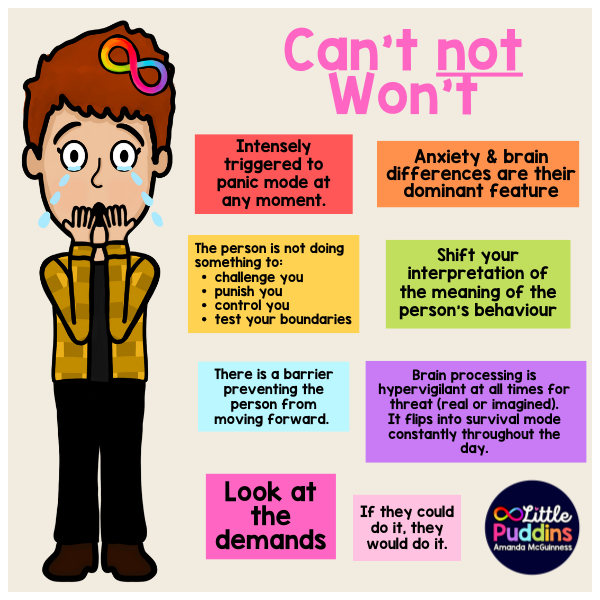
For many years, conversations about PDA have centred on the concept of demand avoidance. This has been an important shift in helping families recognise that distress is not a sign of defiance, laziness or a lack of motivation. Instead, it has encouraged a more compassionate understanding that everyday expectations can sometimes place genuine demands on an individual's nervous system.
While this perspective remains valuable, demands alone do not always explain why participation fluctuates from one moment to the next. The same expectation may feel achievable in one situation but overwhelming in another. Understanding this variability requires us to look beyond the demand itself and consider the wider context in which it is experienced.
Increasingly, neuroaffirmative practice encourages a broader understanding of participation. Everyday experiences are influenced not only by the demands we encounter but also by the cumulative interaction of sensory processing, uncertainty, communication, transitions, social expectations, relationships, physical wellbeing, opportunities for autonomy and accumulated stress. Together, these factors continually shape how the nervous system experiences the world and whether participation feels possible in a particular moment.
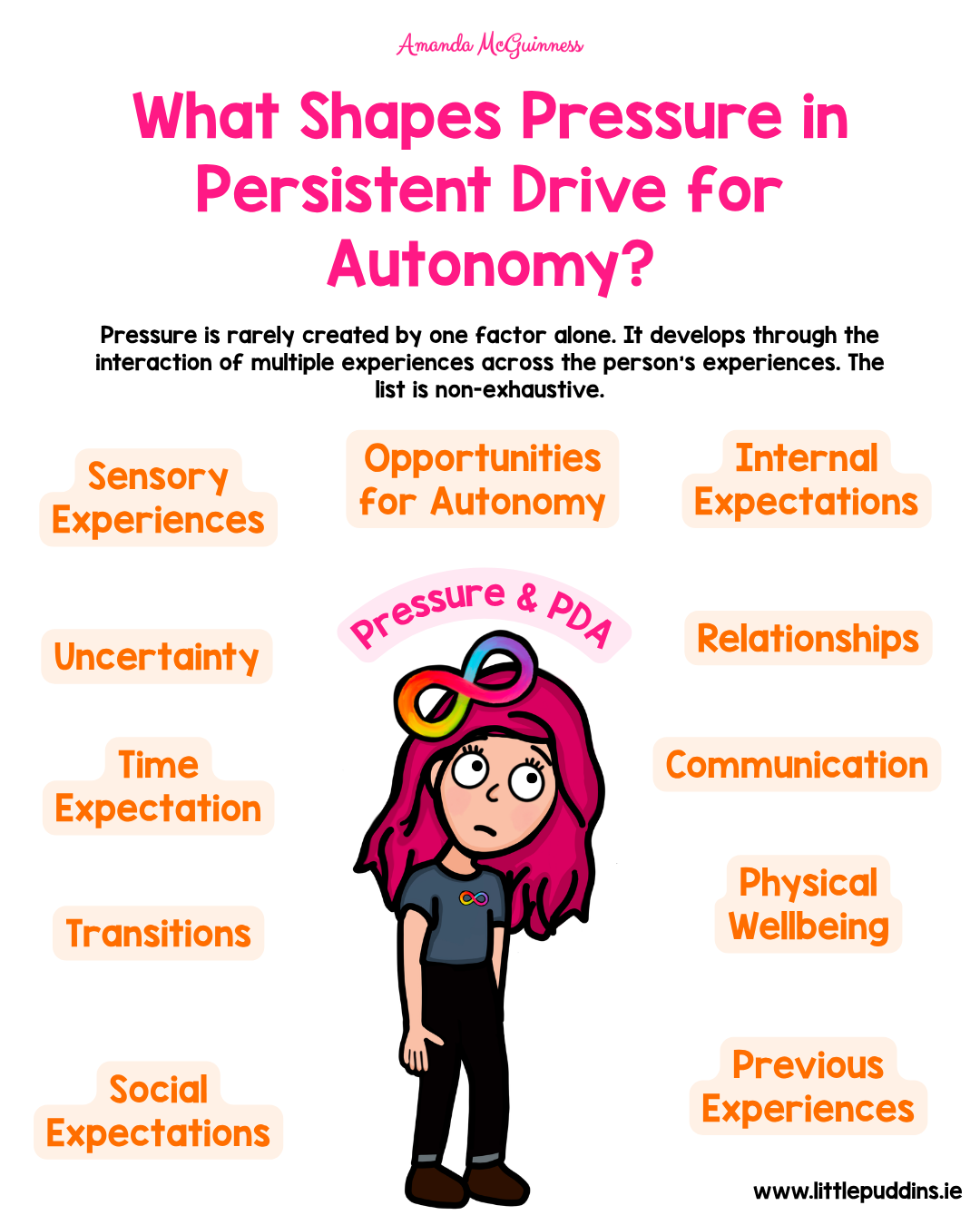
Rather than viewing distress as the direct result of a single request or expectation, it can be more helpful to understand it as the outcome of multiple interacting influences. The request that appears to trigger distress may simply be the point at which the cumulative demands placed on the nervous system exceed the individual's available resources.
This broader perspective does not diminish the importance of understanding demands. Instead, it recognises that demands are experienced within a much richer context. Exploring that context can provide a deeper understanding of why everyday experiences sometimes feel overwhelming and help us create environments that better support regulation, autonomy and meaningful participation.
Looking Beyond Demands
Understanding demands remains an important part of supporting Autistic people with a PDA profile. Everyday expectations, whether they arise from other people, the environment or ourselves, all require the nervous system to process information, adapt and respond. However, demands rarely occur in isolation.
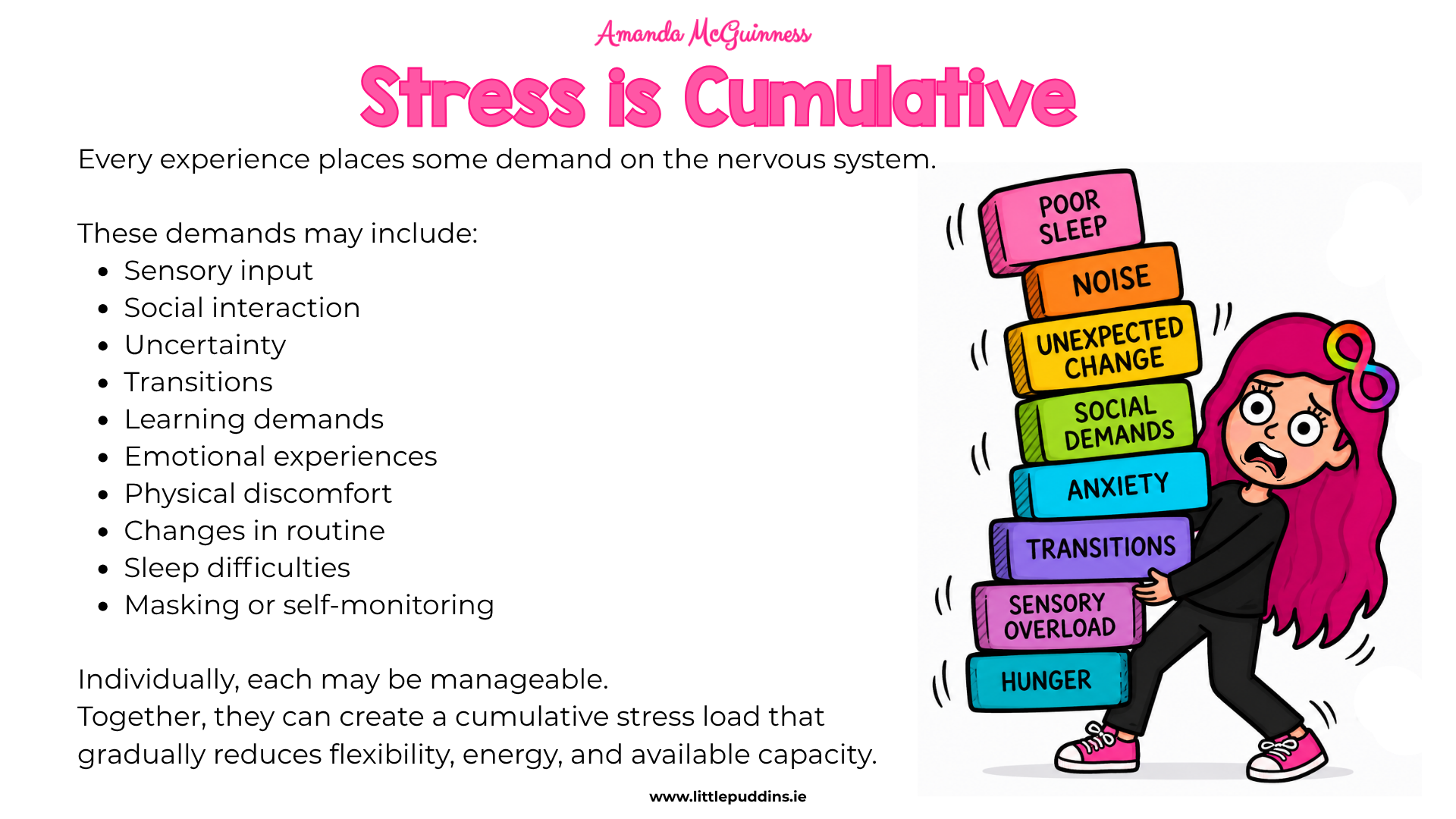
Long before a request is made, an individual may already have navigated sensory discomfort, uncertainty, transitions, communication demands, social interaction, waiting, decision-making, physical fatigue or unexpected changes. Each experience may require only a small amount of additional effort, yet together they can gradually increase the overall level of pressure being experienced.
This helps explain why the same activity may feel manageable on one occasion and overwhelming on another. The task itself may be unchanged, but the conditions surrounding it are not. Participation is influenced not only by what is being asked, but also by how, when and under what circumstances it is experienced.
Understanding PDA through this wider lens encourages us to move beyond identifying a single demand and instead consider the broader conditions influencing participation. Sensory processing, accumulated stress, communication, predictability, relationships, autonomy, previous experiences and the environment all interact to shape how manageable a situation feels. Recognising these interacting factors provides a more complete understanding of why participation may fluctuate and shifts our attention towards creating conditions that better support regulation, flexibility and meaningful engagement.
What Do We Mean by Pressure?
When discussing PDA, pressure is often understood as anything that increases the activation placed on the nervous system or reduces a person's ability to engage comfortably with their window of capacity. It extends beyond being asked to complete a task and includes the many internal and external experiences that require ongoing adaptation throughout the day.
For some people, putting on a pair of shoes before leaving the house may involve very little additional effort. For another person, that same moment may occur after a poor night's sleep, uncomfortable clothing, an unexpected change to the morning routine, multiple verbal reminders, uncertainty about the school day ahead and sensory discomfort. The request to put on shoes has not changed, but the conditions surrounding it have.
The task itself may not be the greatest source of difficulty. Instead, it is the interaction between the task and everything the nervous system has already experienced (stress stacking) that influences whether participation feels manageable.
Pressure is therefore rarely created by one isolated event. It is the cumulative experience of adapting to multiple perceived expectations and environmental influences that continually shape how the nervous system responds. As these experiences accumulate, the resources available for managing new situations may gradually reduce, making everyday participation feel increasingly difficult.
Understanding pressure in this way encourages us to look beyond the immediate situation and consider the wider context in which it occurs. Rather than viewing a moment of distress as an isolated event, it becomes part of a much broader picture that includes previous experiences, sensory processing, communication, relationships, physical wellbeing and the environment.
Why Pressure Can Change From Day to Day
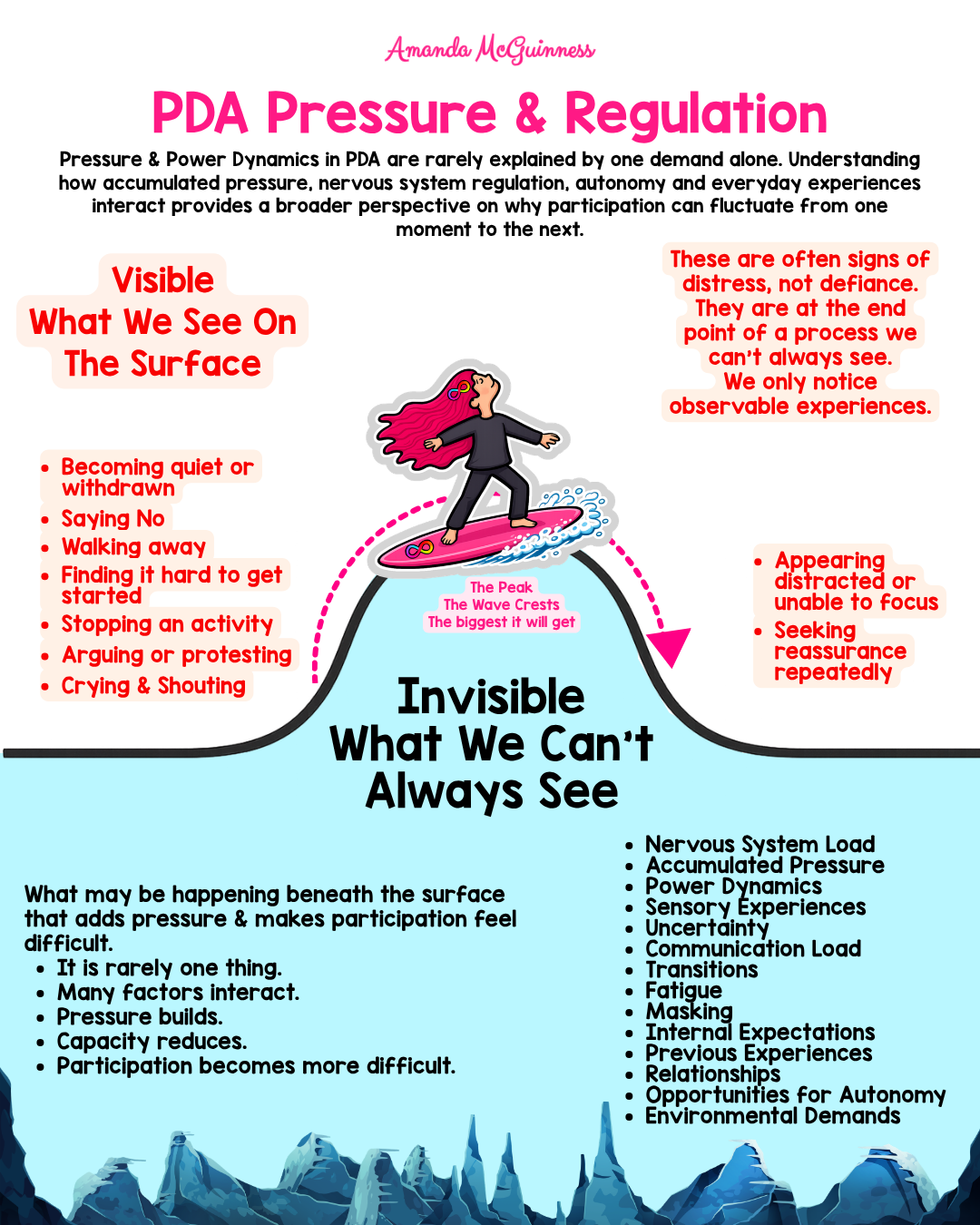
One of the most common experiences reported by families is that participation appears inconsistent. An activity that felt achievable yesterday may feel overwhelming today, even though nothing appears to have changed.
In reality, the context has almost certainly changed.
No two days are identical. Sleep quality, physical health, sensory experiences, social interaction, cognitive demands, emotional wellbeing, transitions, uncertainty and previous experiences continually influence the resources available to the nervous system. These changing conditions mean that participation is naturally dynamic rather than fixed.
Throughout the day, seemingly small experiences often require ongoing adjustment. Waiting in traffic, coping with unexpected noise, navigating busy environments, processing conversations, managing uncertainty or recovering from earlier stress all require energy. Individually these experiences may appear insignificant. Collectively, they can substantially influence how manageable later situations feel.
This cumulative process is sometimes described as stress stacking, where multiple sources of pressure gradually build over time. The final request or expectation may therefore appear to trigger distress, when in reality it simply occurs at the point where the individual's available resources have already been significantly reduced.
Understanding this cumulative nature of pressure helps explain why distress can sometimes appear sudden or disproportionate to the situation. Rather than assuming the individual has moved rapidly from being calm to overwhelmed, it may be more accurate to recognise that the nervous system has been adapting to increasing levels of pressure over an extended period. The final situation is simply the point at which those accumulated pressures become visible.
Recognising this shift in perspective encourages us to move beyond asking why one particular activity felt difficult and instead consider how the broader experiences of the day may have influenced participation.
That phrase “they seemed to go from 0-100” tells us their baseline was never 0 they were experiencing high levels of stress throughout their existence, and we are now seeing the stress stacking come to the surface.
Pressure Is Influenced by Many Interacting Factors
Although demands may contribute to feelings of pressure, they represent only one part of a much broader picture. Everyday participation is shaped by the continual interaction between the individual, their nervous system and the environment around them.
No single factor acts in isolation. Instead, multiple experiences often combine to affect whether a situation feels manageable. Some sources of pressure may be immediately visible, while others remain largely unnoticed by the people providing support.
Understanding these different influences allows us to develop a richer picture of why participation may fluctuate across different environments and at different times.
Sensory Experiences
Sensory processing influences every aspect of daily life. Bright lighting, background noise, crowded environments, uncomfortable clothing, strong smells or fluctuating temperatures may all require additional cognitive and physiological resources to process. Although these experiences are not always obvious to others, they can significantly influence how much capacity remains for engaging in other activities.
Uncertainty and Predictability
Knowing what to expect often reduces the effort required to participate. In contrast, uncertainty about what will happen, changes to familiar routines or unclear expectations may increase the amount of processing required before an activity has even begun. Supporting predictability does not remove all uncertainty, but it can reduce one important source of pressure.

Communication
Everyday communication involves far more than hearing words. Processing spoken language, interpreting meaning, responding to questions, managing conversations and shifting attention all require cognitive effort. Multiple reminders, repeated prompts or rapid questioning may unintentionally increase pressure when the nervous system is already working hard to manage other demands.
Transitions
Transitions require continual adjustment between people, places, activities and expectations. Moving from one environment to another often involves changes in sensory input, attention, emotional regulation and communication. Even positive transitions may require considerable effort and can influence participation long after the transition itself has occurred.
Social Expectations
Many everyday environments involve complex social demands that often go unnoticed. Greeting people, interpreting body language, maintaining conversations, masking differences, responding appropriately and navigating social rules all require sustained cognitive effort. These hidden demands can contribute significantly to the overall level of pressure experienced throughout the day.
Internal Expectations
Not all sources of pressure come from the external environment. Many Autistic people experience strong internal expectations, including perfectionism, fear of making mistakes, uncertainty about whether something has been completed correctly or concerns about disappointing others. These self-generated expectations can become just as demanding as those placed upon them by the outside world.
Understanding and Supporting Participation
One of the most significant shifts that can occur when supporting an Autistic person with a PDA profile is moving away from viewing participation as something that must be achieved through increasing encouragement, persistence or motivation. Instead, participation can be understood as something that emerges when the conditions around the individual feel manageable, predictable and supportive.
This perspective recognises that participation is not determined by willingness alone. It is influenced by the interaction between the individual, their nervous system and the environment in which the activity takes place.
When participation feels difficult, it can be helpful to consider the wider conditions surrounding the situation rather than focusing solely on the task itself. Factors such as sensory comfort, predictability, communication, physical wellbeing, opportunities for autonomy, trusted relationships and accumulated stress all influence how achievable an activity may feel.
Importantly, these conditions are continually changing. An environment that supports participation one day may require adaptation the next because the individual's experiences, energy levels and available resources have also changed.
Understanding participation in this way encourages curiosity rather than judgement. Rather than asking why an activity was not completed, attention shifts towards understanding what may have supported or constrained participation in that particular context.
This approach also reminds us that meaningful participation does not always look the same for every individual. Success is not measured solely by whether an activity was completed exactly as expected, but by whether the environment supported engagement in ways that were achievable, respectful and sustainable for that person.
Creating supportive conditions is therefore not about removing every challenge or expectation. It is about recognising that small adjustments to communication, predictability, sensory experiences, flexibility, relationships and opportunities for autonomy can collectively reduce unnecessary pressure and make participation feel more achievable.
Understanding Pressure in Everyday Life
Understanding pressure becomes easier when we consider how it may influence everyday experiences. The examples below are not intended to explain every situation, nor will every Autistic person experience them in the same way. Instead, they illustrate how participation is often shaped by the interaction of multiple influences rather than one isolated demand.
Leaving the House
From the outside, putting on shoes and walking out the door may appear to be a straightforward request. However, by this stage of the morning an individual may already have navigated poor sleep, sensory discomfort from clothing, changes to their routine, multiple conversations, uncertainty about the day ahead and the pressure of time. The request to leave the house may simply occur at a point where the nervous system has already invested considerable effort adapting to everything that has come before it.
Attending School
The school day involves far more than academic learning. Navigating busy corridors, changing classrooms, managing social interactions, coping with sensory differences, responding to questions, following instructions and adapting to changing expectations all require ongoing cognitive and emotional effort. Even when learning itself is enjoyable, the broader school environment may create significant cumulative pressure that influences participation throughout the day.
Homework
Homework is often viewed as an extension of learning. However, it usually occurs after a full day of managing sensory experiences, social interaction, communication, transitions and sustained attention. The difficulty may therefore be less about the homework itself and more about the reduced resources available to engage with another cognitively demanding activity.
Family Outings
A visit to the supermarket, a family celebration or a trip into town may appear relatively simple from the outside. Yet these experiences often involve unfamiliar environments, noise, bright lighting, waiting, decision-making, changes to routine, social expectations and reduced opportunities for recovery. These interacting experiences can increase pressure long before any visible signs of distress emerge.
Bedtime
Evening routines are often expected to be calming, yet bedtime arrives after an entire day of adapting to internal and external demands. Fatigue, accumulated sensory experiences, emotional processing and the transition from activity to rest all require further adjustment from the nervous system. What appears to be resistance to bedtime may instead reflect the cumulative effort required to reach the end of the day.
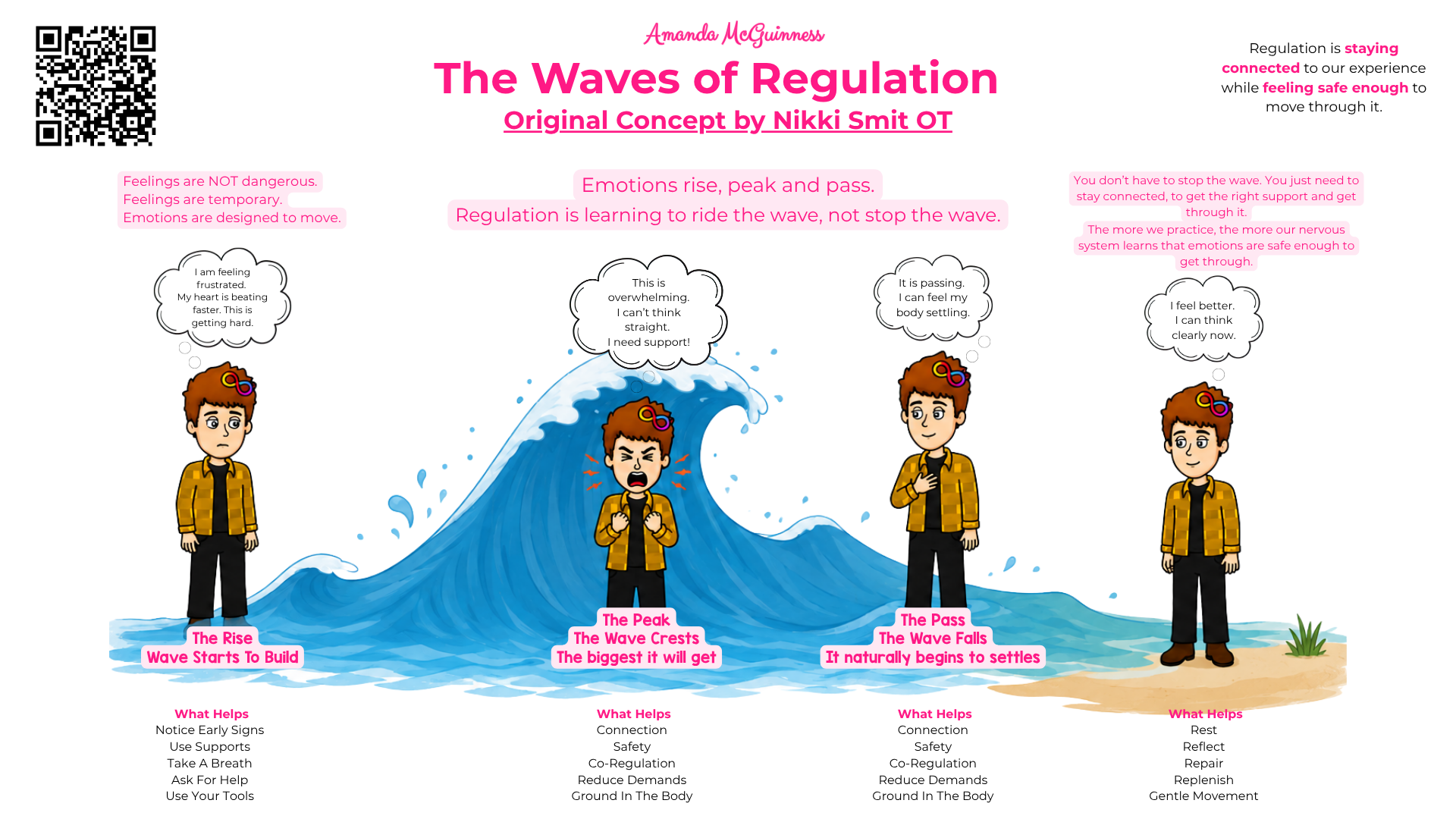
Looking at the Whole Picture
Viewing everyday situations through the lens of pressure encourages a broader understanding of participation. Rather than focusing exclusively on the activity that immediately precedes distress, it invites us to consider the wider context in which that activity occurs.
The environment, previous experiences, sensory processing, communication, opportunities for autonomy, relationships, physical wellbeing and accumulated stress all contribute to how manageable a situation feels. These influences rarely operate independently. Instead, they continually interact with one another, shaping how the nervous system experiences each moment.
Understanding these interacting conditions allows us to move beyond searching for a single explanation and towards recognising the complexity of everyday participation. This broader perspective does not eliminate challenges, but it can help explain why support often needs to remain flexible, responsive and individualised.
Understanding the Bigger Picture
Understanding pressure in PDA is not about replacing one explanation with another. Demands remain an important part of understanding everyday experiences, but they are only one piece of a much broader picture.
Participation is continually shaped by the interaction between the individual, their nervous system and the environment around them. Sensory experiences, uncertainty, communication, relationships, accumulated stress, opportunities for autonomy, physical wellbeing and previous experiences all influence how manageable a situation feels. Recognising these interacting influences provides a richer understanding of why participation may fluctuate from one moment to the next.
This broader perspective encourages us to move beyond asking why an activity was difficult and instead consider the conditions in which it occurred. Rather than searching for a single trigger, we begin to recognise that everyday participation emerges from many interconnected experiences that together influence the nervous system's capacity to engage.
Supporting an Autistic person with a PDA profile is therefore not about eliminating every challenge or removing all expectations. It is about developing a deeper understanding of the factors that influence participation and creating environments that reduce unnecessary pressure while supporting regulation, autonomy, connection and meaningful engagement.
As our understanding of PDA continues to evolve, so too does our understanding of what participation can look like. Moving beyond isolated demands allows us to appreciate the complexity of everyday experiences and reminds us that support is most effective when it responds not only to the activity itself, but also to the wider context in which that activity takes place.
When we begin to understand pressure rather than simply identify demands, we move closer to understanding the conditions that allow participation to become possible.
Continue Exploring PDA
Understanding pressure is one part of the wider picture.
You may also find these Little Puddins guides helpful:
What is PDA? Learn about the characteristics of a Persistent Drive for Autonomy and why it is understood differently from traditional behaviour-based models.
PDA Parenting Guide Explore practical, neuroaffirmative approaches to supporting everyday life at home.
Declarative Language Discover how communication styles can influence autonomy, regulation and connection.
PDA and School Understand how classroom environments, expectations and relationships shape participation.
Autistic Burnout and Regulation Learn how accumulated stress can affect capacity across home, school and community.
PDA References
Supporting Autistic PDA Students References:
Christie, P., Duncan, M., Fidler, R. and Healy, Z. (2012).Understanding Pathological Demand Avoidance Syndrome in Children: A Guide for Parents, Teachers and Other Professionals. London: Jessica Kingsley Publishers.
Fidler, R. and Christie, P. (2019).Collaborative Approaches to Learning for Pupils with PDA: Strategies for Education Professionals. London: Jessica Kingsley Publishers.
Truman, C. (2021).The Teacher’s Introduction to Pathological Demand Avoidance: Essential Strategies for the Classroom. London: Jessica Kingsley Publishers.
Fricker, E. (2021).The Family Experience of PDA: An Illustrated Guide to Pathological Demand Avoidance. London: Jessica Kingsley Publishers.
Cat, S. (2018).Pathological Demand Avoidance Explained. London: Jessica Kingsley Publishers.
Eaton, J. (2017).A Guide to Mental Health Issues in Girls and Young Women on the Autism Spectrum: Diagnosis, Intervention and Family Support. London: Jessica Kingsley Publishers.
Newson, E. (2003).Pathological Demand Avoidance Syndrome: A Necessary Distinction within the Pervasive Developmental Disorders. Archives of Disease in Childhood, 88(7), pp. 595–600.

Get in Touch: Contact Amanda
Follow for Insights: Instagram @littlepuddins.ie
