
Stop Solving PDA Behaviour
A Different Way to Understand and Support PDA
Supporting PDA Starts with Understanding, Not Behaviour
Supporting an Autistic person with a Persistent Drive for Autonomy (PDA) profile can leave parents, educators and professionals searching for strategies that will reduce distress, support participation and make everyday life feel more manageable. When expectations are met with resistance, shutdown, avoidance or emotional overwhelm, it is natural to focus on the behaviour we can immediately see.
However, behaviour is often the final part of a much bigger story.
By the time distress becomes visible, the person's experience may already have been shaped by a complex interaction between their nervous system, autonomy, sensory processing, executive functioning, uncertainty, relationships and accumulated stress. Rather than asking how to change behaviour, it can be more helpful to ask:
What has made participation feel difficult in this moment?
This simple shift changes how we understand PDA. Behaviour becomes meaningful information about the person's experience rather than the problem itself. Instead of searching for strategies that change behaviour, we begin creating the conditions that make participation feel safer, more collaborative and more achievable.
This way of thinking closely aligns with Dr Ross Greene's Collaborative & Proactive Solutions (CPS) approach, which encourages us to understand the problems making participation difficult before working together to develop solutions. If you would like to explore this framework in greater depth, you can also read my guide to Ross Greene's Collaborative & Proactive Solutions for PDA.
Behaviour Is the Starting Point, Not the Whole Story
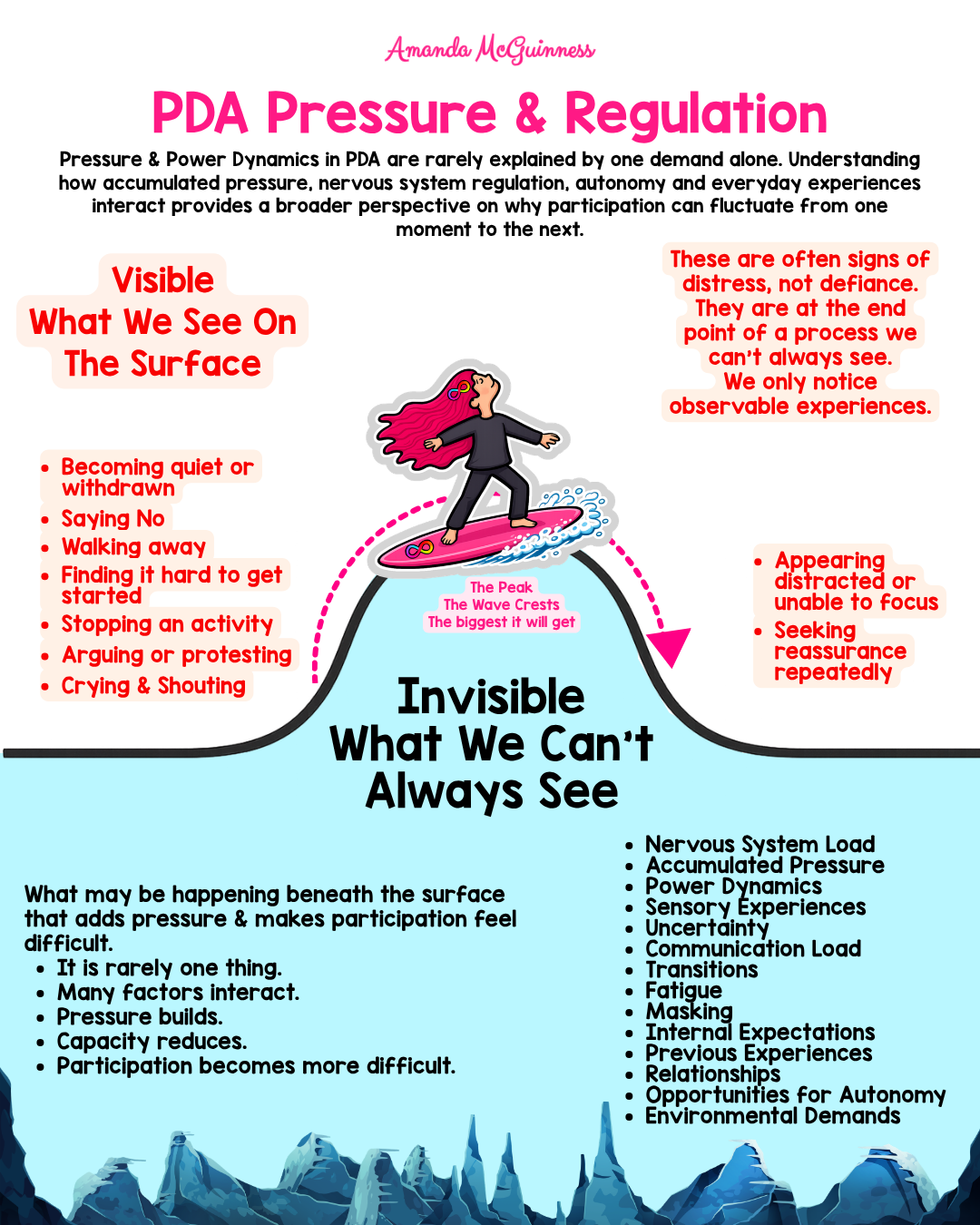
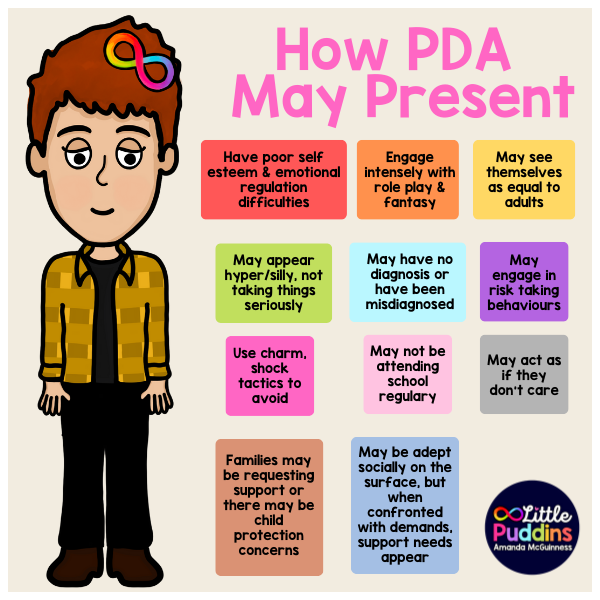
The moments we notice most are often those when participation becomes difficult. A child or teen may refuse to leave the house, become distressed in school or find it impossible to begin a familiar task. These situations understandably draw our attention because they are visible.
Yet behaviour rarely appears in isolation.
A request that seems simple to someone else may involve navigating sensory discomfort, switching attention, managing uncertainty, processing multiple pieces of information, coping with accumulated stress or experiencing the expectation itself as a loss of autonomy.
Understanding behaviour in this way encourages us to look beyond the immediate moment. Rather than asking how to stop the behaviour, we begin asking what may have made participation difficult in the first place.
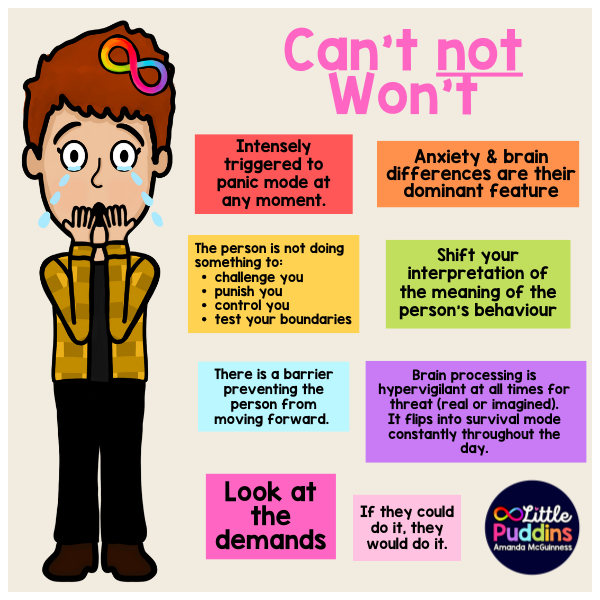
It can be helpful to begin with the assumption that the person is responding in the best way they can with the resources, capacity and supports available to them at that moment. When participation becomes difficult, our role shifts from asking how to make the person try harder towards understanding what may be making participation difficult and how we can work together to remove unnecessary barriers.
Understanding What Shapes Participation
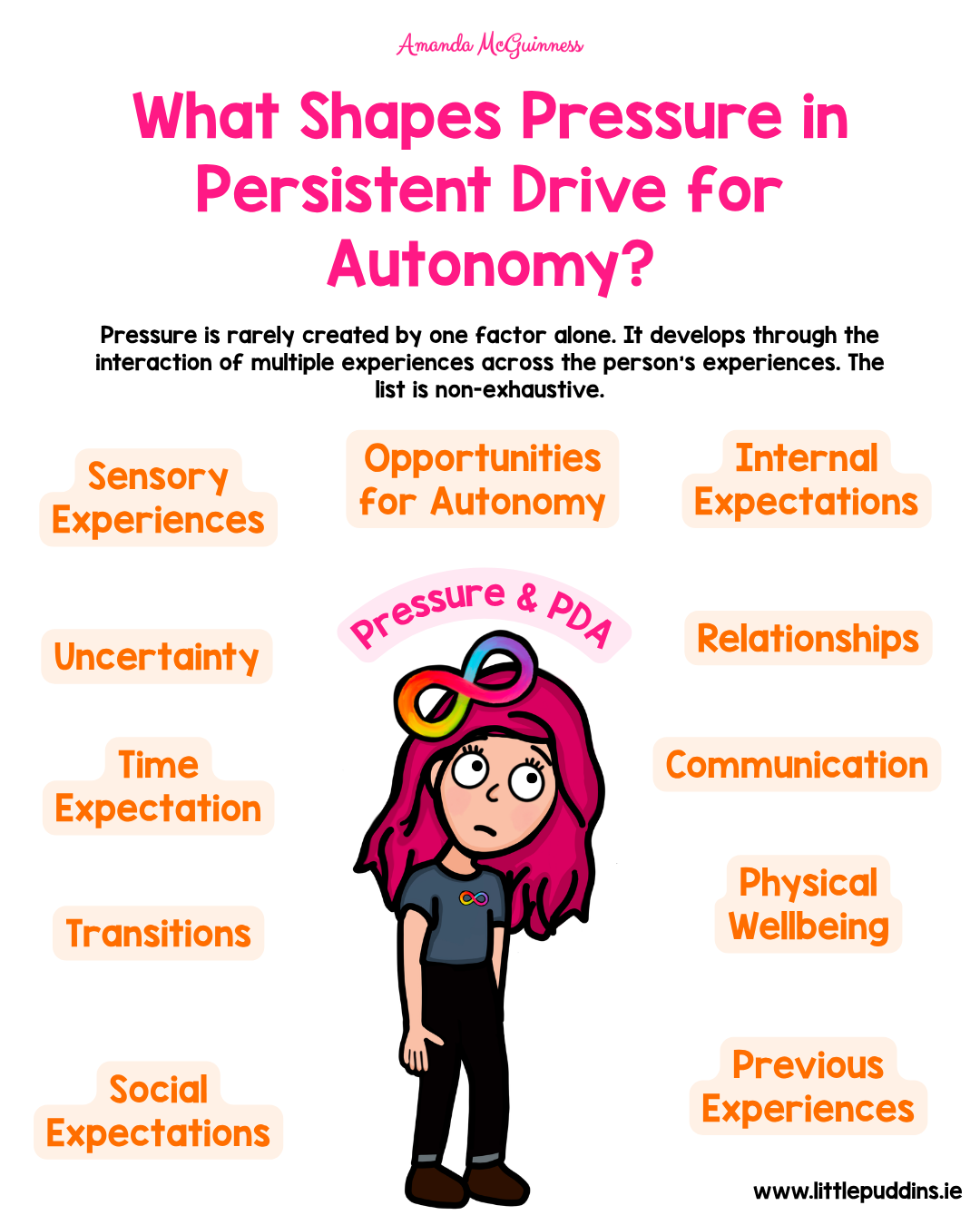
Participation is rarely influenced by one factor alone. Instead, it reflects the interaction between the person, their environment and their experiences in that moment.
For many Autistic people with a PDA profile, participation may be shaped by:
Nervous system regulation and current stress levels.
Experiences of autonomy, agency and meaningful influence.
Executive functioning demands such as planning, task initiation and flexibility.
Sensory processing and the surrounding environment.
Uncertainty or changes in expectations.
The cumulative effect of stress throughout the day.
Relationship safety, trust and previous experiences.
Physical wellbeing, including sleep, illness or pain.
These experiences continually interact with one another. Understanding this broader picture allows us to move beyond responding to isolated moments and towards understanding what is shaping participation over time.
Each of these areas is explored in more detail throughout the Little Puddins Autism PDA Hub.

Building Collaborative Understanding
Once we recognise that behaviour is only one part of the story, our role begins to change.
Instead of assuming we already know why participation has become difficult, we become curious about what we may not yet understand.
This means paying attention to the small changes that often appear before distress becomes visible. A person may become quieter, more restless, need additional processing time, seek greater control over their environment or find it increasingly difficult to cope with everyday expectations. These early changes can tell us that participation is becoming more difficult long before a crisis occurs.
Collaborative understanding also means recognising that everyone involved brings their own perspective. The Autistic PDA person, parent, educator and professional may all experience the same situation differently. Taking time to understand each person's concerns creates stronger foundations for shared problem solving than assuming there is only one correct perspective.
Curiosity is not about delaying support. It is what helps us provide support that is genuinely responsive to the person's experience.
Relationships Create the Conditions for Collaboration
Support does not happen in isolation from relationships.
When an Autistic person experiences relationships as safe, respectful and responsive, it becomes easier to share concerns, explore difficulties and work together towards solutions. Feeling understood does not remove distress, but it creates the conditions in which collaboration is more likely to succeed.
Relationships also influence how expectations are experienced. The same request may feel manageable in one relationship yet overwhelming in another, depending on previous experiences of trust, flexibility, understanding and meaningful influence.
Building relational safety is not about removing expectations. It is about creating environments where concerns can be shared openly, differences are respected and solutions can be developed together.
Recognising the Earliest Signs of Stress
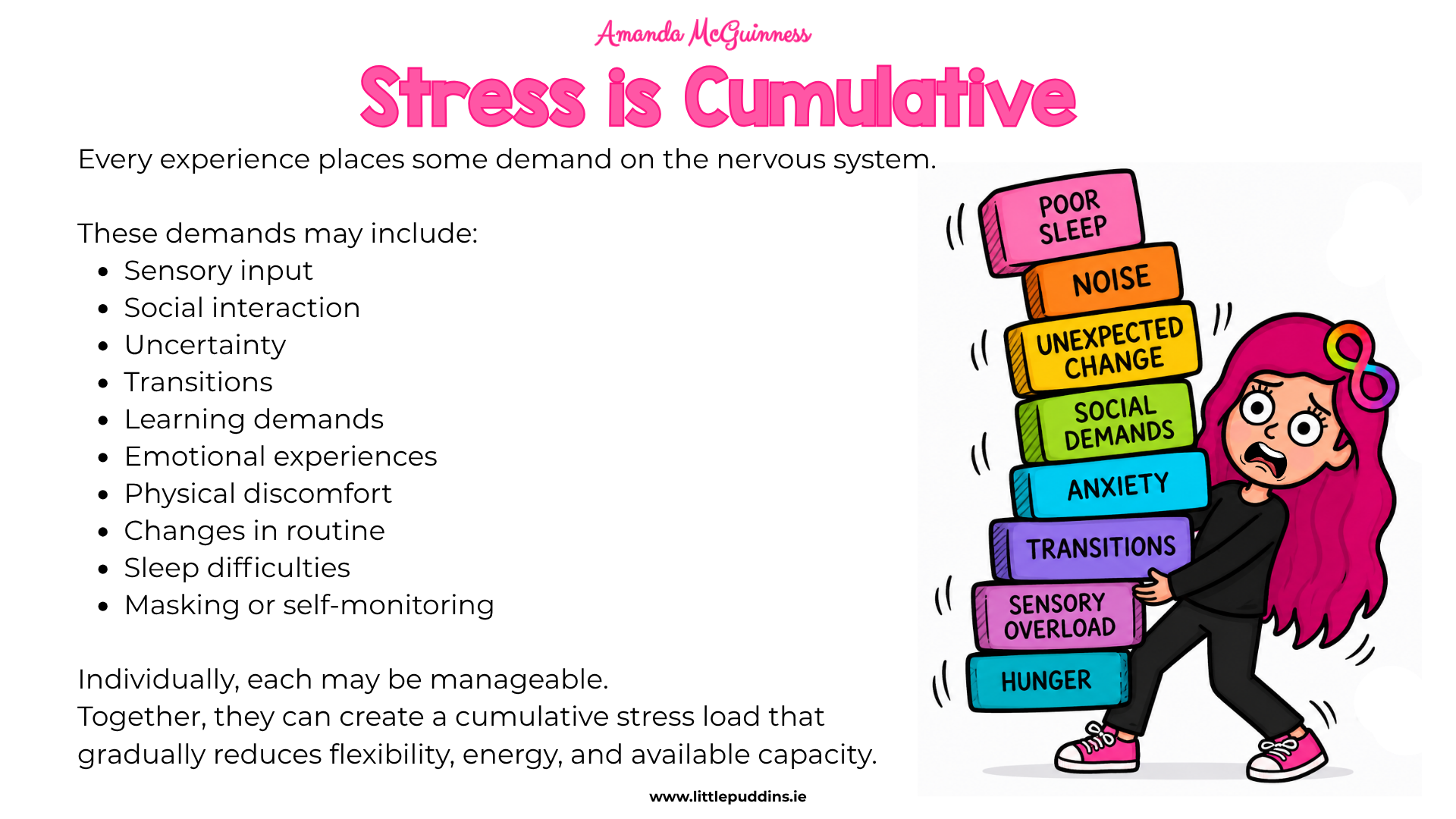
One of the most helpful shifts in supporting an Autistic person with a Persistent Drive for Autonomy (PDA) profile is learning to recognise stress before it becomes distress.
Many of us naturally notice when a person reaches crisis because those moments are difficult to miss. However, there are often smaller changes that appear much earlier, providing valuable opportunities to understand what the person may be experiencing and to reduce unnecessary pressure before participation becomes increasingly difficult.
These early indicators are different for everyone. There is no universal list and they should never be viewed as behaviours to eliminate. Instead, they are meaningful changes that can help us understand when a person's capacity may be changing.
For one person, early signs may include becoming quieter, needing more processing time or withdrawing from conversation. For another, it may look like pacing, using humour differently, becoming more literal, seeking greater control over routines, avoiding interaction or finding sensory experiences increasingly difficult to tolerate.
The goal is to become familiar with the person's unique patterns so that support can become more responsive and collaborative.
When we recognise these early changes, we create opportunities to pause, reduce pressure, adjust expectations, offer support or simply provide space before the situation escalates. Often, these small adjustments can make a significant difference to how achievable participation feels.
When a Solution Doesn't Work, Keep Learning
Participation is influenced by changing circumstances, environments, relationships and capacity, so it is natural that a support which helps in one situation may not have the same effect in another.
Rather than viewing this as failure, it can be helpful to view it as new information.
When an approach doesn't have the outcome we hoped for, it provides another opportunity to deepen our understanding of the person's experience. Perhaps we misunderstood the source of the difficulty, overlooked an important pressure, or discovered that the support needed further adjustment. Every experience helps us build a clearer picture of what makes participation feel more or less achievable for that individual.
Collaborative support is therefore an ongoing process of observing, listening, reflecting and adapting together. Curiosity does not end once a solution has been tried; it continues as we learn more about the person and refine our understanding over time.
From Understanding to Collaborative Solutions
Understanding is not the end point. It is the beginning of collaborative problem solving.
Once we have developed a clearer understanding of what is making participation difficult, we are in a much stronger position to work alongside the person to identify supports that are realistic, respectful and responsive.
This is the principle that sits at the heart of Collaborative & Proactive Solutions (CPS). Rather than asking how to make a person meet an expectation, collaborative approaches begin by understanding the concerns of everyone involved before working together towards mutually satisfactory solutions.
For families, schools and professionals supporting PDA, this represents an important shift. Success is no longer measured by whether behaviour changes immediately, but by whether understanding has increased, pressure has reduced and participation has become more achievable.
Continue Exploring PDA
Understanding pressure is one part of the wider picture.
You may also find these Little Puddins guides helpful:
What is PDA? Learn about the characteristics of a Persistent Drive for Autonomy and why it is understood differently from traditional behaviour-based models.
PDA Parenting Guide Explore practical, neuroaffirmative approaches to supporting everyday life at home.
Declarative Language Discover how communication styles can influence autonomy, regulation and connection.
PDA and School Understand how classroom environments, expectations and relationships shape participation.
Autistic Burnout and Regulation Learn how accumulated stress can affect capacity across home, school and community.
What Does This Look Like in PDA Practice?
At home, collaborative understanding may mean recognising that a morning routine is difficult because several stressors are occurring simultaneously, rather than because a child is refusing to cooperate.
In school, it may involve exploring how sensory dysphoria, uncertainty, transitions or reduced autonomy are affecting participation before introducing additional behavioural strategies.
For professionals, it means working alongside families and the Autistic PDA person to understand their unique experiences, strengths and priorities before recommending support.
Although these situations look different, they are guided by the same principle:
Understand first,
Collaborate second
Develop supports that respond to the person's lived experience rather than the behaviour alone.
Supporting an Autistic person with a PDA profile is not about finding the perfect strategy or eliminating behaviour. It is about developing a deeper understanding of what makes participation feel difficult and using that understanding to shape support.
When we move beyond behaviour and become curious about the person's experience, we create opportunities to reduce unnecessary pressure, strengthen relationships and develop collaborative solutions that are more likely to support meaningful participation.
This shift from managing behaviour to building understanding is not simply a different intervention. It is a different way of thinking about support. It reminds us that the most effective solutions rarely begin with changing the person. They begin with understanding them.
The goal is not to become better at managing behaviour. It is to become better at understanding people. When we understand more, we often need to control less. Collaboration becomes easier, relationships become stronger and participation becomes more achievable because support is built around the person's experience rather than the behaviour we happen to observe.


References:
Pathological Demand Avoidance (PDA) and the Nervous System:
1. Foundational Understanding of PDA:
Newson, E., Le Maréchal, K. and David, C. (2003) ‘Pathological demand avoidance syndrome: a necessary distinction within the pervasive developmental disorders’, Archives of Disease in Childhood, 88(7), pp. 595–600. Available at: https://adc.bmj.com/content/88/7/595 (Accessed: 1 February 2025).
Johnson, M. and Saunderson, H. (2023) ‘Examining the relationship between anxiety and pathological demand avoidance in adults: A mixed methods approach’, Frontiers in Education, 8, Article 1179015. Available at: https://www.frontiersin.org/articles/10.3389/feduc.2023.1179015/full (Accessed: 2 February 2025).
O’Nions, E., Happé, F., Viding, E. and Noens, I. (2021) ‘Extreme demand avoidance in children with autism spectrum disorder: Refinement of a caregiver-report measure’, Advances in Neurodevelopmental Disorders, 5(3), pp. 1–13. Available at: https://link.springer.com/article/10.1007/s41252-021-00203-z (Accessed: 1 February 2025).
O’Nions, E., Christie, P., Gould, J., Viding, E. and Happé, F. (2014) ‘Development of the “Extreme Demand Avoidance Questionnaire” (EDA-Q): Preliminary observations on a trait measure for pathological demand avoidance’, Journal of Child Psychology and Psychiatry, 55(7), pp. 758–768. Available at: https://acamh.onlinelibrary.wiley.com/doi/10.1111/jcpp.12149 (Accessed: 2 February 2025).
2. Neurophysiological Perspectives:
Porges, S.W. (2011) The Polyvagal Theory: Neurophysiological Foundations of Emotions, Attachment, Communication, and Self-Regulation. New York: W.W. Norton & Company.
Porges, S.W. (2001) ‘The polyvagal theory: phylogenetic substrates of a social nervous system’, International Journal of Psychophysiology, 42(2), pp. 123–146.
3. Insights for PDA Practitioners:
O’Nions, E., Happé, F., Viding, E. and Noens, I. (2021) ‘Extreme demand avoidance in children with autism spectrum disorder: Refinement of a caregiver-report measure’, Advances in Neurodevelopmental Disorders, 5(3), pp. 1–13. Available at: https://link.springer.com/article/10.1007/s41252-021-00203-z (Accessed: 1 February 2025)
Haire, L., Symonds, J., Senior, J. and D’Urso, G. (2024) ‘Methods of studying pathological demand avoidance in children and adolescents: A scoping review’, Frontiers in Education, 9, Article 1230011. Available at: https://www.frontiersin.org/articles/10.3389/feduc.2024.1230011/full (Accessed: 1 February 2025).
4. Neuroscience and Trauma-Informed Perspectives:
Porges, S.W. (2009) ‘Reciprocal influences between body and brain in the perception and expression of affect: A polyvagal perspective’, The Healing Power of Emotion: Affective Neuroscience, Development & Clinical Practice, pp. 27–54.
5. Real-World Lived Experience and Clinical Application:
Christie, P. (2018) ‘PDA… the story so far’, PDA Society Resources. Available at: https://www.pdasociety.org.uk/resources/phil-christie-pda-the-story-so-far/ (Accessed: 1 February 2025).
